About Mark Rober On YouTube (@MarkRober)
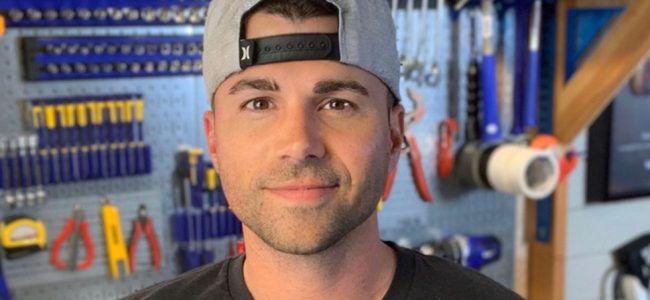
Mark Rober is an American engineer, inventor, educator, and one of the biggest science and technology creators on YouTube. He’s not just someone who posts random videos that went viral once. His channel grew over more than a decade into a global phenomenon, with over 70 million subscribers and more than 15 billion total views as of early 2026.
That’s a scale where his videos reach audiences larger than some TV networks, and it tells you a bit about how broad and appealing his content is.
Before Mark Rober became a YouTube star, he actually had a pretty serious engineering career. He studied mechanical engineering, earning a bachelor’s degree from Brigham Young University and a master’s from the University of Southern California.
Then he spent nine years working at NASA’s Jet Propulsion Laboratory, where he was part of the team behind the Curiosity Mars rover. That’s not a tiny detail, it’s the sort of real-world engineering accomplishment that most people only ever read about in textbooks.
After NASA he moved into product design, working in Apple’s Special Projects Group for several years. He even contributed to virtual reality patents while there. That background gives his videos a foundation in real engineering practice, which I think is one reason they feel both credible and imaginative.
Mark Rober On YouTube
The YouTube channel itself started back in 2011, and over time it found its core style. It’s not about fast food challenges or purely entertainment stunts. Instead Mark mixes science communication, big mechanical builds, creative experiments, interesting challenges, and occasional social experiments.
The topics can vary from testing whether sharks can smell a drop of blood, to building giant domino robots, to creating elaborate squirrel mazes in his backyard. These aren’t short clips with no depth. Many of them go into fascinating details about how things work, why they behave the way they do, and what engineering principles are involved.
One thing you quickly notice if you spend time on his channel is that Mark isn’t trying to just make random stuff for clicks. There’s almost always a learning moment or a curiosity spark.
 That might come as you watch a giant glitter bomb designed to thwart package thieves (something that went wildly viral) or a build of the world’s largest jello pool. I have to admit, watching some of these projects makes me smile because they blend real physics and real creativity with an almost childlike sense of wonder.
His style is very polished but still personable. You don’t get the vibe that he’s trying to be flashy for its own sake. Instead I get the sense that he genuinely loves figuring out how things work and then sharing that sense of discovery with the viewer. When a video hits millions of views in the first few days, you can tell it’s not just hype, it’s something people really connect with.
Outside of the core channel, Mark has also built a broader brand around science education. In 2022 he founded CrunchLabs, a company that creates STEM-focused kits and projects designed to help kids and teens build things and learn engineering concepts through hands-on play. Those products tie into his videos, but they also exist as separate tools for curious minds.
Another aspect of Mark’s public life that has made him stand out is his involvement in large charity projects. Alongside fellow creators like MrBeast, he helped organize fundraising campaigns like #TeamTrees and #TeamSeas, which raised tens of millions of dollars for tree planting and ocean cleanup respectively.
More recently he and others launched the #TeamWater campaign to fund clean drinking water projects around the world. I find it refreshing when someone with a huge platform uses it for something concrete and humanitarian, and it’s a part of his story that goes beyond “cool science videos.”
Of course, not everyone sees his evolution as entirely positive. Some long-time viewers sometimes talk about a shift in style from deeper educational explanations toward more big spectacle builds, and some folks miss the old voice-over segments where he paused and explained physics in detail.
I hear a lot of that sentiment in fan communities, and it does make sense. As creators grow and build teams, their style often changes to fit larger audiences and production realities.
On a personal level, Mark tends to keep his private life pretty out of the spotlight, but some public details are known. He lives in California and is a father. His family life and advocacy work include raising awareness around autism, inspired by his own son.
He’s been involved in charity livestreams to support autism programs, which shows a side of him that goes beyond the science experiments and viral videos.
Recently there’s even talk of him bringing his ideas to Netflix with a competition show coming in 2026, which tells you that his reach now extends well beyond YouTube into broader entertainment platforms.
Mark Rober’s channel is a blend of real engineering background, playful experiments, creativity, big builds, and science communication, wrapped up in a way that feels fun and accessible.
I don’t think I’m alone in saying that watching his videos is one of those experiences where you come away learning something without having to try too hard. It feels like hanging out with a curious friend who happens to have tools, space, and a brain that likes puzzles.
He shows that science can be entertaining, that engineering can be joyful, and that large audiences will follow content that makes them think and laugh at the same time.