Buffy Reboot Cancellation: Why Hulu Betrayed Millions of Fans
There’s a particular kind of disappointment that only exists in the streaming era… the kind where something you were genuinely curious about vanishes before you even get to judge it for yourself.
That’s exactly what happened with the planned Buffy the Vampire Slayer revival at Hulu. Not canceled after a shaky first season. Not pulled after declining viewership. It never even made it to the starting line. A pilot was filmed, momentum was building, and then, just like that, it was gone.
And honestly, that kind of ending feels… unfinished in a way that’s hard to shake.
A legacy that wasn’t supposed to be easy to follow
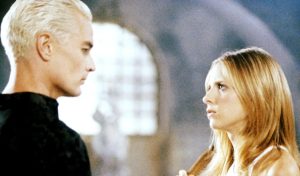 To understand why this cancellation hits differently, you have to go back to what Buffy the Vampire Slayer actually was.
On paper, it sounded like something disposable. A teenage girl fights vampires. Monster-of-the-week episodes. High school drama mixed with supernatural chaos. It could have easily been a forgettable late ‘90s experiment.
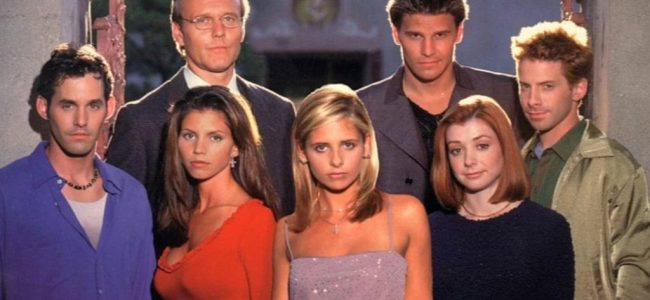
Instead, it became one of the most influential TV shows of its time.
Buffy wasn’t just about slaying demons. It was about growing up when everything feels like it’s out to destroy you… sometimes literally. High school wasn’t just stressful, it was a Hellmouth. Relationships weren’t just complicated, they were dangerous. Loss didn’t come neatly wrapped in lessons, it hit hard and lingered.
Episodes like “The Body” stripped away all supernatural elements to show raw grief. “Hush” proved you could tell a powerful story with almost no dialogue. Season arcs tackled identity, addiction, power, and responsibility in ways that felt surprisingly grounded for a show about vampires.
And at the center of it all was Sarah Michelle Gellar, whose portrayal of Buffy balanced strength with vulnerability in a way that made the character feel real, not mythic.
So when you talk about reviving Buffy, you’re not just rebooting a brand. You’re stepping into something that meant a lot to people, and still does.
The promise of New Sunnydale
That’s what made the idea of a new version, often referred to as New Sunnydale, so intriguing.
This wasn’t just a lazy remake of the original story. The concept suggested a passing of the torch, a new Slayer for a new generation. Ryan Kiera Armstrong was set to take on that role, bringing a fresh perspective into a universe that’s always been about reinvention.
Behind the scenes, there were real reasons to pay attention. Chloé Zhao, known for her atmospheric storytelling and character-driven approach, was attached to direct. The Zuckerman sisters were involved creatively. And perhaps most telling of all, Sarah Michelle Gellar wasn’t distancing herself from the idea, she was openly supportive.
That matters.
Because for years, reviving Buffy felt almost taboo. The original series had ended on a note that felt complete, expanding the idea of “the chosen one” into something more communal. Trying to revisit that world without care could have easily felt hollow.
But this version, at least on paper, sounded like it understood the assignment.
Canceled before it could even speak
And then… silence.
No trailer. No teaser. No early reactions. Just the news that it wouldn’t be moving forward.
In the old TV model, that kind of cancellation would be rare. Networks typically needed to air something to see how audiences responded. Even failures got their moment. They lived, briefly, and then disappeared.
Streaming doesn’t work that way.
Now, decisions are often made behind closed doors, based on internal metrics, executive opinions, and strategic shifts that the public never fully sees. A project can be filmed, edited, and still never reach viewers.
That’s what makes this situation so frustrating. There’s no closure. No way to say, “Well, at least we saw what they were trying to do.”
Instead, all that remains is speculation.
The uncomfortable role of executive influence
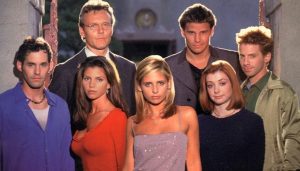 Reports that internal resistance played a role only make things more complicated.
When a show fails because audiences reject it, that’s one thing. When it’s cut down because someone in power simply didn’t believe in it… that hits differently.
It raises questions about how many potentially great ideas never make it past that gatekeeping stage. How many creative risks are quietly buried because they don’t align with someone’s personal taste or vision.
And with something like Buffy, a franchise that thrives on emotional connection and bold storytelling, that kind of interference feels especially ironic.
After all, the original series was never the “safe” choice.
What we lost… and what we’ll never know
Maybe the new series would have been incredible.
Maybe it would have struggled to balance nostalgia with originality. Maybe it would have divided fans, sparked debates, created new iconic moments… or failed to capture the magic entirely.
Any of those outcomes would have at least meant something.
But now, we’re left with nothing but the idea of what it could have been.
A new Slayer navigating a modern world. Updated metaphors for today’s anxieties. A chance to explore how the concept of “chosen one” evolves in an era that questions authority and identity more than ever.
Buffy was always at its best when it reflected the time it was made in. The late ‘90s version spoke to a generation figuring itself out. A 2020s version could have done the same, in a completely different way.
We don’t get to see that version.
The strange afterlife of canceled shows
Ironically, cancellations like this sometimes give projects a kind of mythic status.
There’s now a lost Buffy pilot out there somewhere, finished, unseen, and quietly sitting in a vault. That alone will keep curiosity alive. Fans will wonder what it looked like, how it felt, whether it captured even a fraction of the original’s spirit.
And in a weird way, that mystery might keep the idea of a revival alive longer than an actual release would have.
Because once something is real, it can be judged.
But when it’s taken away before it arrives, it becomes something else entirely… possibility.
Why Buffy still matters
If there’s one clear takeaway from all of this, it’s that Buffy still holds a place in pop culture that most shows never reach.
People care.
Not in a casual, “oh yeah, I remember that show” kind of way. In a deeper, more emotional sense. It’s a story that stuck with viewers, shaped conversations, and proved that genre TV could carry real weight.
That kind of legacy doesn’t fade easily.
And maybe that’s why this cancellation feels so heavy. It’s not just about losing a new show. It’s about losing a chance to see that legacy evolve.
The hardest thing in this world…
There’s a line from the original series that fans often come back to, the idea that living, really living, is the hardest thing in the world.
In a strange, almost poetic way, it applies here too.
Because part of being a fan today is dealing with these abrupt endings. Shows disappear. Projects vanish. Stories stop before they begin.
And all you can do is accept it, even when it doesn’t feel fair.
Still, the original Buffy the Vampire Slayer remains. Its impact is untouched. Its story is complete. And maybe, for now, that’s enough.
But it’s hard not to think about what might have been… and wish we had just gotten the chance to see it.