
InterPOP

About InterPOP
Posts by :
test post 2
test post 2 test post 2 test post 2 test post 2 test post 2 test post 2 test post 2 test post 2 test post 2 test post 2
Test post 1
Test post 1 Test post 1 Test post 1 Test post 1 Test post 1 Test post 1 Test post 1 Test post 1 Test post 1 Test post 1 Test post 1 Test post 1 Test post 1 Test post 1
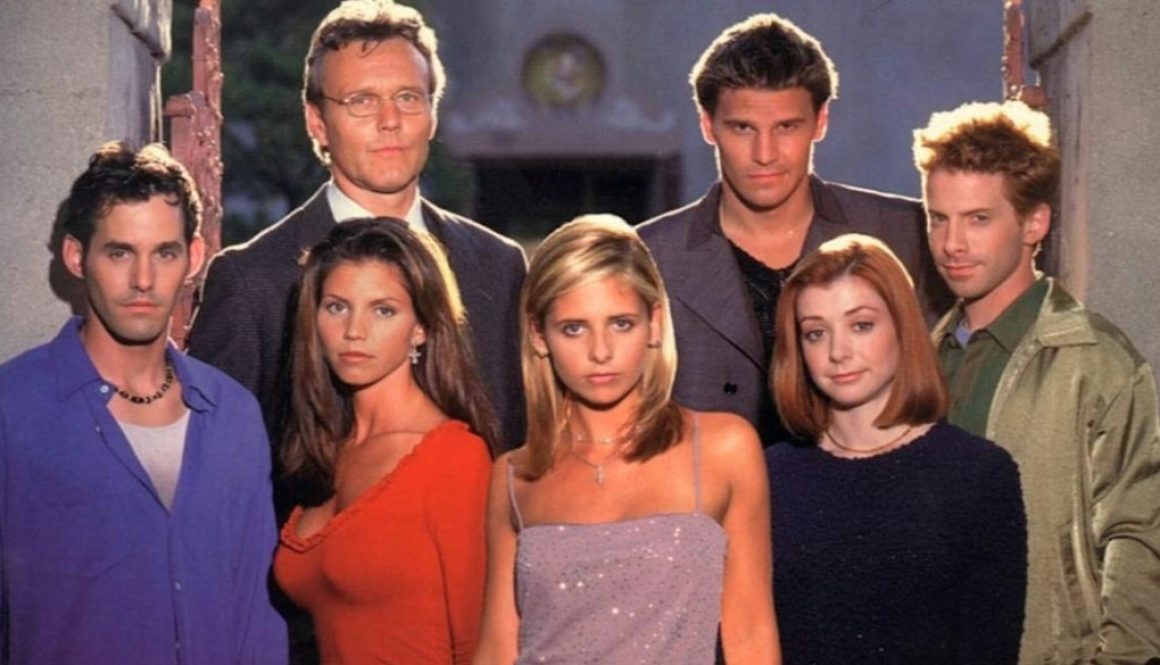
Buffy Reboot Cancellation: Why Hulu Betrayed Millions of Fans
There’s a particular kind of disappointment that only exists in the streaming era… the kind where something you were genuinely curious about vanishes before you even get to judge it for yourself.
That’s exactly what happened with the planned Buffy the Vampire Slayer revival at Hulu. Not canceled after a shaky first season. Not pulled after declining viewership. It never even made it to the starting line. A pilot was filmed, momentum was building, and then, just like that, it was gone.
And honestly, that kind of ending feels… unfinished in a way that’s hard to shake.
A legacy that wasn’t supposed to be easy to follow
 To understand why this cancellation hits differently, you have to go back to what Buffy the Vampire Slayer actually was.
On paper, it sounded like something disposable. A teenage girl fights vampires. Monster-of-the-week episodes. High school drama mixed with supernatural chaos. It could have easily been a forgettable late ‘90s experiment.
Instead, it became one of the most influential TV shows of its time.
Buffy wasn’t just about slaying demons. It was about growing up when everything feels like it’s out to destroy you… sometimes literally. High school wasn’t just stressful, it was a Hellmouth. Relationships weren’t just complicated, they were dangerous. Loss didn’t come neatly wrapped in lessons, it hit hard and lingered.
Episodes like “The Body” stripped away all supernatural elements to show raw grief. “Hush” proved you could tell a powerful story with almost no dialogue. Season arcs tackled identity, addiction, power, and responsibility in ways that felt surprisingly grounded for a show about vampires.
And at the center of it all was Sarah Michelle Gellar, whose portrayal of Buffy balanced strength with vulnerability in a way that made the character feel real, not mythic.
So when you talk about reviving Buffy, you’re not just rebooting a brand. You’re stepping into something that meant a lot to people, and still does.
The promise of New Sunnydale
That’s what made the idea of a new version, often referred to as New Sunnydale, so intriguing.
This wasn’t just a lazy remake of the original story. The concept suggested a passing of the torch, a new Slayer for a new generation. Ryan Kiera Armstrong was set to take on that role, bringing a fresh perspective into a universe that’s always been about reinvention.
Behind the scenes, there were real reasons to pay attention. Chloé Zhao, known for her atmospheric storytelling and character-driven approach, was attached to direct. The Zuckerman sisters were involved creatively. And perhaps most telling of all, Sarah Michelle Gellar wasn’t distancing herself from the idea, she was openly supportive.
That matters.
Because for years, reviving Buffy felt almost taboo. The original series had ended on a note that felt complete, expanding the idea of “the chosen one” into something more communal. Trying to revisit that world without care could have easily felt hollow.
But this version, at least on paper, sounded like it understood the assignment.
Canceled before it could even speak
And then… silence.
No trailer. No teaser. No early reactions. Just the news that it wouldn’t be moving forward.
In the old TV model, that kind of cancellation would be rare. Networks typically needed to air something to see how audiences responded. Even failures got their moment. They lived, briefly, and then disappeared.
Streaming doesn’t work that way.
Now, decisions are often made behind closed doors, based on internal metrics, executive opinions, and strategic shifts that the public never fully sees. A project can be filmed, edited, and still never reach viewers.
That’s what makes this situation so frustrating. There’s no closure. No way to say, “Well, at least we saw what they were trying to do.”
Instead, all that remains is speculation.
The uncomfortable role of executive influence
 Reports that internal resistance played a role only make things more complicated.
When a show fails because audiences reject it, that’s one thing. When it’s cut down because someone in power simply didn’t believe in it… that hits differently.
It raises questions about how many potentially great ideas never make it past that gatekeeping stage. How many creative risks are quietly buried because they don’t align with someone’s personal taste or vision.
And with something like Buffy, a franchise that thrives on emotional connection and bold storytelling, that kind of interference feels especially ironic.
After all, the original series was never the “safe” choice.
What we lost… and what we’ll never know
Maybe the new series would have been incredible.
Maybe it would have struggled to balance nostalgia with originality. Maybe it would have divided fans, sparked debates, created new iconic moments… or failed to capture the magic entirely.
Any of those outcomes would have at least meant something.
But now, we’re left with nothing but the idea of what it could have been.
A new Slayer navigating a modern world. Updated metaphors for today’s anxieties. A chance to explore how the concept of “chosen one” evolves in an era that questions authority and identity more than ever.
Buffy was always at its best when it reflected the time it was made in. The late ‘90s version spoke to a generation figuring itself out. A 2020s version could have done the same, in a completely different way.
We don’t get to see that version.
The strange afterlife of canceled shows
Ironically, cancellations like this sometimes give projects a kind of mythic status.
There’s now a lost Buffy pilot out there somewhere, finished, unseen, and quietly sitting in a vault. That alone will keep curiosity alive. Fans will wonder what it looked like, how it felt, whether it captured even a fraction of the original’s spirit.
And in a weird way, that mystery might keep the idea of a revival alive longer than an actual release would have.
Because once something is real, it can be judged.
But when it’s taken away before it arrives, it becomes something else entirely… possibility.
Why Buffy still matters
If there’s one clear takeaway from all of this, it’s that Buffy still holds a place in pop culture that most shows never reach.
People care.
Not in a casual, “oh yeah, I remember that show” kind of way. In a deeper, more emotional sense. It’s a story that stuck with viewers, shaped conversations, and proved that genre TV could carry real weight.
That kind of legacy doesn’t fade easily.
And maybe that’s why this cancellation feels so heavy. It’s not just about losing a new show. It’s about losing a chance to see that legacy evolve.
The hardest thing in this world…
There’s a line from the original series that fans often come back to, the idea that living, really living, is the hardest thing in the world.
In a strange, almost poetic way, it applies here too.
Because part of being a fan today is dealing with these abrupt endings. Shows disappear. Projects vanish. Stories stop before they begin.
And all you can do is accept it, even when it doesn’t feel fair.
Still, the original Buffy the Vampire Slayer remains. Its impact is untouched. Its story is complete. And maybe, for now, that’s enough.
But it’s hard not to think about what might have been… and wish we had just gotten the chance to see it.
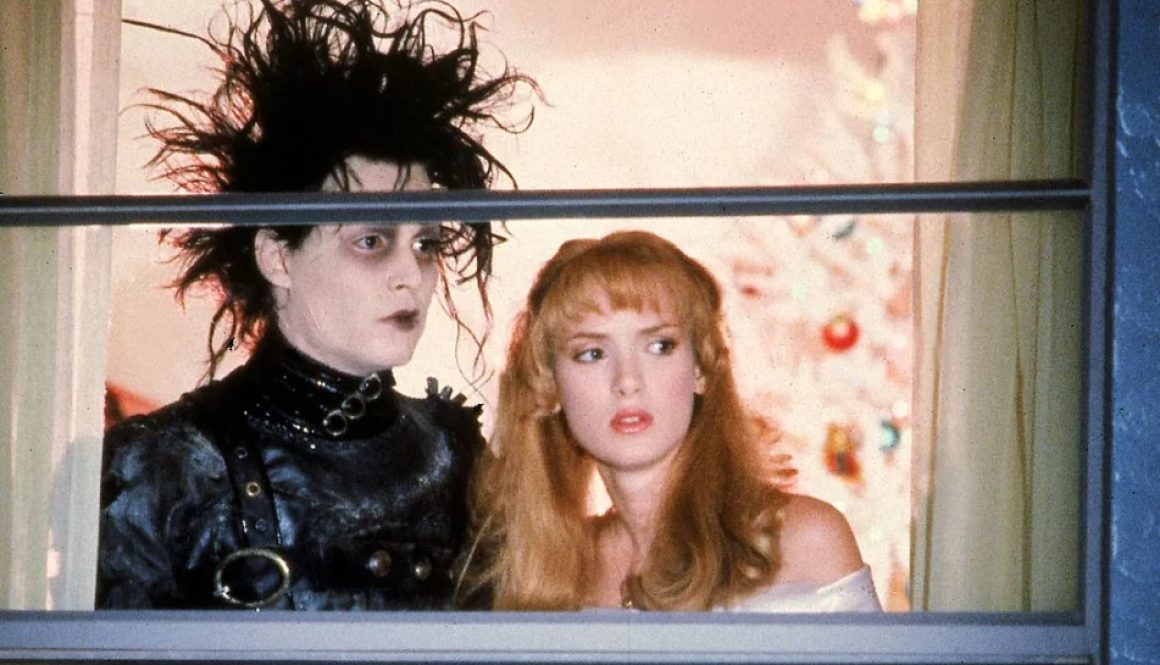
Edward Scissorhands: 30 Weird and Fascinating Facts
Edward Scissorhands: One of Johnny Depp’s Best Films
Picture this: pastel-colored houses, gossiping neighbors, and one very shy man who trims hedges with his hands. That’s Edward Scissorhands, the strange and beautiful 1990 film that looked like a dream but felt like heartbreak.
Directed by Tim Burton, the movie turned an offbeat idea into one of cinema’s most memorable modern fables. It’s both romantic and eerie, funny and sad. If you’ve ever felt like you didn’t quite fit in, Edward probably speaks your language.
Let’s explore thirty fascinating facts about Edward Scissorhands, followed by a reflection on why it continues to cut so deep (pun totally intended).
30 Facts About Edward Scissorhands
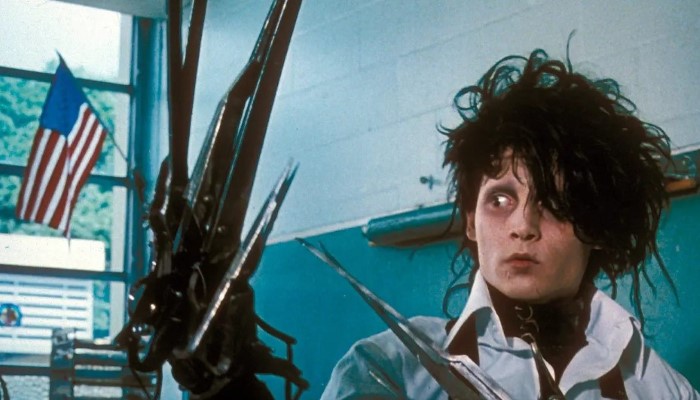
1. Edward Scissorhands premiered in December 1990.
It was released by 20th Century Fox and quickly became both a critical and commercial success, earning over $80 million worldwide.
2. Tim Burton directed and co-wrote the story.
Burton developed the idea from a childhood drawing of a thin, sad figure with scissors for hands. That sketch eventually became the movie’s emotional center.
3. Caroline Thompson wrote the screenplay.
Burton admired her earlier script for The Addams Family and invited her to shape his concept into a full story. Thompson’s writing gave the film its poetic tone.
4. Johnny Depp starred as Edward.
Before this film, Depp was known mostly for teen roles. His performance as Edward marked the beginning of a long creative partnership with Burton.
5. Winona Ryder played Kim Boggs.
Ryder’s mix of sweetness and sincerity made Kim a perfect counterbalance to Edward’s awkward innocence. She was also dating Depp at the time, which gave their on-screen chemistry extra spark.
6. The character of Edward was inspired partly by Frankenstein’s monster.
Burton saw Edward as a modern Frankenstein figure: created by a man, misunderstood by society, and searching for love.
7. Vincent Price played The Inventor.
This was Price’s final on-screen role. Burton had admired him for years and wanted to pay tribute to his legacy in gothic cinema.
8. The Inventor’s castle was modeled after classic horror films.
The production design drew inspiration from old Universal monster movies and German expressionist sets from the 1920s.
9. The pastel suburb was filmed in Florida.
Most of the suburban scenes were shot in a real neighborhood in Lutz, Florida, which the crew repainted to achieve that candy-colored perfection.
10. The cast and crew endured intense heat during filming.
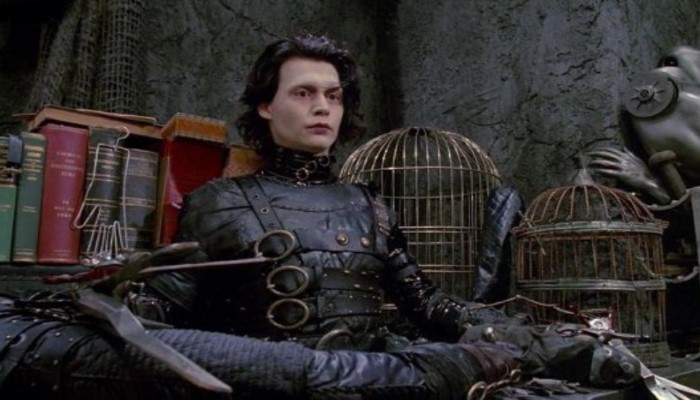
The temperature often exceeded 100°F, making Depp’s black leather costume a nightmare to wear. He reportedly lost several pounds during production. That’s what I call dedication, thus making this one of the best 1990s movies of all time.
11. Edward’s costume was made of real leather and metal.
Designed by Colleen Atwood, it included dozens of buckles and straps. Depp said it made him feel both trapped and empowered, which fit the character perfectly.
12. The scissor hands were built from lightweight fiberglass.
They were designed to look dangerous but function safely. Depp learned to perform delicate movements with them to make Edward appear gentle despite his blades.
13. Tim Burton’s childhood in Burbank inspired the movie.
He grew up in a sunny, cookie-cutter neighborhood and often felt out of place. The story became his way of expressing that sense of isolation.
14. The film’s score was composed by Danny Elfman.
Elfman’s hauntingly beautiful soundtrack became one of his most acclaimed works, filled with choirs and whimsical melodies that capture the movie’s bittersweet tone.
15. The opening scene features a snow motif that wasn’t in the original script.
Burton added the idea of snow as a symbol of Edward’s loneliness and creativity. It became one of the most iconic visual elements of the movie.
16. Depp barely spoke during the film.
Edward has only about 150 words of dialogue in total. Burton believed silence would make the character more sympathetic and mysterious. It kind of makes you want an Edward Scissorhands sequel just to hear him speak a little more.
17. The role almost went to Tom Cruise.
Other actors considered included Tom Hanks and Robert Downey Jr., but Burton felt Depp brought the right combination of vulnerability and quiet intensity.
18. Winona Ryder wasn’t the only cast member from Burton’s previous films.
Dianne Wiest, Alan Arkin, and Catherine O’Hara also helped ground the story with strong performances that balanced comedy and pathos.
19. The neighborhood gossip scene was partly improvised.
Burton encouraged the actors to exaggerate suburban stereotypes. Their over-the-top chatter helped make the community feel both funny and unsettling.
20. The hedge sculptures were real.
A team of landscape artists created large foam and wire hedges, then sculpted them into animal and human shapes for Edward’s trimming scenes.
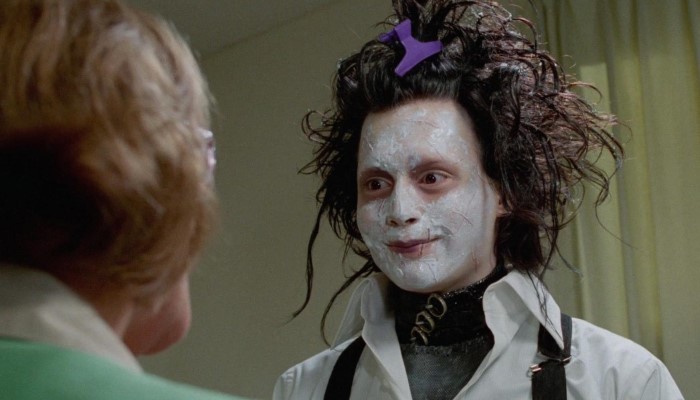
21. Edward’s topiary art symbolized creativity within constraint.
The idea was that even though Edward was built to cut, he could also use that limitation to create beauty. It’s a quiet metaphor for artistic expression.
22. The ice dance scene was filmed with practical effects.
They used real ice shavings, giant fans, and special lighting to make it look like snow was falling. That sequence became one of Burton’s favorite moments in his career.
23. The production design used strong contrasts of light and color.
The bright, cheerful suburb clashes visually with the dark, shadowy castle, emphasizing Edward’s sense of alienation.
24. The Boggs house interior was built on a soundstage.
That allowed the crew to control lighting and rearrange walls for camera movement. It also helped capture the pastel dreamlike quality of the scenes.
25. The movie subtly critiques suburban conformity.
Burton used the uniform houses and identical families to highlight how communities often reject those who don’t fit their mold. These subtle things reminds us that Tim Burton is one of the best directors of our era.
26. It was nominated for an Academy Award for Best Makeup.
Although it didn’t win, the film’s artistry was widely praised for blending fantasy and realism in a visually seamless way.
27. The snow at the end was created using soap flakes.
Those tiny flakes shimmer beautifully on camera, creating a magical look that perfectly complements the movie’s emotional finale.
28. The film’s final line connects to the entire story’s theme.
Kim’s line, “Sometimes you can still catch me dancing in it,” reminds viewers that creativity and love can leave traces long after they’re gone.
29. The movie’s critical reception improved over time.
While early reviews were mixed, it has since been recognized as one of Burton’s most personal and enduring works.
30. Edward Scissorhands has become a modern classic.
It remains a favorite among film students, artists, and dreamers. Its influence can be seen in countless works that blend melancholy with magic.
A Modern Fairy Tale with Scars
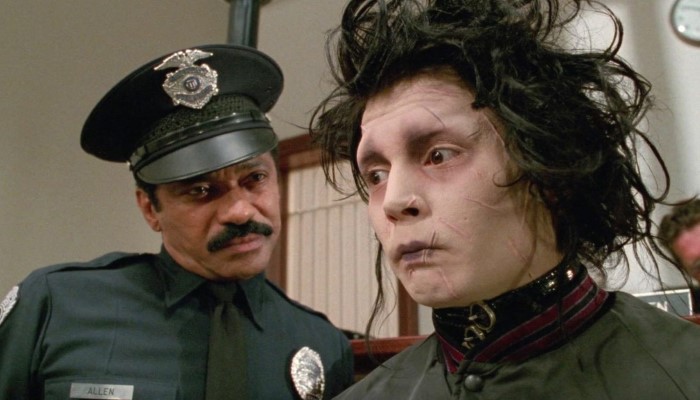
Edward Scissorhands might look like a gothic fantasy, but beneath the leather and lace lies a deeply human story. It’s about loneliness, kindness, and the pain of being different in a world obsessed with sameness. Burton used the film to express how childhood isolation can follow you into adulthood, shaping how you love and create.
The film’s power comes from its contradictions. It’s bright but sad, funny but tragic. The neighborhood feels safe but suffocating. Edward’s creation is both miraculous and heartbreaking. The Inventor gave him hands that can craft beauty but never touch what he loves. It’s the kind of poetic irony that hits harder the older you get.
What Makes Edward Scissorhands So Great
Burton’s direction gives the story a painterly quality. Every frame feels like an illustration from a storybook: soft pastels clashing with gothic shadows. The score by Danny Elfman elevates that feeling even more, turning every moment of tenderness or fear into something mythic.
Johnny Depp’s performance is what ties it all together. His wide-eyed innocence turns Edward into more than just a tragic figure. He’s art personified: misunderstood, fragile, and quietly transformative. The way he moves, hesitant yet graceful, feels choreographed to heartbreak.
Themes and Emotional Depth
At its core, Edward Scissorhands is about love and acceptance. It asks whether society truly values kindness or only conformity. The people in the pastel neighborhood welcome Edward at first because he’s useful, but once they can’t control him, they reject him. The movie doesn’t preach; it simply shows how cruelty often hides behind polite smiles.
The romance between Edward and Kim is another reason the film endures. Their connection feels innocent and doomed, like something out of a fairy tale written in snowflakes. When she dances beneath the ice, it becomes one of cinema’s most beautiful metaphors for fleeting love.
Edward Scissorhands remains one of Burton’s defining works, and it helped establish a new kind of film language…one where the weird, lonely outsider could finally take center stage. It paved the way for later projects like Big Fish, Frankenweenie, and Corpse Bride.
It also inspired countless artists to embrace vulnerability and difference. You can see traces of Edward’s influence in fashion, music videos, and modern gothic art. His silhouette, with that wild hair and gloved blades, has become an icon of creative individuality.
More than thirty years later, Edward Scissorhands still feels timeless. Its mixture of melancholy, beauty, and suburban absurdity gives it a dreamlike quality few films ever achieve. The story reminds us that art, like Edward himself, often comes from a place of pain. Yet when that pain is turned into creation, it becomes something unforgettable.
X-Files 2026 Reboot: Will Fox Mulder and Dana Scully Return?
Some TV shows age like milk. Others age like a mysterious VHS tape you found in a dusty box in the attic, you pop it in “just for a minute,” and suddenly three hours vanish while eerie music plays in the background.
That second category belongs to The X-Files.
For a lot of 90s kids and teens, this show was not just television. It was a weekly ritual of paranoia. The lights dimmed, the intro theme whispered something unsettling into your brain, and suddenly every creak in the house sounded like it might be an alien investigator checking your fridge.
Decades later, the question remains… what exactly made The X-Files so special, and could it ever truly return?
Let’s open the case file.
The Perfect Storm of 90s Weirdness
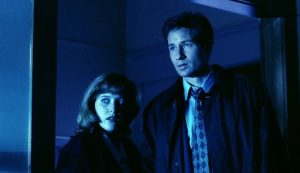 When The X-Files premiered in 1993 on Fox Broadcasting Company, television was a very different landscape. Sci-fi existed, sure, but it often lived in neat little boxes. Either you were watching space operas like Star Trek: The Next Generation or monster-of-the-week shows that wrapped everything up in 45 minutes.
Then along came FBI agents Fox Mulder and Dana Scully, played by David Duchovny and Gillian Anderson.
Mulder believed everything.
Aliens. Government conspiracies. Psychic powers. Ancient monsters living in the sewer system. If someone said they saw Bigfoot driving a UFO while reading their mind, Mulder would probably say, “Interesting… tell me more.”
Scully, on the other hand, was the rational scientist. She demanded evidence. She questioned every theory. She basically served as the audience member who had not slept for three days and desperately wanted a logical explanation.
That dynamic was lightning in a bottle. Believer versus skeptic. Chaos versus reason.
And the show never treated the weird stuff like a joke. It leaned into it with a straight face, which somehow made it even creepier.
Monster of the Week… and the Big Conspiracy
One of the genius tricks of The X-Files was its dual storytelling style.
Some episodes were self-contained horror stories, the famous “monster of the week.” These could feature anything from stretchy sewer mutants to killer insects to terrifying creatures that live in forests and ruin camping trips forever.
Then there was the bigger arc.
Aliens.
Government cover-ups.
Shadowy organizations that definitely had too many dark hallways in their offices.
This overarching mythology pulled viewers into a long mystery that lasted for years. It made the show feel bigger than just a procedural. Each episode hinted that the truth was buried somewhere deeper.
Sometimes the mythology got messy, sure. Even devoted fans occasionally needed a corkboard, red string, and a strong cup of coffee to track it all.
Still, that complexity became part of the fun.
The Atmosphere Was Half the Magic
 Plenty of shows have paranormal plots.
Few have the mood of The X-Files.
The lighting was dim. The forests were foggy. Government offices looked like they had not replaced a lightbulb since 1973.
Even the music worked psychological wizardry on the viewer. That eerie theme song by Mark Snow practically trained your brain to feel uneasy within five seconds.
The show also loved quiet moments. Long silences. Characters staring at strange evidence while something hummed ominously in the background.
Modern television often moves fast, dialogue flying at warp speed.
The X-Files sometimes just… lingered.
And that patience made it creepy.
Mulder and Scully Became Cultural Icons
Chemistry between actors is one of those mysterious forces in entertainment. You cannot engineer it in a lab. It either exists or it does not.
Mulder and Scully had it in abundance.
Their relationship balanced humor, skepticism, loyalty, and just enough unresolved tension to keep viewers hooked for years. They trusted each other even when they disagreed, which happened constantly.
Fans debated their relationship endlessly. Were they partners? Friends? Something more?
The show smartly played the long game.
Meanwhile, Scully became one of television’s most influential characters. Many women who later pursued careers in science or medicine have mentioned the “Scully effect,” inspired by her calm, analytical approach to the supernatural.
A fictional FBI agent helping influence real-world STEM careers… television occasionally does strange and wonderful things.
Not Everything Aged Perfectly
Let’s keep the nostalgia goggles slightly fog-free.
Some aspects of The X-Files feel very 1990s.
The pacing can be slower than what modern viewers expect. Some mythology episodes became tangled enough to make your brain perform interpretive dance.
Later seasons also struggled when the core cast shifted around. Once Mulder and Scully were not consistently paired together, the magic dimmed a bit.
Then there were the revival seasons in 2016 and 2018.
Fans were excited, naturally. Returning to this strange world sounded like a dream.
The results were… mixed.
Some episodes captured the old spirit beautifully. Others felt like the show trying to remember what made itself special in the first place.
Nostalgia is powerful, but it cannot always recreate the exact cultural moment that made something work.
Could The X-Files Ever Truly Return?
 The idea of bringing The X-Files back to television has been floating around for a few years now, and it sounds like the project is finally starting to take shape.
Back in March 2023, series creator Chris Carter revealed that filmmaker Ryan Coogler was developing a reboot of the classic sci-fi series. At the time, details were pretty thin, but the news immediately caught fans’ attention. Interestingly, Carter later clarified in February 2024 that he would not be directly involved in producing the new show.
Coogler eventually confirmed that the reboot was moving forward. In April 2025, he said the project would actually be the next thing he planned to work on.
By the end of 2025, Coogler gave fans a better idea of what the reboot might look like. He explained that the series would keep the storytelling style that made the original famous, mixing standalone “monster-of-the-week” episodes with a larger conspiracy storyline that develops across the season.
Then, in February 2026, the project reached a big milestone when Hulu officially ordered a pilot episode. Coogler is expected to write and direct that first episode himself. The cast will include Danielle Deadwyler, who will play one of two FBI agents assigned to investigate mysterious cases tied to unexplained phenomena.
This effectively means that Mulder and Scully will not return, at least not as regulars. There’s always the possibility of making guest appearances, though.
The show’s premise centers on these agents forming an unexpected partnership while working in a division that had previously been shut down.
Behind the scenes, Jennifer Yale will serve as the showrunner, guiding the overall direction of the series. Although Carter isn’t involved in the day-to-day production, he will still have a role as one of the executive producers.
Why Fans Still Return to It
Despite its imperfections, The X-Files continues to attract new viewers.
Part of that comes down to curiosity. Younger audiences want to see the show that influenced so many later series.
You can trace its DNA in everything from Fringe to Supernatural to even more grounded mystery shows.
But nostalgia fans keep coming back for another reason.
The show made the world feel larger.
Every forest could hide something strange. Every government building might contain secrets. Every weird headline in the newspaper could be the start of a Mulder and Scully investigation.
And that sense of possibility, mixed with just a little fear, never really goes out of style.
Television rarely makes you look at a dark hallway and think, “Maybe an alien is standing there.”
The X-Files managed it weekly.
Which is probably why so many fans still leave the porch light on… just in case.

30 Weird Facts About Bloodsport
Let’s look at one of the best 1980s movies, shall we?
Back in the late 1980s, before every action star was armed with CGI explosions and superhero suits, there was Bloodsport.
It was raw, sweaty, and filmed on location in Hong Kong, giving audiences a front-row seat to a brutal underground tournament known as the Kumite.
The movie starred a young Jean-Claude Van Damme as Frank Dux, a character supposedly based on a real person who claimed to have fought in secret full-contact martial arts battles.
Whether or not that part was true didn’t really matter to the audiences. What mattered was that Bloodsport looked and felt like something dangerous, something hidden, and something uniquely cool. Not to mention, it was one ofJean-Claude Van Damme’s best films.
It was a perfect mix of 80s cheese, martial arts bravado, and underdog storytelling that turned Van Damme into a legend. Let’s explore thirty detailed facts about Bloodsport, followed by my opinion on what made it so memorable.
30 Facts About Bloodsport

1. Bloodsport was released in 1988.
It premiered on February 26, 1988, and became a surprise hit. The movie was made on a modest budget of around $1.5 million but went on to earn nearly $50 million worldwide, proving that audiences had a hunger for raw martial arts action.
2. The film was inspired by supposed real-life events.
The story is based on the claims of Frank Dux, a martial artist who said he participated in an underground tournament called the Kumite. Over the years, many have questioned whether the tournament ever existed, but those doubts only added to the movie’s mystique.
3. Jean-Claude Van Damme was still a rising star when he got the role.
Before Bloodsport, Van Damme had worked mostly as a stuntman and minor actor. He landed the lead after impressing producers with a high kick during an audition. His physical charisma and fluid movement made him perfect for the part.
4. Bloodsport was directed by Newt Arnold.
Arnold had worked as an assistant director on big productions like The Godfather Part II and Blade Runner. Bloodsport was one of his few times directing, and his experience helped keep the chaotic Hong Kong shoot on track.
5. The film was shot almost entirely in Hong Kong.
Most of the fighting scenes took place in Kowloon, capturing the crowded streets, neon lights, and gritty atmosphere that became the movie’s signature look. The authenticity gave it a sense of exotic realism that set it apart from other martial arts films of the era.
6. Van Damme performed nearly all his own stunts.
He was known for insisting on full physical authenticity. That included real splits, roundhouse kicks, and jumping attacks. He trained for months before filming to ensure he could perform everything without doubles.
7. The movie features the famous “Dim Mak” scene.
Early in the film, Dux proves his skill by breaking the bottom brick in a stacked pile without damaging the ones above it. The “death touch” or Dim Mak became one of the most iconic moments of Van Damme’s career and cemented his image as a martial arts phenomenon.
8. The Kumite set design was based on underground fighting myths.
Production designer Jackson De Govia modeled the arena after secret fighting pits and ancient temples, giving it a mystical atmosphere. The dim lighting, rhythmic chanting, and multicultural audience gave the tournament an almost religious feel.
9. The villain, Chong Li, was played by Bolo Yeung.
Yeung was already known for appearing alongside Bruce Lee in Enter the Dragon. His muscular physique and intimidating glare made him a perfect antagonist. His line “You are next!” remains a fan favorite.
10. The film’s fight choreography was heavily stylized.

Each fighter represented a different martial art, from Muay Thai to Capoeira. That diversity gave the movie variety and introduced many viewers to fighting styles they had never seen before.
11. The movie’s editor, Carl Kress, previously won an Oscar.
Kress had co-won an Academy Award for editing The Towering Inferno in 1974. His experience helped shape the fast pacing and visual rhythm that made Bloodsport so thrilling to watch.
12. Van Damme helped re-edit the film himself.
After seeing an early cut, Van Damme reportedly told producers it needed better rhythm. He spent time in the editing room improving the timing of the fight scenes, which many believe helped make the movie more exciting.
13. The training montage became a genre-defining moment.
Like Rocky before it, Bloodsport’s training scenes show Dux mastering balance, flexibility, and pain tolerance. The imagery of Van Damme doing splits between two chairs became instantly iconic.
14. The soundtrack was composed by Paul Hertzog.
Hertzog’s synth-heavy score captured the energy and emotion of the film perfectly. The songs “Fight to Survive” and “On My Own… Alone” by Stan Bush became unofficial anthems for martial arts fans everywhere.
15. The film introduced Western audiences to the idea of full-contact martial arts.
Before Bloodsport, most martial arts movies featured choreographed fights with limited realism. This film emphasized power, speed, and full physical contact, making it feel more raw and dangerous.
16. The movie was initially considered a direct-to-video release.
Executives at Cannon Films didn’t expect it to succeed in theaters. Once they saw early audience reactions, they changed course and gave it a wide release—and the gamble paid off.
17. Van Damme’s English dialogue was rewritten several times.
Because of his thick accent, some lines were simplified during shooting. Yet his sincerity and body language made him more expressive than words could.
18. The real Frank Dux worked as a consultant on the film.
He trained Van Damme and helped choreograph fight sequences. While his claims about the Kumite were controversial, his technical input added credibility to the martial arts scenes.
19. The movie was banned in several countries for excessive violence.
Some nations in Asia and Europe restricted its release due to its bloody fights and bare-knuckle brutality. Ironically, that only made it more popular in underground VHS trading circles.
20. The film’s production company, Cannon Films, was famous for low-budget action.
Cannon specialized in fast, inexpensive movies starring martial arts or action heroes. Bloodsport stood out as one of their biggest critical and financial successes.
21. Donald Gibb played Ray Jackson, Dux’s tough but lovable ally.
Known for his role in Revenge of the Nerds, Gibb’s performance added comic relief and emotional depth. His friendship with Dux became one of the movie’s strongest subplots.
22. The movie popularized the term “Kumite.”
Before Bloodsport, few people outside martial arts circles had heard of it. Now it’s practically shorthand for any underground or no-rules fighting tournament in pop culture.
23. Filming wrapped earlier than expected.
Thanks to Van Damme’s efficiency and the compact shooting schedule, the crew finished several days ahead of time, which saved money and helped the movie meet its tight release window.
24. The slow-motion fight shots were deliberate.
They were used to emphasize emotion and power, not just spectacle. The slow zoom-ins on sweat and blood helped dramatize every punch and kick.
25. The final fight was filmed over several days.
Van Damme and Bolo Yeung rehearsed meticulously to keep it safe yet intense. Their choreography balanced elegance and brutality, resulting in one of the best one-on-one fights of the decade.
26. Critics initially dismissed the film.
Many reviewers called it “cheesy” or “plotless,” but martial arts fans embraced it completely. Over time, it became a cult classic, praised for its sincerity and entertainment value.
27. The film helped launch the UFC era indirectly.
Mixed martial arts pioneers have cited Bloodsport as early inspiration for showcasing real, full-contact fighting styles against each other. The movie’s concept was ahead of its time.
28. Van Damme’s signature split became his brand.
After audiences saw him do it in Bloodsport, he began including it in nearly every film. It became his signature move, much like Bruce Lee’s nunchaku or Schwarzenegger’s one-liners.
29. The film spawned several sequels.
Three official follow-ups were made, though none starred Van Damme. Bloodsport II, III, and The Next Kumite continued the tournament storyline with mixed results. And there’s also Lady Bloodfight, if you wish to count that one.
30. Bloodsport remains one of Van Damme’s most beloved films.
Fans consider it his breakout moment, the movie that turned him into a global action icon. Decades later, it’s still quoted, referenced, and rewatched by martial arts enthusiasts everywhere.
The Fight That Started It All

Bloodsport wasn’t just another action movie. It was a bridge between the martial arts fantasies of Bruce Lee’s era and the high-octane action movies that dominated the 1990s. It took a simple story—a disciplined fighter entering a secret tournament—and turned it into a myth about honor, focus, and sheer willpower.
Jean-Claude Van Damme carried the film not through dialogue but through physical storytelling. His movements had a grace that bordered on ballet, yet every kick landed with impact. The camera worshiped his athleticism, and his vulnerability gave the movie unexpected heart.
Why Bloodsport Endures
One reason Bloodsport still resonates is that it feels handmade. The sweat is real, the hits look painful, and the soundtrack screams pure 80s intensity. It was made before digital trickery became standard, which gives every scene a sense of authenticity that modern fight movies often lack.
The movie also hit the right emotional beats. Frank Dux wasn’t fighting for fame or money; he fought for honor and self-respect. That sincerity, combined with the film’s relentless pacing, made it endlessly rewatchable. Even now, martial arts fans can’t help quoting “Kumite! Kumite!” like a ritual chant.
And as you may know, numerous Bloodsport sequels were made over time. While they may not have the same impact as the original, the Bloodsport franchise is still considered one of the best 80s action movies.
The Legacy of Van Damme
Van Damme became the face of a new kind of hero: one who was athletic, foreign, and a little mysterious. Bloodsport made him the spiritual successor to Bruce Lee while paving the way for films like Kickboxer and Lionheart. His mix of vulnerability and strength connected with audiences who were tired of robotic muscle-bound heroes.
What It Gave to Pop Culture
Bloodsport influenced everything from video games like Mortal Kombat to later fight films like Ong-Bak. The concept of a secret underground tournament became an enduring trope across action cinema. Even today, you can find echoes of it in movies like John Wick and shows that celebrate martial arts discipline.
What makes Bloodsport timeless is its honesty. It never pretended to be sophisticated. It promised high kicks, bruised egos, and triumph through pain—and it delivered. Beneath the macho posturing, there’s something pure about Frank Dux’s journey. It’s about proving yourself not to others, but to yourself.
More than three decades later, Bloodsport remains the movie that martial arts fans return to when they want to feel that raw adrenaline again. It’s sweaty, simple, and somehow poetic. Just like the Kumite itself, it’s an experience you survive, remember, and secretly wish you could enter…if only to whisper, “I am the next.”

Everything Coming to Netflix in March 2026
March 2026 is not playing around. If you are searching for the best Netflix shows of 2026 or trying to keep up with all the Netflix shows coming March 2026, this month’s lineup is stacked with action, prestige drama, anime, documentaries, live events, and a healthy dose of chaos. Your watchlist might need a spreadsheet.
Below, you’ll find everything arriving on Netflix in March to help you decide what to stream first.
What’s Coming to Netflix on March 1st
- Born a Champion (2021)
A seasoned Brazilian jiu jitsu fighter faces the sting of defeat and the suspicion of foul play, pushing him back into the ring for redemption. This one blends martial arts grit with emotional stakes about honor and legacy. - Deepwater Horizon (2016)
A tense dramatization of the catastrophic oil rig explosion that shook the world. The film focuses on the workers caught in the disaster, highlighting bravery, sacrifice, and split second decisions under extreme pressure. - Honk for Jesus: Save Your Soul (2022)
A satirical look at a fallen megachurch empire trying to rebuild its image. With sharp humor and uncomfortable moments, it pokes at celebrity culture, faith, and public redemption. - Jurassic World (2015)
A fully operational dinosaur theme park becomes a nightmare when a genetically engineered predator proves impossible to control. Corporate ambition meets prehistoric teeth. - Jurassic World: Fallen Kingdom (2018)
As dinosaurs face extinction again, a rescue mission uncovers a darker conspiracy involving cloning and black market trafficking. The question is no longer whether dinosaurs should exist, but who controls them. - The Actors Awards Presented by SAG-AFTRA (2026) LIVE
Hollywood’s biggest stars gather to celebrate outstanding performances in film and television, streamed live for fans who love red carpets and acceptance speeches. - The Green Knight (2021)
A visually stunning and moody retelling of an Arthurian legend, following a young knight who accepts a mysterious challenge that tests his courage, morality, and sense of identity.
Jurassic World 2015 Trailer:
What’s Coming to Netflix on March 2nd
- Gabby’s Dollhouse (Season 13) Netflix Original
The colorful preschool series returns with more imaginative adventures, musical numbers, and gentle lessons about creativity and teamwork. - Hotel Mumbai (2018)
A gripping portrayal of the 2008 terror attacks in Mumbai, focusing on hotel staff and guests fighting to survive in the face of relentless danger. - Jurassic World: Dominion (2022)
Dinosaurs now roam a world shared with humans, creating ecological tension and ethical dilemmas as a biotech scheme threatens global balance. - Wind Breaker (Season 1)
An anime about a tough new student who disrupts a high school’s delicate power structure, challenging rival factions and redefining strength.
What’s Coming to Netflix on March 4th
- Blue Therapy (Season 1) Netflix Original
Couples step outside their comfort zones to confront relationship issues head on, revealing raw emotions and difficult truths along the way. - Street Flow 3 (2026) Netflix Original
The final chapter in the French trilogy follows brothers trying to escape the weight of their past crimes, wrestling with grief and loyalty in a harsh world.
What’s Coming to Netflix on March 5th
- A Friend, A Murderer (Limited Series) Netflix Original
A Danish docuseries that explores how close friendships were shattered by shocking crimes, told through firsthand recollections and emotional reflections. - Re/Member: The Last Night (2025)
The chilling Japanese story continues as a group of young people confront supernatural terror tied to a deadly urban legend. - Vladimir (Limited Series) Netflix Original
A respected professor’s life begins to unravel when a complicated affair with a colleague spirals into obsession and personal collapse.
What’s Coming to Netflix on March 6th
- A Man Called Ove (2015)
A grumpy widower with strict routines finds his solitary life disrupted by new neighbors, leading to an unexpectedly warm story about second chances. - Boyfriend on Demand (Limited Series) Netflix Original
A romantic drama exploring digital connections, emotional longing, and the blurred lines between fantasy and reality. - Hello Bachhon (Season 1) Netflix Original
A Hindi drama centered on ambition, family expectations, and the everyday struggles that shape young lives. - Strangers in the Park (2026) Netflix Original
An Argentinian comedy built around awkward encounters and misunderstandings that spiral into hilarious consequences. - The Dinosaurs (Limited Series) Netflix Original
A sweeping docuseries that transports viewers back to the age of dinosaurs, blending science and cinematic storytelling. - The TikTok Killer (2026) Netflix Original
A Spanish true crime documentary investigating a disappearance linked to online fame and a popular social media figure. - War Machine (2026) Netflix Original
An elite military training exercise turns into a terrifying fight for survival when soldiers encounter an unexplainable threat with sci fi undertones.
The TikTok Killer clip:
What’s Coming to Netflix on March 7th
- Beastars (Season 3 – Final Part) Netflix Original
The anime’s final chapter dives deeper into identity, instinct, and social tension in a world of anthropomorphic animals. - Downton Abbey: The Grand Finale (2025)
The beloved period drama concludes with one last elegant story, revisiting familiar faces and long running relationships. - Girl From Nowhere: The Reset (Season 1)
A bold reboot that reimagines the dark anthology series with fresh twists and unsettling moral dilemmas.
What’s Coming to Netflix on March 9th
- Baby Einstein: Closer Look (Season 1)
Educational entertainment designed for young viewers, blending music, language, and visual learning. - Sesame Street (Volume 2) Netflix Original
More fun and educational adventures with beloved characters, mixing humor and heartfelt lessons.
What’s Coming to Netflix on March 10th
- ONE PIECE (Season 2) Netflix Original
The live action pirate saga continues as the Straw Hat crew venture further into dangerous seas, chasing treasure and freedom.
What’s Coming to Netflix on March 11th
- Age of Attraction (Season 1) Netflix Original
A dating competition series where singles test chemistry under unusual challenges designed to spark real connection. - Louis Theroux: Inside the Manosphere (2026) Netflix Original
The documentary filmmaker explores controversial online communities, speaking directly with influential figures and unpacking digital culture.
What’s Coming to Netflix on March 12th
- Love Is Blind: Sweden (Season 3) Netflix Original
The Swedish edition of the dating experiment returns, testing whether emotional connection can outlast physical attraction. - Virgin River (Season 7) Netflix Original
The small town drama continues with new emotional twists for Mel, Jack, and the residents of Virgin River.
Love is Blind Sweden (season one)
What’s Coming to Netflix on March 13th
- That Night (Limited Series) Netflix Original
A Spanish drama about a single mother whose vacation spirals into a murder investigation, pulling her family into deeper trouble.
What’s Coming to Netflix on March 14th
- Nobody 2 (2025)
Hutch Mansell is dragged back into his violent past, delivering more brutal action and dark humor. - The Bad Guardian (2024)
A woman battles a corrupt guardianship system after discovering her father is being exploited.
What’s Coming to Netflix on March 15th
- BlackBerry (2023)
A fast paced biopic chronicling the meteoric rise and dramatic fall of the smartphone pioneer that once dominated the tech world. - Gaslit by My Husband: The Morgan Metzer Story (2024)
A thriller inspired by real events, centering on a terrifying home invasion that raises chilling suspicions.
What’s Coming to Netflix on March 16th
- The Plastic Detox (2026) Netflix Original
A documentary following couples as they confront the hidden impact of microplastics on fertility and long term health.
What’s Coming to Netflix on March 17th
- Small Time Crooks (2000)
A comedic crime story about a failed heist that accidentally turns into a successful bakery business.
What’s Coming to Netflix on March 18th
- Furies (Season 2) Netflix Original
The French action series escalates with more betrayals, revenge plots, and high intensity confrontations. - Eva Lasting (Season 4) Netflix Original
The Colombian romantic drama reaches its final season, wrapping up heartfelt storylines and youthful dreams. - Radioactive Emergency (Limited Series) Netflix Original
A Brazilian drama inspired by true events, following experts racing to contain a devastating radiological crisis.
What’s Coming to Netflix on March 19th
- Beauty in Black (Season 2 – Part 2) Netflix Original
The drama deepens as long simmering tensions and secrets explode in the second half of the season. - Saw X (2023)
The horror franchise continues with more twisted moral tests and psychological traps. - Spiral: From The Book of Saw (2021)
A detective investigates a series of grisly crimes inspired by the infamous Jigsaw legacy. - STEEL BALL RUN JoJo’s Bizarre Adventure (Season 1) Netflix Original
A fresh anime arc filled with eccentric characters, high stakes races, and supernatural showdowns. - Unicorn Academy: Secrets Revealed (Chapter 1) Netflix Original
The animated fantasy series expands with new magical mysteries and friendships.
What’s Coming to Netflix on March 20th
- Peaky Blinders: The Immortal Man (2026) Netflix Original
The crime saga returns in film form, revisiting the Shelby empire and unfinished business. - Pokémon Horizons: Season 3: Rising Hope (Season 2) Netflix Original
The animated adventure continues with new regions, battles, and evolving friendships. - The Creator (2023)
A sci fi epic exploring a war between humanity and advanced artificial intelligence, centered on a soldier confronting impossible choices. - The Rise of the Red Hot Chili Peppers: Our Brother, Hillel (2026) Netflix Original
A documentary reflecting on the band’s early days and the lasting influence of its founding guitarist.
What’s Coming to Netflix on March 21st
- BTS THE COMEBACK LIVE | ARIRANG (2026) LIVE
A massive live concert event featuring one of the world’s biggest music groups. - The Bad Guys 2 (2025)
The animated crew reunites for another high stakes heist filled with humor and chaotic teamwork.
What’s Coming to Netflix on March 25th
- Heartbreak High (Season 3) Netflix Original
As graduation approaches, friendships are tested and secrets threaten to derail carefully laid plans.
What’s Coming to Netflix on March 26th
- 53 Sundays (2026) Netflix Original
A Spanish comedy centered on family chaos and escalating misunderstandings. - Detective Hole (Season 1) Netflix Original
A brooding Norwegian detective hunts dangerous criminals while battling personal demons. - MLB Opening Day 2026 LIVE
Baseball fans can catch live coverage as the New York Yankees face the San Francisco Giants to kick off the season. - Something Very Bad Is Going to Happen (Season 1) Netflix Original
A mystery horror series promising eerie tension and unsettling twists. - The Red Line (2026) Netflix Original
A Thai drama about three women taking revenge against a powerful scam network.
Something Very Bad is Going to Happen trailer:
What’s Coming to Netflix on March 27th
- 53 Sundays (2026) Netflix Original
The Spanish comedy returns for more family driven antics and escalating situations. - BTS: THE RETURN (2026) Netflix Original
A documentary chronicling the group’s journey back to the spotlight and the pressures of global fame.
What’s Coming to Netflix on March 28th
- Anemone (2025)
A quiet drama set in Northern England, following two estranged brothers attempting to reconnect in isolation.
With such a packed slate, March 2026 feels like a defining month for Netflix. From blockbuster sequels and award contenders to international dramas and live events, the Netflix shows coming March 2026 cover nearly every genre imaginable.
If you are building your list of the best Netflix shows of 2026, this month alone could fill it. Clear some space on that couch, because your streaming schedule just got very busy.

25 Awesome Facts About Braveheart
Among the best 90s movies, Braveheart is surely one of them
Few movies can make audiences cry, cheer, and quote the word “freedom” with such conviction decades after release. Braveheart did exactly that. Released in 1995, it told the story of William Wallace, a Scottish warrior who led his people in a rebellion against English rule during the 13th century.
Directed by and starring Mel Gibson, the film blended brutal battle scenes with themes of love, courage, and defiance. It was historical fiction at its most dramatic: part legend, part cinematic thunderstorm.
Whether you were there for the history, the blood, or the heart, Braveheart delivered something unforgettable.
Let’s dive into 25 facts about Braveheart, each with added background and juicy behind-the-scenes details. Afterward, we’ll look at what made it such a landmark in filmmaking and why its cry for freedom still echoes today.
25 Facts About Braveheart

1. The film was released in 1995.
Braveheart premiered on May 24, 1995. Despite a nearly three-hour runtime, it became a box office hit, earning over $200 million worldwide. That was no small feat for a historical drama during the blockbuster-heavy 90s, and one of Mel Gibson’s best movies without a doubt.
2. Mel Gibson directed and starred in the film.
Gibson’s best acting role was perhaps here in Braveheart. But did you know he played William Wallace, while also serving as the film’s director and producer? Balancing both roles was a massive undertaking. He initially didn’t want to star but studio executives insisted that his name would help sell the movie internationally.
3. The screenplay was written by Randall Wallace.
Interestingly, Randall Wallace is not related to William Wallace. He based the script on the 15th-century poem The Acts and Deeds of Sir William Wallace, Knight of Elderslie. The writer said he wanted to explore what drives an ordinary man to fight tyranny.
4. Filming took place mostly in Ireland.
Although the story is set in Scotland, the majority of battle scenes were filmed in Ireland for logistical and budget reasons. The Irish Army even provided thousands of soldiers as extras. Many of them later joked about playing both Scottish and English troops depending on the camera angle.
5. The production used real armor and handmade weapons.
To keep things authentic, the costume and props teams forged weapons using medieval techniques. Each sword weighed up to 6 pounds, and the actors spent weeks training to move convincingly with them.
6. The famous blue face paint wasn’t historically accurate.
Historians note that Scots of Wallace’s time did not wear war paint. The blue makeup was inspired by ancient Pictish warriors, used here as a visual symbol of rebellion and identity rather than historical fact.
7. The battle scenes were choreographed like dance sequences.
Over 1,500 extras participated in large-scale Braveheart fights, each one meticulously choreographed. Gibson wanted every clash of steel and splash of mud to feel real. The result was chaos that somehow looked cinematic and controlled.
8. The Battle of Stirling Bridge didn’t include an actual bridge.
In real history, Wallace won by using the narrow bridge to trap English forces. The filmmakers removed it because it limited camera angles. Ironically, it became one of the few battles ever filmed “without a bridge” in its title.
9. The film’s running time was originally much longer.
Talk about the longest movies in Hollywood, right? The first cut of Braveheart ran over four hours. Gibson eventually trimmed it to about 178 minutes. Some deleted scenes included more about Wallace’s early life and his relationship with Princess Isabelle.
10. Sophie Marceau played Princess Isabelle of France.

Her character was introduced to provide romantic balance and emotional depth. While historically inaccurate (the real Isabelle was a child during Wallace’s lifetime), her presence helped humanize the story.
11. The score was composed by James Horner.
Horner’s music became one of the most iconic soundtracks in film history. It features sweeping strings, Celtic flutes, and haunting themes that capture both the tenderness and tragedy of the story. The score remains one of Horner’s most beloved works.
12. Cinematographer John Toll won an Oscar for his work.
The Braveheart soundtrack was something out of this world. The film’s natural lighting and sweeping landscapes turned the Scottish countryside (and parts of Ireland) into a visual poem. Toll’s camera made mud, blood, and mist look strangely beautiful.
13. The film won five Academy Awards.
Braveheart took home Oscars for Best Picture, Best Director, Best Cinematography, Best Makeup, and Best Sound Editing. Gibson became only the second person after Kevin Costner to win both Best Director and Best Picture for the same film while also starring in it.
14. Mel Gibson did not expect the film to win.
In interviews, Gibson said he was shocked when Braveheart won Best Picture. He thought the violence and length would turn off the Academy. The surprise win helped solidify his reputation as a serious filmmaker, and it marked Braveheart as a top 90s film.
15. Many Scottish historians criticized its accuracy.
While the movie captured the spirit of rebellion, it took creative liberties with real events. Historians have pointed out anachronisms, invented characters, and exaggerated moments. Yet fans argue that emotional truth matters more than literal accuracy.
16. The crew struggled with unpredictable weather.
Ireland’s climate made filming a challenge. Rain would start and stop without warning, forcing the crew to reset scenes. Gibson decided to embrace the gloomy skies, saying the gray light added mood and realism.
17. The sword used by Wallace in the movie became legendary.
The prop sword was over five feet long and is now displayed in various film exhibitions. It’s one of the most recognizable weapons in movie history, symbolizing strength and freedom.
18. The film’s tagline “Every man dies, not every man really lives” wasn’t in the script.
The quote was created for marketing, but it perfectly captured the movie’s spirit. It has since been mistaken by many as an actual William Wallace quote.
19. The love story with Murron adds emotional weight.
Murron, played by Catherine McCormack, appears briefly but her death becomes the emotional spark for Wallace’s rebellion. Gibson said the love story was vital to make the violence matter; to show that vengeance was rooted in grief.
20. The torture scene at the end was brutally realistic.

To portray Wallace’s execution authentically, Gibson refused to soften it. The editing leaves much to imagination, but the sound design and emotion make it deeply affecting. Many viewers have called it one of the most powerful scenes in cinema history.
21. The extras nearly went rogue during the battle shoots.
Hundreds of extras reportedly got carried away and began hitting each other for real during takes. Gibson had to remind them to “save it for the camera.” The authenticity, however, gave the battles an edge that few films have replicated.
22. The film reignited Scottish pride worldwide.
After Braveheart was released, tourism in Scotland soared. Visitors flooded to landmarks like Stirling and Edinburgh, eager to walk where Wallace supposedly fought. The movie even inspired renewed interest in Scottish independence movements.
23. The Gaelic language was used briefly for authenticity.
While most of the dialogue is in English, Gibson insisted on including snippets of Gaelic in early scenes to give a sense of place and cultural realism. It added texture to the world-building.
24. Braveheart influenced many later historical epics.
Movies like Gladiator and The Last Samurai drew inspiration from its storytelling structure. The blend of intimate emotion and large-scale violence became a blueprint for epic filmmaking in the years that followed.
25. The film remains one of Mel Gibson’s defining works.
Despite his later controversies, Braveheart is still considered his masterpiece. It showcased his ability to balance action, emotion, and grand storytelling. Nearly 30 years later, its spirit of rebellion and sacrifice continues to inspire audiences around the world. Some people are actually wishing for a Braveheart sequel or even a prequel, even though this is clearly impossible.
The Fire Behind the Freedom
This is not just one of the best movies of the 90s, but rather a film that redefined drama in Hollywood.
At its heart, Braveheart isn’t just about war; it’s about identity. It’s about what happens when an ordinary man decides he’s had enough of being told how to live. Mel Gibson captured that moment of rebellion not as a historical document, but as myth: messy, tragic, and deeply human.
The film thrives on emotion more than accuracy. Wallace’s world isn’t a classroom lesson in medieval politics; it’s a portrait of courage painted in mud and blood. Every scream, sword swing, and teardrop feels earned.
When Wallace roars “Freedom!” it doesn’t sound like dialogue; it sounds like a battle cry from the soul.
The Artistry of the Epic
From a filmmaking standpoint, Braveheart hit a sweet spot between grandeur and intimacy. The battle sequences feel enormous, but the story remains rooted in one man’s heartbreak. The music by James Horner does much of the emotional heavy lifting, weaving sadness and triumph together like a Celtic hymn.
Cinematographer John Toll’s lens made every landscape feel sacred. The hills, the fog, the fields…they look like characters themselves, silent witnesses to pain and defiance. The movie’s color palette moves from earthy realism to painterly drama, reflecting the journey from peace to chaos.
Braveheart: Legacy and Impact

Few films have left such a lasting mark on both pop culture and national identity. For many people, Braveheart became the modern myth of Scottish freedom. It gave history a face, even if not a perfectly accurate one. Its impact reached far beyond cinema. It stirred emotions about justice and defiance that transcended borders.
The film also helped reignite the historical-epic genre. Without Braveheart, we might never have gotten Gladiator, Kingdom of Heaven, or even 300. It reminded filmmakers that audiences will sit through long, violent, emotional stories if they’re told with conviction.
Braveheart is an imperfect masterpiece. It’s as romantic as it is brutal, as symbolic as it is visceral. It stretches truth, yet somehow finds emotional honesty in the process. At its core, it tells us that freedom is worth pain, that love can outlast death, and that courage often comes from heartbreak.
When the movie fades out and you hear those final bagpipes, it doesn’t feel like a film ending; it feels like a memory passing into legend. And that’s what keeps Braveheart alive, even now. It isn’t history. It’s a myth, told by firelight, with blood on its hands and freedom in its heart.

Has Cicada 3301 Been Solved Yet?
A Look into the Internet’s Greatest Mystery
Cicada 3301 is the nickname for a series of incredibly complex, unsolved puzzles that first appeared on the internet in the early 2010s.
Often called “the most elaborate and mysterious puzzle of the Internet age”, it captivated thousands of curious minds worldwide with its blend of cryptography, steganography (hidden messages in media), and even real-world treasure hunts.
To this day, no one knows who created these puzzles or why. Many theories have been proposed. Some suspect it was a covert government experiment or recruitment test by a powerful agency, while others believe a secret society or hacker collective could be behind it.
In this article, we’ll dive into the origin of Cicada 3301, what the puzzle involved, why people became so obsessed with it, its legacy, and the latest known information about this enduring mystery.
The Origin: A Puzzle out of Nowhere

A stylized cicada insect logo and the number 3301 became the iconic signature of the mystery. On January 4, 2012, users of the 4chan internet forum encountered a strange post unlike anything seen before.
It was a simple black-and-white image with white text that read: “Hello. We are looking for highly intelligent individuals. To find them, we have devised a test… There is a message hidden in this image… Find it, and it will lead you on the road to finding us. We look forward to meeting the few who will make it all the way through. Good luck.”
It was signed “3301.”
Tech-savvy readers quickly realized this was no ordinary message: the image itself contained a hidden clue encoded within it.
Using steganography techniques (hiding data inside an image file), solvers extracted a secret string of text from the picture, which led to a web link as the next step of the puzzle. In other words, the Cicada 3301 post was an elaborate invitation to a scavenger hunt.
This mysterious image on 4chan marked the beginning of one of the most sophisticated internet riddles in history.
Once that first hidden message was found, the real journey began. Solvers following the trail found that each clue led to another, growing increasingly complex.
For example, one early clue pointed to a specific subreddit (a forum page) which contained a code referencing an 18th-century Welsh myth called “The Lady of the Fountain.” Decoding that eventually revealed a telephone number; when dialed, a prerecorded voice congratulated the caller and mentioned “three prime numbers” associated with the initial 4chan image, one of which was 3301 (a nod to Cicada’s signature).
And from there, things only got more bizarre and exciting.
As participants dug deeper, the puzzle broadened beyond the internet. Cicada 3301 began leaving physical clues in the real world, sending solvers on a global scavenger hunt. In later stages of the 2012 puzzle, the organizers posted GPS coordinates for locations across multiple countries, where they had planted posters with QR codes and enigmatic symbols.
From telephone poles in cities like Paris, Sydney, Warsaw, and Seoul, dedicated participants went out to find and scan these QR code flyers in person. Imagine an online riddle that actually sends people around the world on a treasure hunt. That was the level of commitment Cicada 3301 inspired.
By this point, it was clear that no single person could solve everything alone; the challenge required collaborative effort from a community of solvers pooling their knowledge.
Eventually, the trail of clues led the fastest solvers to a final private website on the Tor network (an anonymous “dark web” browser). This appeared to be the endgame of the 2012 puzzle.
However, only a select few who arrived first got access, while those who were slower were met with a discouraging note on the site: “We want the best, not the followers.” In other words, Cicada 3301 closed the door once they had enough top performers.
The few individuals who did make it all the way were presumably given further instructions or membership in whatever group was behind the puzzles, while everyone else was left in the dark. (Those who finished reportedly received a congratulatory email from Cicada 3301, but were likely sworn to secrecy about what came next.)
The initial puzzle had ended, but the mystery was only growing…and the internet was hooked.
The Puzzles Continue: 2012–2014 Timeline
The creators of Cicada 3301 didn’t stop after that first puzzle. In fact, they returned with new challenges each year for the next two years, forming a trilogy of legendary internet puzzles.
Here’s a brief timeline of the known Cicada 3301 events:
2012 Puzzle: The first puzzle began with the 4chan image on January 4, 2012 (as described above). It led participants through a series of digital clues (hidden messages in images, cryptographic ciphers, online forums) and even real-world locations to find posters and QR codes.
Those who solved every step were privately contacted by Cicada 3301 (reportedly via email) and reached the “final stage,” although what exactly that entailed remains secret. The vast majority of players only know that the winners were essentially told, congratulations, you solved it, and then went silent. The true “prize” of the puzzle was never publicly revealed, adding to the intrigue.
2013 Puzzle: Almost exactly one year later, on January 5, 2013, a new Cicada 3301 puzzle was announced with another image posted on 4chan’s boards. “Hello again. Our search for intelligent individuals now continues,” it began.
The second puzzle followed a similar format to 2012 but with increased difficulty; it introduced more complex cryptographic tasks, deeper literary references, and once again culminated in physical clues planted around the world. Just as before, only the quickest and most skilled solvers made it to the end.
Those who arrived late found the trail abruptly closed, forcing them to wait and hope for another chance the next year. Cicada 3301’s message was clear: they only wanted the absolute best problem-solvers, not just anyone who could follow others’ work.
2014 Puzzle: On January 4, 2014, Cicada 3301 returned for a third round, but this time the puzzle launch was slightly different. Instead of posting on 4chan, the group’s verified Twitter account suddenly posted an image with more obtuse, cryptic text than before.
This third puzzle introduced a mysterious digital manuscript titled “Liber Primus” (Latin for “First Book”). The Liber Primus was a 58-page book written entirely in runic characters, apparently created by Cicada 3301 themselves. Solvers were able to decode portions of this runic text, revealing philosophical and esoteric passages, but many pages of the book remained (and still remain) uncracked.
The Liber Primus is believed to hold the final key to the Cicada 3301 mystery; a message or instructions that might only emerge once the text is fully decoded. To date, however, the 2014 puzzle remains officially unsolved. No one has publicly announced completing it, and large chunks of the Liber Primus are still encrypted.
Notably, after 2014, Cicada 3301 did not release a new puzzle in January 2015, breaking the annual pattern. Aside from a small clue that appeared in 2016 and a final message in 2017 (more on those later), the puzzles ceased after the 2014 round.
Throughout these puzzle rounds, the anonymous organizers consistently implied that their goal was to recruit “highly intelligent individuals” via these tests.
The very first 2012 message said so, and winners later corroborated that Cicada 3301 asked them questions about their views on information freedom, privacy, and censorship…as if vetting candidates for a secret project or group.
What exactly that group does or did is still unknown, but the emphasis on cryptography and privacy hints at a possible mission related to internet security or anonymity.
What Did the Cicada 3301 Puzzle Involve?

So, what did Cicada 3301 actually consist of? In essence, it was a multi-layered, multi-media puzzle that required a broad range of skills and knowledge to solve.
The challenges were designed to test participants’ ingenuity in many areas. Here’s a breakdown of key elements and concepts that appeared in Cicada 3301’s puzzles:
Advanced Cryptography and Coding: Nearly every stage of Cicada 3301 involved cracking some form of cipher or code. Solvers encountered everything from classic cryptographic ciphers (like Caesar shifts and RSA encryption) to custom encryption schemes.
For example, participants had to know or learn about prime numbers, hashing algorithms, and programming tricks to decode messages. The puzzles were heavily focused on data security and encryption techniques, exactly the kinds of skills one would need in cybersecurity or codebreaking work.
Steganography (Hidden Messages in Images): The very first clue demonstrated this: Cicada 3301 hid information inside image files (and later in music files and other media) using steganography.
Solvers often had to use special tools to reveal hidden text or images buried in seemingly normal files. A simple photograph or a piece of digital art from Cicada might actually contain a secret URL or code if you knew how to extract it. This taught participants to “look beyond the obvious,” a recurring theme in the puzzle.
Literature, Philosophy, and Occult References: Cicada 3301 wasn’t just about tech — it also drew on a rich tapestry of books, poetry, and historical texts. Clues frequently referenced obscure literature ranging from medieval Welsh legends to modern cyberpunk writing.
For instance, one clue required knowledge of a poem from the Mabinogion (a collection of Welsh myths), and another involved a quotation from Agrippa, a rare electronic poem by William Gibson that was distributed only on floppy disks.
Participants also encountered references to works like The Book of the Law (an occult text by Aleister Crowley) and William Blake’s poetry, among others. The Liber Primus itself, with its runic script and philosophical tone, reads like something between a scripture and a riddle.
These high-brow references meant that solving Cicada 3301 required not just technical chops but also a breadth of knowledge in the humanities and an ability to interpret abstract or esoteric clues.
Real-World Treasure Hunt: Unlike many online puzzles, Cicada 3301 broke the fourth wall and entered the physical world. At certain points, solvers were given GPS coordinates and instructions to find something in real life.
Cicada agents (or perhaps local volunteers) had posted paper flyers with QR codes and cicada symbols in cities across North America, Europe, Asia, and Australia. These posters were often taped to telephone poles or street signs in locations from Warsaw, Poland to Seattle in the US. If you scanned the QR code on one of these posters, it would give you yet another clue or riddle to solve online.
The fact that Cicada’s mystery scavenger hunt spanned multiple continents made participants feel like they were part of a worldwide conspiracy or adventure. It also added urgency, as the physical clues were taken down quickly, suggesting only a handful of people were ever meant to find them in time.
Multi-Media and Original Content: The puzzles weren’t limited to text and images. Cicada 3301 incorporated custom-made media and software as part of the challenge. Solvers uncovered original music compositions (two pieces titled “The Instar Emergence” and “Interconnectedness”), which contained encoded messages in their sound or sheet music.
There was even a bootable Linux CD that Cicada released at one point. When participants ran it, it presented puzzles and clues in the code, implying the group had serious technical prowess to create their own operating system image for the game.
The use of an OpenPGP signature (a cryptographic digital signature) on every official message was another hallmark of Cicada 3301; it allowed solvers to verify that a clue truly came from the real Cicada (and not a hoaxer) by checking it against the group’s public cryptographic key.
This level of technical detail reassured players that they were following an authentic trail and highlighted the organizers’ emphasis on security and anonymity.
I have to stress that Cicada 3301 was not a commercial project or a typical Alternate Reality Game (ARG) designed for marketing or entertainment. Unlike most ARGs, it never promoted a product, never made money, and no company or individual ever claimed credit for it. It appeared to be a purely intellectual challenge, or perhaps an elaborate recruitment tool, operating in complete secrecy.
Why People Became Obsessed with Cicada 3301

Cicada 3301 sparked an almost fanatical following in some corners of the internet. What made thousands of people dedicate countless hours (and many sleepless nights) to solving these puzzles?
Several factors contributed to the obsession:
Unprecedented Challenge: The Cicada puzzles were hard. They combined a wide array of disciplines in ways people had never seen before online. Solvers had to be part computer scientist, part cryptographer, part literature professor, and part treasure hunter.
This level of difficulty and complexity was incredibly enticing to those who love puzzles and problem-solving. Being told “we’re looking for highly intelligent individuals” was like catnip; a direct dare to rise to the challenge.
As one commentator noted, Cicada 3301 was arguably the internet’s most elaborate mystery, which naturally attracted elite puzzle-solvers eager to test their mettle.
The Mystery of the Puppet Master: Unlike a normal contest, here nobody knew who was running the show or what the ultimate goal was. Was it a hacker group? A government agency? A secret society? This anonymity added a huge aura of mystery.
Participants weren’t just solving puzzles; they were trying to piece together who and why. Every clue solved felt like it might reveal the identity or motive of the elusive “3301.” This is a big reason people became so obsessed, as the human brain loves a good mystery, and Cicada 3301 was an extremely tantalizing one.
The puzzles’ content even fueled this curiosity by touching on themes of privacy, cryptography, and forbidden knowledge, which led many to speculate that a powerful organization or agency was behind it.
Community & Collaboration: Cicada 3301 might have started as a competition, but it quickly became a community effort. Thousands of individuals around the world congregated on message boards, chat rooms, Reddit threads, and IRC channels to share findings and work together on solutions.
People who didn’t even know each other in real life were pooling their talents. A coder would team up with a linguist, or a math PhD with a history buff, all united by the common goal of cracking Cicada’s codes. This collaborative spirit created a buzz of excitement and camaraderie online.
According to reports at the time, forums would be active through the night with users brainstorming solutions, comparing notes, and eagerly awaiting new clues. In a sense, Cicada 3301 became a massively multiplayer puzzle, and being part of that global solver community was thrilling in its own right.
The Thrill of a Real-Life Adventure: The moment Cicada sent players out into the physical world (to find QR codes on lampposts and such), it crossed into legend. Suddenly this was more than a computer puzzle; it felt like a spy novel come to life.
Solvers found themselves chasing clues across cities, which provided a rush of adrenaline and adventure. Even those who only watched from home could feel the excitement as pictures of found QR code posters in different countries popped up online.
Few internet phenomena break the barrier into the real world like this, and it gave Cicada 3301 a unique, almost cinematic appeal. It’s the kind of mystery that makes you think, “If I’m smart (or lucky) enough, I might end up flying to another country or uncovering a hidden artifact.” That’s an addictive prospect.
A Hint of a Greater Reward: Lastly, a huge factor was the implied reward. The Cicada 3301 messages suggested that those who solve everything would “meet” the organization or be welcomed into something special. Indeed, the first puzzle’s winners were privately contacted, and Cicada explicitly said they were looking to recruit exceptional individuals.
This led many participants to dream about what lay at the end of the road. Perhaps it was a high-paying job offer from a tech company or intelligence agency; maybe it was admission into a secret society of geniuses; it could even have been access to some earth-shattering knowledge.
The truth is, we still don’t know what successful solvers actually got (beyond the puzzle-solving experience itself). But just the possibility of a secretive and significant reward (essentially, the allure of being one of the chosen few) drove people to pour their hearts into the challenge.
Cicada reinforced this by emphasizing quality over quantity (e.g. the “We want the best, not the followers” message), implying that if you make it, you’re truly special. For many, that intangible reward of recognition and belonging was enough motivation to keep going.
In short, Cicada 3301 hit the perfect storm of factors to create an online obsession: it had the intellectual appeal of a fiendish puzzle, the emotional appeal of a deep mystery, and the social appeal of a collaborative quest and potential secret prize. It’s no wonder it became one of the most talked-about internet mysteries of its time.
Legacy and Latest Developments

After 2014, Cicada 3301 largely vanished as suddenly as it appeared, but its impact and legend live on. The legacy of Cicada 3301 can be seen in both internet culture and in the ongoing curiosity it inspires:
An Unsolved Legend: Today, Cicada 3301 is frequently cited as one of the eeriest unsolved mysteries of the internet. The fact that no one has publicly identified the creators or purpose of these puzzles gives it an almost mythic status.
It’s often compared to other famous mysteries like the Voynich Manuscript or the Kryptos sculpture, or puzzles that tease with the possibility of a hidden truth, remaining just out of reach.
Enthusiast communities still exist; for example, there are wiki pages and Discord servers where dedicated fans continue to analyze the clues and especially to work on decoding the remaining pages of the Liber Primus, hoping to one day reveal the final message.
In a real sense, the Cicada puzzle isn’t completely “over” because parts of it (like Liber Primus) have not been solved. This means the door is always open for new sleuths to try their hand at it, keeping the mystery alive year after year.
Final Messages and Silence: The last known official communication from Cicada 3301 came in April 2017, in the form of a PGP-signed message (using the same cryptographic signature Cicada had used all along to verify its identity).
In that message, Cicada 3301 warned the public about “unauthorized third parties” trying to use the name Cicada 3301 without permission, and stated that any puzzle not signed with their official PGP key should be considered suspect. Essentially, they were saying “if it’s not cryptographically signed by us, it’s not us.”
This was likely in response to various copycat puzzles and hoaxes that had started to appear, as fans or opportunists tried to continue the Cicada tradition on their own. After this 2017 signed message, there have been no new verified puzzles or communications from the original Cicada 3301 group.
The trail has gone cold. The Twitter account went quiet. To the best of public knowledge, Cicada 3301 disbanded or went completely dark after 2017. All we have are the puzzles and clues they left behind and a lot of unanswered questions.
What Was Cicada 3301, Really? Without official answers, people have continued to speculate about who was behind Cicada and what their goal was. Over the years, a few clues and rumors have trickled out from alleged insiders.
For example, some self-claimed winners or leakers suggested that Cicada 3301 was not a government agency at all but rather a small group of privacy-minded enthusiasts (perhaps around 20 individuals) who wanted to develop and promote cryptographic software for the public good.
According to this rumor, the puzzles were a way to find talented people who believed in ideals like internet freedom and privacy, and recruit them to work on secret projects (such as creating secure communication tools resistant to censorship).
This aligns with what known winners have said: those who solved the puzzles in 2012–2013 reported that they were asked about their stance on information freedom and were tasked with projects to advance those ideals. In other words, Cicada might have been a grassroots movement to strengthen privacy and security technology by gathering sharp minds.
However, it’s important to note that none of these theories have been confirmed. The “small privacy group” explanation is just one of many. Other theories persist that perhaps it really was a clever recruitment program for an intelligence agency or corporation (who have never admitted it), or that it was an elaborate social experiment or game that ended once it proved its point.
Influence on Culture and Copycats: Cicada 3301’s influence can be seen in various places. For one, it inspired similar puzzles and challenges. Notably, in 2014 the U.S. Navy created a cryptographic recruiting game called Project Architeuthis, clearly modeled after Cicada’s style (Architeuthis is the Latin name for a giant squid, a wink to Cicada).
Cicada has also been referenced or inspired plotlines in popular media. A 2014 episode of the TV show Person of Interest featured a large-scale mysterious game called “Nautilus” that was directly inspired by Cicada 3301.
More recently, in 2021 a comedy-thriller film titled “Dark Web: Cicada 3301” was released, which is a fictional story built around the concept of the Cicada puzzle, showing how it has entered the public imagination.
Beyond these, Cicada 3301 has become part of internet folklore; even people who never attempted the puzzle sometimes recognize the cicada emblem or the number 3301 as shorthand for “that crazy internet puzzle thing.” It has been the subject of countless YouTube videos, articles, and discussions in the years since it appeared.
The legacy of Cicada 3301 blended technology, art, and adventure in a way that had never quite been done before. And it left us with a haunting question: what was it all for?
As of 2025, the Cicada 3301 mystery remains unsolved in the sense that the organization’s true identity and purpose have never been publicly revealed.
The puzzles stopped, but they left a trail of breadcrumbs that intrepid codebreakers are still picking over. Maybe one day someone will decrypt the final pages of Liber Primus or an insider will come forward with the full story.
Or perhaps Cicada 3301 will unexpectedly return with a new puzzle, as challenging and beguiling as the last. Until then, it remains an open case; a modern legend of the digital age, where each answer only led to new questions.
And for all of us who love a good mystery, Cicada 3301 is a reminder that the internet still has a few secrets left up its sleeve.