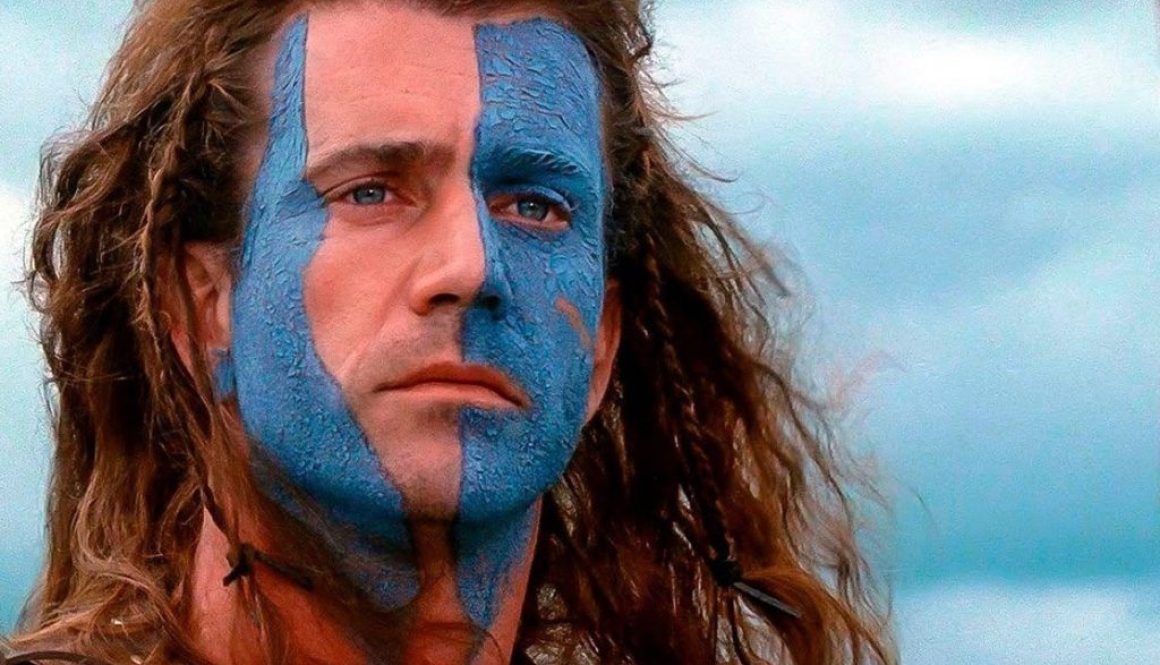
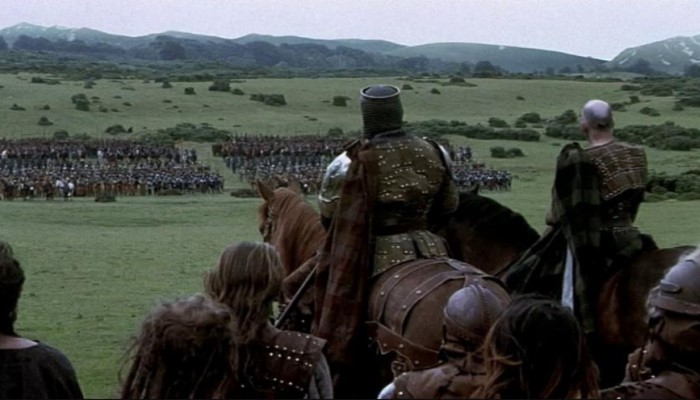
Among the best 90s movies, Braveheart is surely one of them
Few movies can make audiences cry, cheer, and quote the word “freedom” with such conviction decades after release. Braveheart did exactly that. Released in 1995, it told the story of William Wallace, a Scottish warrior who led his people in a rebellion against English rule during the 13th century.
Directed by and starring Mel Gibson, the film blended brutal battle scenes with themes of love, courage, and defiance. It was historical fiction at its most dramatic: part legend, part cinematic thunderstorm.
Whether you were there for the history, the blood, or the heart, Braveheart delivered something unforgettable.
Let’s dive into 25 facts about Braveheart, each with added background and juicy behind-the-scenes details. Afterward, we’ll look at what made it such a landmark in filmmaking and why its cry for freedom still echoes today.
25 Facts About Braveheart
1. The film was released in 1995.
Braveheart premiered on May 24, 1995. Despite a nearly three-hour runtime, it became a box office hit, earning over $200 million worldwide. That was no small feat for a historical drama during the blockbuster-heavy 90s, and one of Mel Gibson’s best movies without a doubt.
2. Mel Gibson directed and starred in the film.
Gibson’s best acting role was perhaps here in Braveheart. But did you know he played William Wallace, while also serving as the film’s director and producer? Balancing both roles was a massive undertaking. He initially didn’t want to star but studio executives insisted that his name would help sell the movie internationally.
3. The screenplay was written by Randall Wallace.
Interestingly, Randall Wallace is not related to William Wallace. He based the script on the 15th-century poem The Acts and Deeds of Sir William Wallace, Knight of Elderslie. The writer said he wanted to explore what drives an ordinary man to fight tyranny.
4. Filming took place mostly in Ireland.
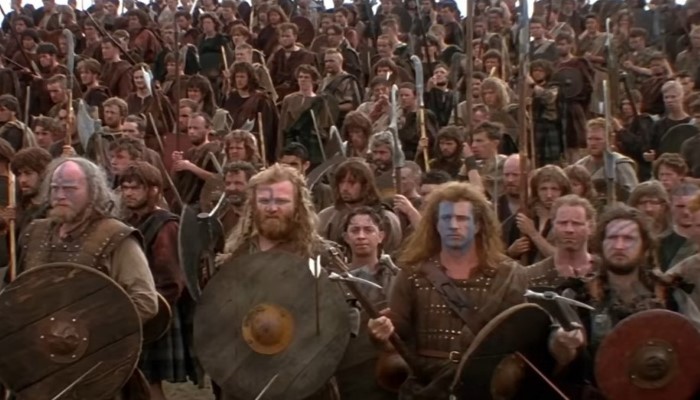
Although the story is set in Scotland, the majority of battle scenes were filmed in Ireland for logistical and budget reasons. The Irish Army even provided thousands of soldiers as extras. Many of them later joked about playing both Scottish and English troops depending on the camera angle.
5. The production used real armor and handmade weapons.
To keep things authentic, the costume and props teams forged weapons using medieval techniques. Each sword weighed up to 6 pounds, and the actors spent weeks training to move convincingly with them.
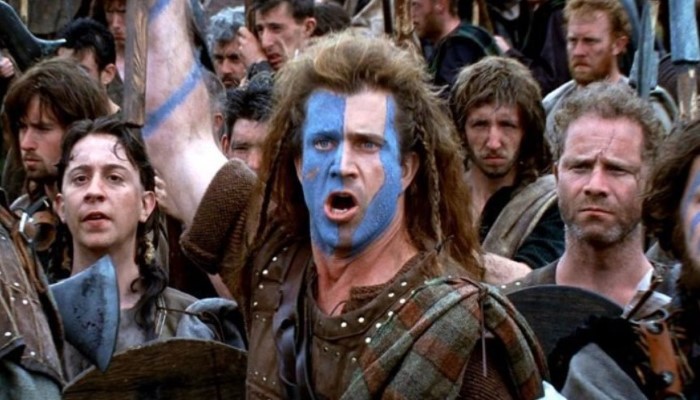
6. The famous blue face paint wasn’t historically accurate.
Historians note that Scots of Wallace’s time did not wear war paint. The blue makeup was inspired by ancient Pictish warriors, used here as a visual symbol of rebellion and identity rather than historical fact.
7. The battle scenes were choreographed like dance sequences.
Over 1,500 extras participated in large-scale Braveheart fights, each one meticulously choreographed. Gibson wanted every clash of steel and splash of mud to feel real. The result was chaos that somehow looked cinematic and controlled.
8. The Battle of Stirling Bridge didn’t include an actual bridge.
In real history, Wallace won by using the narrow bridge to trap English forces. The filmmakers removed it because it limited camera angles. Ironically, it became one of the few battles ever filmed “without a bridge” in its title.
9. The film’s running time was originally much longer.
Talk about the longest movies in Hollywood, right? The first cut of Braveheart ran over four hours. Gibson eventually trimmed it to about 178 minutes. Some deleted scenes included more about Wallace’s early life and his relationship with Princess Isabelle.
10. Sophie Marceau played Princess Isabelle of France.
Her character was introduced to provide romantic balance and emotional depth. While historically inaccurate (the real Isabelle was a child during Wallace’s lifetime), her presence helped humanize the story.
11. The score was composed by James Horner.
Horner’s music became one of the most iconic soundtracks in film history. It features sweeping strings, Celtic flutes, and haunting themes that capture both the tenderness and tragedy of the story. The score remains one of Horner’s most beloved works.
12. Cinematographer John Toll won an Oscar for his work.
The Braveheart soundtrack was something out of this world. The film’s natural lighting and sweeping landscapes turned the Scottish countryside (and parts of Ireland) into a visual poem. Toll’s camera made mud, blood, and mist look strangely beautiful.
13. The film won five Academy Awards.
Braveheart took home Oscars for Best Picture, Best Director, Best Cinematography, Best Makeup, and Best Sound Editing. Gibson became only the second person after Kevin Costner to win both Best Director and Best Picture for the same film while also starring in it.
14. Mel Gibson did not expect the film to win.
In interviews, Gibson said he was shocked when Braveheart won Best Picture. He thought the violence and length would turn off the Academy. The surprise win helped solidify his reputation as a serious filmmaker, and it marked Braveheart as a top 90s film.
15. Many Scottish historians criticized its accuracy.
While the movie captured the spirit of rebellion, it took creative liberties with real events. Historians have pointed out anachronisms, invented characters, and exaggerated moments. Yet fans argue that emotional truth matters more than literal accuracy.
16. The crew struggled with unpredictable weather.
Ireland’s climate made filming a challenge. Rain would start and stop without warning, forcing the crew to reset scenes. Gibson decided to embrace the gloomy skies, saying the gray light added mood and realism.
17. The sword used by Wallace in the movie became legendary.
The prop sword was over five feet long and is now displayed in various film exhibitions. It’s one of the most recognizable weapons in movie history, symbolizing strength and freedom.
18. The film’s tagline “Every man dies, not every man really lives” wasn’t in the script.
The quote was created for marketing, but it perfectly captured the movie’s spirit. It has since been mistaken by many as an actual William Wallace quote.
19. The love story with Murron adds emotional weight.
Murron, played by Catherine McCormack, appears briefly but her death becomes the emotional spark for Wallace’s rebellion. Gibson said the love story was vital to make the violence matter; to show that vengeance was rooted in grief.
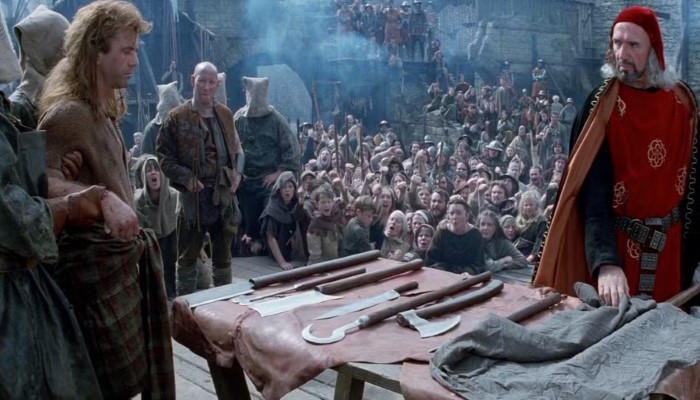
20. The torture scene at the end was brutally realistic.
To portray Wallace’s execution authentically, Gibson refused to soften it. The editing leaves much to imagination, but the sound design and emotion make it deeply affecting. Many viewers have called it one of the most powerful scenes in cinema history.
21. The extras nearly went rogue during the battle shoots.
Hundreds of extras reportedly got carried away and began hitting each other for real during takes. Gibson had to remind them to “save it for the camera.” The authenticity, however, gave the battles an edge that few films have replicated.
22. The film reignited Scottish pride worldwide.
After Braveheart was released, tourism in Scotland soared. Visitors flooded to landmarks like Stirling and Edinburgh, eager to walk where Wallace supposedly fought. The movie even inspired renewed interest in Scottish independence movements.
23. The Gaelic language was used briefly for authenticity.
While most of the dialogue is in English, Gibson insisted on including snippets of Gaelic in early scenes to give a sense of place and cultural realism. It added texture to the world-building.
24. Braveheart influenced many later historical epics.
Movies like Gladiator and The Last Samurai drew inspiration from its storytelling structure. The blend of intimate emotion and large-scale violence became a blueprint for epic filmmaking in the years that followed.
25. The film remains one of Mel Gibson’s defining works.
Despite his later controversies, Braveheart is still considered his masterpiece. It showcased his ability to balance action, emotion, and grand storytelling. Nearly 30 years later, its spirit of rebellion and sacrifice continues to inspire audiences around the world. Some people are actually wishing for a Braveheart sequel or even a prequel, even though this is clearly impossible.
The Fire Behind the Freedom
This is not just one of the best movies of the 90s, but rather a film that redefined drama in Hollywood.
At its heart, Braveheart isn’t just about war; it’s about identity. It’s about what happens when an ordinary man decides he’s had enough of being told how to live. Mel Gibson captured that moment of rebellion not as a historical document, but as myth: messy, tragic, and deeply human.
The film thrives on emotion more than accuracy. Wallace’s world isn’t a classroom lesson in medieval politics; it’s a portrait of courage painted in mud and blood. Every scream, sword swing, and teardrop feels earned.
When Wallace roars “Freedom!” it doesn’t sound like dialogue; it sounds like a battle cry from the soul.
The Artistry of the Epic
From a filmmaking standpoint, Braveheart hit a sweet spot between grandeur and intimacy. The battle sequences feel enormous, but the story remains rooted in one man’s heartbreak. The music by James Horner does much of the emotional heavy lifting, weaving sadness and triumph together like a Celtic hymn.
Cinematographer John Toll’s lens made every landscape feel sacred. The hills, the fog, the fields…they look like characters themselves, silent witnesses to pain and defiance. The movie’s color palette moves from earthy realism to painterly drama, reflecting the journey from peace to chaos.
Braveheart: Legacy and Impact
Few films have left such a lasting mark on both pop culture and national identity. For many people, Braveheart became the modern myth of Scottish freedom. It gave history a face, even if not a perfectly accurate one. Its impact reached far beyond cinema. It stirred emotions about justice and defiance that transcended borders.
The film also helped reignite the historical-epic genre. Without Braveheart, we might never have gotten Gladiator, Kingdom of Heaven, or even 300. It reminded filmmakers that audiences will sit through long, violent, emotional stories if they’re told with conviction.
Braveheart is an imperfect masterpiece. It’s as romantic as it is brutal, as symbolic as it is visceral. It stretches truth, yet somehow finds emotional honesty in the process. At its core, it tells us that freedom is worth pain, that love can outlast death, and that courage often comes from heartbreak.
When the movie fades out and you hear those final bagpipes, it doesn’t feel like a film ending; it feels like a memory passing into legend. And that’s what keeps Braveheart alive, even now. It isn’t history. It’s a myth, told by firelight, with blood on its hands and freedom in its heart.
Cicada 3301 is the nickname for a series of incredibly complex, unsolved puzzles that first appeared on the internet in the early 2010s.
Often called “the most elaborate and mysterious puzzle of the Internet age”, it captivated thousands of curious minds worldwide with its blend of cryptography, steganography (hidden messages in media), and even real-world treasure hunts.
To this day, no one knows who created these puzzles or why. Many theories have been proposed. Some suspect it was a covert government experiment or recruitment test by a powerful agency, while others believe a secret society or hacker collective could be behind it.
In this article, we’ll dive into the origin of Cicada 3301, what the puzzle involved, why people became so obsessed with it, its legacy, and the latest known information about this enduring mystery.
The Origin: A Puzzle out of Nowhere
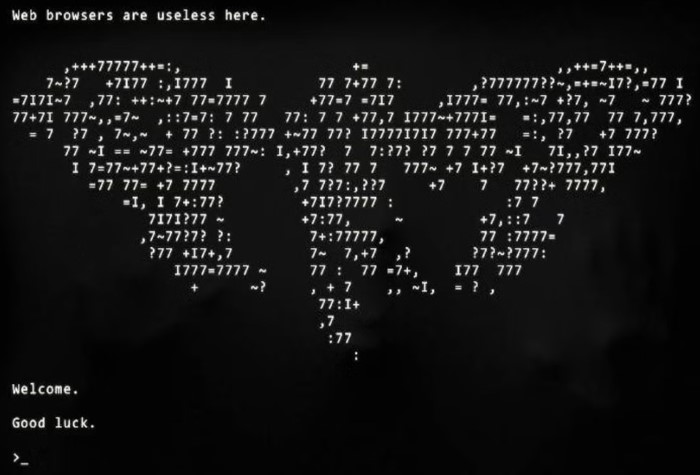
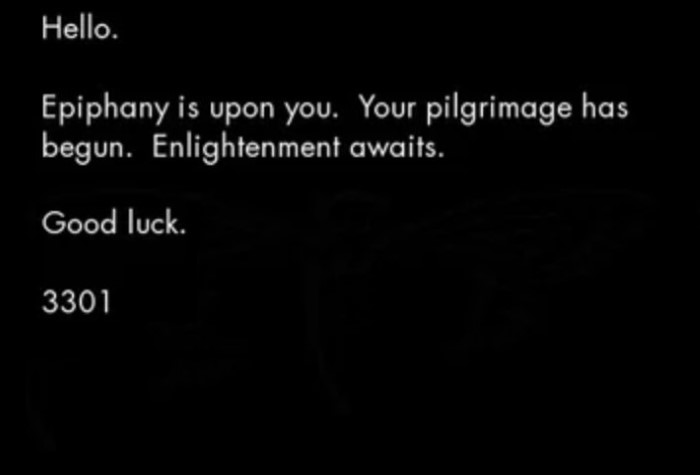
A stylized cicada insect logo and the number 3301 became the iconic signature of the mystery. On January 4, 2012, users of the 4chan internet forum encountered a strange post unlike anything seen before.
It was a simple black-and-white image with white text that read: “Hello. We are looking for highly intelligent individuals. To find them, we have devised a test… There is a message hidden in this image… Find it, and it will lead you on the road to finding us. We look forward to meeting the few who will make it all the way through. Good luck.”
It was signed “3301.”
Tech-savvy readers quickly realized this was no ordinary message: the image itself contained a hidden clue encoded within it.
Using steganography techniques (hiding data inside an image file), solvers extracted a secret string of text from the picture, which led to a web link as the next step of the puzzle. In other words, the Cicada 3301 post was an elaborate invitation to a scavenger hunt.
This mysterious image on 4chan marked the beginning of one of the most sophisticated internet riddles in history.
Once that first hidden message was found, the real journey began. Solvers following the trail found that each clue led to another, growing increasingly complex.
For example, one early clue pointed to a specific subreddit (a forum page) which contained a code referencing an 18th-century Welsh myth called “The Lady of the Fountain.” Decoding that eventually revealed a telephone number; when dialed, a prerecorded voice congratulated the caller and mentioned “three prime numbers” associated with the initial 4chan image, one of which was 3301 (a nod to Cicada’s signature).
And from there, things only got more bizarre and exciting.
As participants dug deeper, the puzzle broadened beyond the internet. Cicada 3301 began leaving physical clues in the real world, sending solvers on a global scavenger hunt. In later stages of the 2012 puzzle, the organizers posted GPS coordinates for locations across multiple countries, where they had planted posters with QR codes and enigmatic symbols.
From telephone poles in cities like Paris, Sydney, Warsaw, and Seoul, dedicated participants went out to find and scan these QR code flyers in person. Imagine an online riddle that actually sends people around the world on a treasure hunt. That was the level of commitment Cicada 3301 inspired.
By this point, it was clear that no single person could solve everything alone; the challenge required collaborative effort from a community of solvers pooling their knowledge.
Eventually, the trail of clues led the fastest solvers to a final private website on the Tor network (an anonymous “dark web” browser). This appeared to be the endgame of the 2012 puzzle.
However, only a select few who arrived first got access, while those who were slower were met with a discouraging note on the site: “We want the best, not the followers.” In other words, Cicada 3301 closed the door once they had enough top performers.
The few individuals who did make it all the way were presumably given further instructions or membership in whatever group was behind the puzzles, while everyone else was left in the dark. (Those who finished reportedly received a congratulatory email from Cicada 3301, but were likely sworn to secrecy about what came next.)
The initial puzzle had ended, but the mystery was only growing…and the internet was hooked.
The Puzzles Continue: 2012–2014 Timeline
The creators of Cicada 3301 didn’t stop after that first puzzle. In fact, they returned with new challenges each year for the next two years, forming a trilogy of legendary internet puzzles.
Here’s a brief timeline of the known Cicada 3301 events:
2012 Puzzle: The first puzzle began with the 4chan image on January 4, 2012 (as described above). It led participants through a series of digital clues (hidden messages in images, cryptographic ciphers, online forums) and even real-world locations to find posters and QR codes.
Those who solved every step were privately contacted by Cicada 3301 (reportedly via email) and reached the “final stage,” although what exactly that entailed remains secret. The vast majority of players only know that the winners were essentially told, congratulations, you solved it, and then went silent. The true “prize” of the puzzle was never publicly revealed, adding to the intrigue. 2013 Puzzle: Almost exactly one year later, on January 5, 2013, a new Cicada 3301 puzzle was announced with another image posted on 4chan’s boards. “Hello again. Our search for intelligent individuals now continues,” it began.
The second puzzle followed a similar format to 2012 but with increased difficulty; it introduced more complex cryptographic tasks, deeper literary references, and once again culminated in physical clues planted around the world. Just as before, only the quickest and most skilled solvers made it to the end.
Those who arrived late found the trail abruptly closed, forcing them to wait and hope for another chance the next year. Cicada 3301’s message was clear: they only wanted the absolute best problem-solvers, not just anyone who could follow others’ work. 2014 Puzzle: On January 4, 2014, Cicada 3301 returned for a third round, but this time the puzzle launch was slightly different. Instead of posting on 4chan, the group’s verified Twitter account suddenly posted an image with more obtuse, cryptic text than before.
This third puzzle introduced a mysterious digital manuscript titled “Liber Primus” (Latin for “First Book”). The Liber Primus was a 58-page book written entirely in runic characters, apparently created by Cicada 3301 themselves. Solvers were able to decode portions of this runic text, revealing philosophical and esoteric passages, but many pages of the book remained (and still remain) uncracked.
The Liber Primus is believed to hold the final key to the Cicada 3301 mystery; a message or instructions that might only emerge once the text is fully decoded. To date, however, the 2014 puzzle remains officially unsolved. No one has publicly announced completing it, and large chunks of the Liber Primus are still encrypted.
Notably, after 2014, Cicada 3301 did not release a new puzzle in January 2015, breaking the annual pattern. Aside from a small clue that appeared in 2016 and a final message in 2017 (more on those later), the puzzles ceased after the 2014 round. Throughout these puzzle rounds, the anonymous organizers consistently implied that their goal was to recruit “highly intelligent individuals” via these tests.
The very first 2012 message said so, and winners later corroborated that Cicada 3301 asked them questions about their views on information freedom, privacy, and censorship…as if vetting candidates for a secret project or group.
What exactly that group does or did is still unknown, but the emphasis on cryptography and privacy hints at a possible mission related to internet security or anonymity.
What Did the Cicada 3301 Puzzle Involve?
So, what did Cicada 3301 actually consist of? In essence, it was a multi-layered, multi-media puzzle that required a broad range of skills and knowledge to solve.
The challenges were designed to test participants’ ingenuity in many areas. Here’s a breakdown of key elements and concepts that appeared in Cicada 3301’s puzzles:
Advanced Cryptography and Coding: Nearly every stage of Cicada 3301 involved cracking some form of cipher or code. Solvers encountered everything from classic cryptographic ciphers (like Caesar shifts and RSA encryption) to custom encryption schemes.
For example, participants had to know or learn about prime numbers, hashing algorithms, and programming tricks to decode messages. The puzzles were heavily focused on data security and encryption techniques, exactly the kinds of skills one would need in cybersecurity or codebreaking work.
Steganography (Hidden Messages in Images): The very first clue demonstrated this: Cicada 3301 hid information inside image files (and later in music files and other media) using steganography.
Solvers often had to use special tools to reveal hidden text or images buried in seemingly normal files. A simple photograph or a piece of digital art from Cicada might actually contain a secret URL or code if you knew how to extract it. This taught participants to “look beyond the obvious,” a recurring theme in the puzzle.
Literature, Philosophy, and Occult References: Cicada 3301 wasn’t just about tech — it also drew on a rich tapestry of books, poetry, and historical texts. Clues frequently referenced obscure literature ranging from medieval Welsh legends to modern cyberpunk writing.
For instance, one clue required knowledge of a poem from the Mabinogion (a collection of Welsh myths), and another involved a quotation from Agrippa, a rare electronic poem by William Gibson that was distributed only on floppy disks.
Participants also encountered references to works like The Book of the Law (an occult text by Aleister Crowley) and William Blake’s poetry, among others. The Liber Primus itself, with its runic script and philosophical tone, reads like something between a scripture and a riddle.
These high-brow references meant that solving Cicada 3301 required not just technical chops but also a breadth of knowledge in the humanities and an ability to interpret abstract or esoteric clues.
Real-World Treasure Hunt: Unlike many online puzzles, Cicada 3301 broke the fourth wall and entered the physical world. At certain points, solvers were given GPS coordinates and instructions to find something in real life.
Cicada agents (or perhaps local volunteers) had posted paper flyers with QR codes and cicada symbols in cities across North America, Europe, Asia, and Australia. These posters were often taped to telephone poles or street signs in locations from Warsaw, Poland to Seattle in the US. If you scanned the QR code on one of these posters, it would give you yet another clue or riddle to solve online.
The fact that Cicada’s mystery scavenger hunt spanned multiple continents made participants feel like they were part of a worldwide conspiracy or adventure. It also added urgency, as the physical clues were taken down quickly, suggesting only a handful of people were ever meant to find them in time. Multi-Media and Original Content: The puzzles weren’t limited to text and images. Cicada 3301 incorporated custom-made media and software as part of the challenge. Solvers uncovered original music compositions (two pieces titled “The Instar Emergence” and “Interconnectedness”), which contained encoded messages in their sound or sheet music.
There was even a bootable Linux CD that Cicada released at one point. When participants ran it, it presented puzzles and clues in the code, implying the group had serious technical prowess to create their own operating system image for the game.
The use of an OpenPGP signature (a cryptographic digital signature) on every official message was another hallmark of Cicada 3301; it allowed solvers to verify that a clue truly came from the real Cicada (and not a hoaxer) by checking it against the group’s public cryptographic key.
This level of technical detail reassured players that they were following an authentic trail and highlighted the organizers’ emphasis on security and anonymity.
I have to stress that Cicada 3301 was not a commercial project or a typical Alternate Reality Game (ARG) designed for marketing or entertainment. Unlike most ARGs, it never promoted a product, never made money, and no company or individual ever claimed credit for it. It appeared to be a purely intellectual challenge, or perhaps an elaborate recruitment tool, operating in complete secrecy.
Why People Became Obsessed with Cicada 3301
Cicada 3301 sparked an almost fanatical following in some corners of the internet. What made thousands of people dedicate countless hours (and many sleepless nights) to solving these puzzles?
Several factors contributed to the obsession:
Unprecedented Challenge: The Cicada puzzles were hard. They combined a wide array of disciplines in ways people had never seen before online. Solvers had to be part computer scientist, part cryptographer, part literature professor, and part treasure hunter.
This level of difficulty and complexity was incredibly enticing to those who love puzzles and problem-solving. Being told “we’re looking for highly intelligent individuals” was like catnip; a direct dare to rise to the challenge.
As one commentator noted, Cicada 3301 was arguably the internet’s most elaborate mystery, which naturally attracted elite puzzle-solvers eager to test their mettle. The Mystery of the Puppet Master: Unlike a normal contest, here nobody knew who was running the show or what the ultimate goal was. Was it a hacker group? A government agency? A secret society? This anonymity added a huge aura of mystery.
Participants weren’t just solving puzzles; they were trying to piece together who and why. Every clue solved felt like it might reveal the identity or motive of the elusive “3301.” This is a big reason people became so obsessed, as the human brain loves a good mystery, and Cicada 3301 was an extremely tantalizing one.
The puzzles’ content even fueled this curiosity by touching on themes of privacy, cryptography, and forbidden knowledge, which led many to speculate that a powerful organization or agency was behind it.
Community & Collaboration: Cicada 3301 might have started as a competition, but it quickly became a community effort. Thousands of individuals around the world congregated on message boards, chat rooms, Reddit threads, and IRC channels to share findings and work together on solutions.
People who didn’t even know each other in real life were pooling their talents. A coder would team up with a linguist, or a math PhD with a history buff, all united by the common goal of cracking Cicada’s codes. This collaborative spirit created a buzz of excitement and camaraderie online.
According to reports at the time, forums would be active through the night with users brainstorming solutions, comparing notes, and eagerly awaiting new clues. In a sense, Cicada 3301 became a massively multiplayer puzzle, and being part of that global solver community was thrilling in its own right. The Thrill of a Real-Life Adventure: The moment Cicada sent players out into the physical world (to find QR codes on lampposts and such), it crossed into legend. Suddenly this was more than a computer puzzle; it felt like a spy novel come to life.
Solvers found themselves chasing clues across cities, which provided a rush of adrenaline and adventure. Even those who only watched from home could feel the excitement as pictures of found QR code posters in different countries popped up online.
Few internet phenomena break the barrier into the real world like this, and it gave Cicada 3301 a unique, almost cinematic appeal. It’s the kind of mystery that makes you think, “If I’m smart (or lucky) enough, I might end up flying to another country or uncovering a hidden artifact.” That’s an addictive prospect. A Hint of a Greater Reward: Lastly, a huge factor was the implied reward. The Cicada 3301 messages suggested that those who solve everything would “meet” the organization or be welcomed into something special. Indeed, the first puzzle’s winners were privately contacted, and Cicada explicitly said they were looking to recruit exceptional individuals.
This led many participants to dream about what lay at the end of the road. Perhaps it was a high-paying job offer from a tech company or intelligence agency; maybe it was admission into a secret society of geniuses; it could even have been access to some earth-shattering knowledge.
The truth is, we still don’t know what successful solvers actually got (beyond the puzzle-solving experience itself). But just the possibility of a secretive and significant reward (essentially, the allure of being one of the chosen few) drove people to pour their hearts into the challenge.
Cicada reinforced this by emphasizing quality over quantity (e.g. the “We want the best, not the followers” message), implying that if you make it, you’re truly special. For many, that intangible reward of recognition and belonging was enough motivation to keep going.
In short, Cicada 3301 hit the perfect storm of factors to create an online obsession: it had the intellectual appeal of a fiendish puzzle, the emotional appeal of a deep mystery, and the social appeal of a collaborative quest and potential secret prize. It’s no wonder it became one of the most talked-about internet mysteries of its time.
Legacy and Latest Developments
After 2014, Cicada 3301 largely vanished as suddenly as it appeared, but its impact and legend live on. The legacy of Cicada 3301 can be seen in both internet culture and in the ongoing curiosity it inspires:
An Unsolved Legend: Today, Cicada 3301 is frequently cited as one of the eeriest unsolved mysteries of the internet. The fact that no one has publicly identified the creators or purpose of these puzzles gives it an almost mythic status.
It’s often compared to other famous mysteries like the Voynich Manuscript or the Kryptos sculpture, or puzzles that tease with the possibility of a hidden truth, remaining just out of reach.
Enthusiast communities still exist; for example, there are wiki pages and Discord servers where dedicated fans continue to analyze the clues and especially to work on decoding the remaining pages of the Liber Primus, hoping to one day reveal the final message.
In a real sense, the Cicada puzzle isn’t completely “over” because parts of it (like Liber Primus) have not been solved. This means the door is always open for new sleuths to try their hand at it, keeping the mystery alive year after year. Final Messages and Silence: The last known official communication from Cicada 3301 came in April 2017, in the form of a PGP-signed message (using the same cryptographic signature Cicada had used all along to verify its identity).
In that message, Cicada 3301 warned the public about “unauthorized third parties” trying to use the name Cicada 3301 without permission, and stated that any puzzle not signed with their official PGP key should be considered suspect. Essentially, they were saying “if it’s not cryptographically signed by us, it’s not us.”
This was likely in response to various copycat puzzles and hoaxes that had started to appear, as fans or opportunists tried to continue the Cicada tradition on their own. After this 2017 signed message, there have been no new verified puzzles or communications from the original Cicada 3301 group.
The trail has gone cold. The Twitter account went quiet. To the best of public knowledge, Cicada 3301 disbanded or went completely dark after 2017. All we have are the puzzles and clues they left behind and a lot of unanswered questions. What Was Cicada 3301, Really? Without official answers, people have continued to speculate about who was behind Cicada and what their goal was. Over the years, a few clues and rumors have trickled out from alleged insiders.
For example, some self-claimed winners or leakers suggested that Cicada 3301 was not a government agency at all but rather a small group of privacy-minded enthusiasts (perhaps around 20 individuals) who wanted to develop and promote cryptographic software for the public good.
According to this rumor, the puzzles were a way to find talented people who believed in ideals like internet freedom and privacy, and recruit them to work on secret projects (such as creating secure communication tools resistant to censorship).
This aligns with what known winners have said: those who solved the puzzles in 2012–2013 reported that they were asked about their stance on information freedom and were tasked with projects to advance those ideals. In other words, Cicada might have been a grassroots movement to strengthen privacy and security technology by gathering sharp minds.
However, it’s important to note that none of these theories have been confirmed. The “small privacy group” explanation is just one of many. Other theories persist that perhaps it really was a clever recruitment program for an intelligence agency or corporation (who have never admitted it), or that it was an elaborate social experiment or game that ended once it proved its point.
Influence on Culture and Copycats: Cicada 3301’s influence can be seen in various places. For one, it inspired similar puzzles and challenges. Notably, in 2014 the U.S. Navy created a cryptographic recruiting game called Project Architeuthis, clearly modeled after Cicada’s style (Architeuthis is the Latin name for a giant squid, a wink to Cicada).
Cicada has also been referenced or inspired plotlines in popular media. A 2014 episode of the TV show Person of Interest featured a large-scale mysterious game called “Nautilus” that was directly inspired by Cicada 3301.
More recently, in 2021 a comedy-thriller film titled “Dark Web: Cicada 3301” was released, which is a fictional story built around the concept of the Cicada puzzle, showing how it has entered the public imagination.
Beyond these, Cicada 3301 has become part of internet folklore; even people who never attempted the puzzle sometimes recognize the cicada emblem or the number 3301 as shorthand for “that crazy internet puzzle thing.” It has been the subject of countless YouTube videos, articles, and discussions in the years since it appeared.
The legacy of Cicada 3301 blended technology, art, and adventure in a way that had never quite been done before. And it left us with a haunting question: what was it all for?
As of 2025, the Cicada 3301 mystery remains unsolved in the sense that the organization’s true identity and purpose have never been publicly revealed.
The puzzles stopped, but they left a trail of breadcrumbs that intrepid codebreakers are still picking over. Maybe one day someone will decrypt the final pages of Liber Primus or an insider will come forward with the full story.
Or perhaps Cicada 3301 will unexpectedly return with a new puzzle, as challenging and beguiling as the last. Until then, it remains an open case; a modern legend of the digital age, where each answer only led to new questions.
And for all of us who love a good mystery, Cicada 3301 is a reminder that the internet still has a few secrets left up its sleeve.
Chatroulette: The Internet’s Wildest Social Experiment
If you were active online in the late 2000s, there’s a good chance you at least heard of Chatroulette. And if you dared to try it like I did, you probably walked away thinking something along the lines of: “Well… that was a rollercoaster I wasn’t prepared for.”
Chatroulette wasn’t just a website, but rather a brief cultural earthquake. Chaotic, hilarious, awkward, and sometimes downright scarring, it represented the raw, unfiltered internet in a way few platforms ever have.
A Teenager’s Idea That Took Over the World
Chatroulette launched in November 2009, created not by a massive tech company, but by 17-year-old Andrey Ternovskiy, a high school student from Moscow. The story still fascinates me: a teenager building a global cultural sensation from his bedroom.
Ternovskiy was inspired by two things: random online chat culture, and the unpredictability of the casino game “roulette.” The concept was brilliantly simple:
Press “Start,” instantly connect with a random stranger through video. Don’t like them? Press “Next.”
No accounts, no usernames, no algorithm pairing. Just pure randomness.
That simplicity was the hook. It made the internet feel like a giant room where literally anyone could appear in front of you.
The Explosion of Popularity
Within months of launching, the platform exploded. By early 2010, Chatroulette was pulling tens of thousands of new users daily and millions of monthly visitors. Celebrities, college students, bored office workers, musicians, pranksters. Everyone was trying it.
YouTube played a huge role in its growth. People started screen-recording their sessions, creating reaction videos, pranks, costumes, magic tricks, and musical performances for strangers.
Some of the most iconic early internet videos came from Chatroulette interactions, like improvisational piano/guitar duets or full-on comedic sketches for unsuspecting strangers.
Singer Ben Folds famously performed live “Chatroulette concerts,” projecting random users onto a giant screen and improvising songs about them mid-show. That’s how massive the cultural impact was.
For a moment, Chatroulette genuinely felt like the future of social interaction; spontaneous, global, unfiltered human connection.
The Dark Side: When the Unfiltered Internet Shows Its Teeth
But that same lack of structure is also what caused its downfall.
1. The NSFW Reputation That Stuck Forever
Let’s be honest: the site very quickly gained a reputation for explicit content. While some people used the platform to sing, chat, or make new friends, a large portion used it for… let’s just say “exhibitionist purposes.”
The joke became: “Chatroulette is 10% wholesome chaos and 90% things you wish you never saw.”
Ternovskiy tried cleaning it up with things like moderation filters, AI detection, and “clean” vs. “adult” sections. But once a platform becomes a meme for degeneracy, it’s nearly impossible to reverse the image.
2. The Social Experiment Nobody Asked For
One of the most fascinating yet uncomfortable aspects of Chatroulette is how it unintentionally revealed human biases…especially around looks, gender, and social perception.
People have since uploaded countless compilations on YouTube showing experiments like:
An attractive girl getting showered with compliments, serenaded, or begged not to skip
A “regular” or less conventionally attractive person being skipped within 1–2 seconds
A guy dressed as a hot girl (catfishing) being adored until he revealed himself
People in costumes vs. people just sitting there staring
Social experiments on race, disability, or overweight individuals
Users treating women like celebrities and men like filler content
And I saw this firsthand. If you weren’t doing something entertaining or weren’t attractive enough, many users didn’t even say Hello. They just hit Next instantly. It was speed-dating energy on steroids.
Chatroulette unintentionally exposed the superficiality of online interaction long before Tinder, Instagram, and swipe-culture normalized judging people in seconds.
In a strange way, it laid the groundwork for what social behavior on modern platforms would become: fast judgments, short attention spans, and a “What can you offer me in 3 seconds?” mentality.
3. The Troll Culture
Because everyone was anonymous and disposable, trolling became a dominant activity. People would dress up in ridiculous outfits, jump-scare strangers, or perform disturbing pranks. Some were harmless and hilarious; others… not so much.
It was the early “content farm” before “content creation” was a career.
Chatroulette’s Pop Culture Imprint
Despite the chaos, Chatroulette made a massive cultural dent.
It appeared in jokes on Jimmy Fallon, SNL, and South Park
It influenced platforms like Omegle, Monkey, and live random match apps
Streamers and YouTubers built entire brands off Chatroulette reactions
It became a symbol of “Wild West internet culture.” In essence, a time before everything became curated, polished, and algorithmically filtered
Even today, if you mention Chatroulette, most people respond with a half-traumatized laugh and a story that begins with, “OMG, I remember seeing…”
The Fall, the Fade, and Small Revivals
After the initial hype, the platform declined heavily. Once explicit content drove away the “fun and curious” users, the wholesome interactions dried up, creating a cycle that made new users less likely to stick around.
There was a brief comeback during the COVID-19 pandemic, when people craved real-time connection during lockdown. New safety measures, better moderation, and split categories brought a bit of life back to it.
Still, it has never returned to its 2010 peak.
My Final Thoughts
When I look back, Chatroulette feels like a moment in time we’ll probably never relive in the same way. It was raw, unscripted, unpolished human interaction: sometimes heartwarming, often absurd, and occasionally scarring.
But it was real. Before filters, before TikTok editing, before clout-chasing, before curated online identities… Chatroulette gave us unfiltered humanity, for better or worse.
Was it a brilliant concept hindered by human behavior? Absolutely. Would I ever want to go back to that chaotic digital jungle? Maybe… but only for nostalgia’s sake.
Because whether you loved it, hated it, or only heard stories, Chatroulette remains a cultural relic, one that showed us how fascinating, creative, superficial, and unpredictable strangers on the internet can be when given total freedom.
Fun Facts About Chatroulette & Early Video Chat Culture
Chatroulette was built in just three days. Its creator, 17-year-old Andrey Ternovskiy, coded the entire first version in his bedroom over a long weekend.
The site hit 1.5 million daily users at its peak in 2010. For a brief moment, Chatroulette had the same level of traffic as major social networks, and with zero marketing budget.
Ben Folds helped make Chatroulette mainstream. The musician did live concerts where he projected random Chatroulette users on stage and improvised songs about them for thousands of fans.
Chatroulette originally had no rules whatsoever. No login, no age gate, no moderation. That “Wild West” freedom is partly what made it explode and what ultimately hurt it.
The “Next” button changed internet behavior. Chatroulette helped popularize the “instant skip” mindset; quick judgment and short attention span. It was an early version of modern swipe culture.
Popular YouTubers helped propel the platform. Creators like Merton (the piano improv guy), pranksters, magicians, and comedians attracted millions of views and drew people to the site.
Celebrities used Chatroulette anonymously. Rumors and screenshots circulated of big names hopping on the platform disguised, including musicians, actors, and athletes, though most sessions were never confirmed.
Chatroulette once banned users with an AI “penis detection” system. The company claimed it developed a moderation tool to automatically block explicit content long before AI content filters became common.
For a while, Chatroulette was more popular than Twitter in Google searches. In early 2010, global search volume for “Chatroulette” briefly surpassed Twitter and Facebook in some countries.
Some universities used Chatroulette for social experiments. Students explored topics like looks-based bias, racism, gender perception, and trolling behavior, often publishing their findings online or on YouTube.
The name “Chatroulette” was almost not chosen. Ternovskiy considered more tech-sounding names, but the gambling twist gave it personality and a built-in metaphor for randomness.
Omegle existed first, but wasn’t popular until Chatroulette blew up. Omegle launched months earlier, but it was mainly text-only. When video went viral on Chatroulette, Omegle added video chat and rode the wave.
The FBI was once rumored to monitor Chatroulette. Due to minors frequently encountering explicit content, urban legends spread that law enforcement monitored the site, fueling the “forbidden” image.
Chatroulette briefly split into “Clean” and “Unclean” modes. Users could self-select which version they wanted, but unsurprisingly, the NSFW side remained far more active.
The pandemic sparked a mini-resurgence. During COVID-19 lockdowns, thousands of bored or lonely people rediscovered random video chatting for social connection.
“Reaction content” was practically born on Chatroulette. Before TikTok duets or Twitch reactions, Chatroulette gave rise to the format of filming yourself reacting to strangers on video.
The platform unintentionally created a new form of improv comedy. Musicians, actors, and performers used Chatroulette as a stage to test improv skills in front of live strangers.
Chatroulette exposed the world’s “bedroom culture.” For the first time at scale, people saw strangers worldwide in their natural environments. That means messy rooms, kitchens, basements, dorms, which felt strangely intimate.
Schools briefly used video chat roulette clones for language learning. A few educators tried using random chat pairing to match language learners across countries, but it didn’t last due to obvious risks.
Some users created elaborate sets and costumes just for Chatroulette. People built mini-theaters at home to surprise strangers (like horror scenes, magic shows, or movie reenactments) years before TikTok trends.
A Blockbuster Video Comeback Makes Perfect Sense…Under Certain Conditions
If you grew up in the 80s, 90s, or early 2000s, there’s a good chance Blockbuster wasn’t just a store for you, it was a Friday night ritual.
Picking out movies with friends or family, grabbing popcorn and candy, arguing over which VHS tape or DVD to rent… that was an experience.
And as much as I love the convenience of Netflix and Hulu, I can’t help but feel that something got lost when streaming took over.
So here’s a thought I can’t shake: Blockbuster should open a few more physical stores again.
I’m not saying a full-scale comeback with 9,000 stores like the chain had at its peak in 2004. Rather, a small and smart expansion modeled after the one surviving Blockbuster in Bend, Oregon.
The Last Blockbuster Standing
Let’s talk about the famous Bend, Oregon store, AKA the last official Blockbuster on Earth.
This store has become more than a rental shop; it’s a tourist attraction, a nostalgic landmark, and a reminder of how much people miss the tangible side of entertainment. Visitors fly in from all over just to take a selfie inside those blue-and-yellow walls.
What’s interesting is that this store didn’t survive by accident. It works for a few practical reasons:
Bend is relatively remote, with fewer entertainment options than big cities.
There’s a strong sense of community, where people still enjoy local shops.
Not everyone there is fully dependent on streaming, whether due to lifestyle, internet access, or simple preference.
Like many of us, a lot of people around Bend grew up with Blockbuster and still embrace physical media.
If the nostalgia factor alone keeps that store relevant, imagine what a modernized version of Blockbuster could do in the right places.
I emphasize: In the right places.
Why Opening a Few More Stores Is Worth Trying
Now, I know the argument: “Streaming killed physical rentals. Why go backward?”
But I’d argue it’s less about going backward and more about adapting what once worked into a new environment (albeit smaller and more limited).
Here’s why a small, strategic relaunch could actually succeed:
1. Physical Media Isn’t Dead. It’s Resurging
Vinyl records came back. Polaroid cameras came back. Even VHS has a niche collector market now.
There’s a growing appetite for tangible entertainment, especially with younger generations discovering it for the first time.
A modern Blockbuster could offer:
Retro movie sections (VHS, DVD, and Blu-ray classics)
Collector’s editions and exclusive physical media
In-store movie nights or community events
People today crave experiences, not just screens.
2. Not Every Town Has Reliable Streaming
We forget this living in big cities, but in certain areas (rural U.S., parts of Canada, Latin America, or even Australia) having fast, reliable, unlimited internet isn’t a given.
In some countries, data caps make binge-watching expensive. Streaming isn’t always practical.
Blockbuster could open stores in:
Rural or suburban communities with limited broadband
Countries where streaming adoption lags behind
Sometimes, old-school wins simply because the infrastructure isn’t there for the “new school.”
3. Community is the Secret Ingredient
Blockbuster wasn’t just about renting movies, it was a social hub.
I remember walking in and running into neighbors, classmates, or coworkers. It gave people a reason to leave the house and interact with actual human beings. Believe it or not, that’s rare now.
A small chain of modern Blockbuster stores could recreate that sense of community:
Local staff who know movie tastes
Suggestion shelves curated by employees or customers
Family-themed movie nights
Retro gaming sections for Nintendo 64, PS2, GameCube, etc.
Think of it as part movie rental shop, part community center, part pop-culture museum.
4. Nostalgia is Profitable (When Done Right)
Let’s be honest: Blockbuster has brand power. People still talk about it. Documentaries have been made about it. Memes still circulate daily. It’s part of pop culture.
If companies can profit from reboots of everything from flip phones to Care Bears, Blockbuster absolutely can, too.
Imagine pop-up Blockbusters in malls, airports, or tourist destinations. Imagine a Blockbuster café that rents movies and serves snacks themed around iconic films. That’s revenue far beyond late fees and rentals.
What Should Be Learned from the Bend Store
Blockbuster video commercial:
To be clear, the Bend Blockbuster succeeded because of careful adaptation, not blind nostalgia. Any expansion should borrow from what works there:
Keep it local and community-focused
Offer merch and collectibles (the Bend store sells hats, shirts, magnets, and people love it)
Embrace the “museum appeal” while still serving a function
Lean into retro + modern instead of pretending it’s still 1998
It’s about balance.
Yes, streaming is convenient. But does it spark joy? Scrolling through endless thumbnails isn’t an experience; it’s a chore.
Walking through aisles, holding a physical copy, discovering a forgotten movie…that hits different.
The Bottom Line
Blockbuster doesn’t need thousands of stores again. It doesn’t need to replace streaming.
It just needs to exist in a modernized, strategically placed way that reminds people what made it special in the first place.
Because deep down, a lot of us still miss it.
Not just the movies, but the feeling.
And if one store in Bend, Oregon can stay alive in 2025, imagine what five or ten could do if they’re placed in the right towns, marketed with the right “retro-meets-modern” strategy, and built around community rather than competition.
Maybe it’s time for Blockbuster to take the gamble again. Not as a comeback… but as a cultural revival.
Another Blockbuster video commercial:
Fun Facts About Blockbuster Video
Blockbuster once had over 9,000 stores worldwide. At its peak in 2004, the chain was opening a new store every 17 hours on average.
The very first Blockbuster opened in 1985 in Dallas, Texas. It was founded by David Cook, who originally worked in the oil and gas industry and used a database system to track inventory, which was revolutionary for video rentals at the time.
Blockbuster famously passed on buying Netflix for only $50 million. In 2000, Netflix tried to pitch a collaboration, but Blockbuster declined. This is one of the most infamous business decisions in history.
The “Be Kind, Rewind” phrase wasn’t invented by Blockbuster. It began with VHS culture in general, but Blockbuster made it mainstream by turning it into an iconic slogan of renting etiquette.
Late fees once brought in $800 million a year. They were a huge part of Blockbuster’s revenue until the chain removed them in 2005 after customer backlash.
Blockbuster had its own exclusive snacks and candy. Some items (like Blockbuster-branded popcorn) became fan favorites and are now collector items.
Australia held onto Blockbuster longer than almost any other country. A handful of stores survived until 2019, with one in Perth becoming the “second-to-last Blockbuster on Earth.”
Blockbuster wasn’t just movies, it rented video games, too. For many gamers in the 90s, Blockbuster was the only way to test a new game before buying it.
Blockbuster once had a mail-rental service like Netflix. It launched in 2004 (called Blockbuster Online) to compete with Netflix’s DVDs-by-mail model, but it came too late.
There was a Blockbuster spin-off called “Blockbuster Music.” In the 1990s, the company briefly ran music stores and even tried CD listening stations before digital music killed the idea.
A Blockbuster credit card existed. Customers could apply for a branded credit card that earned points for rentals and store purchases.
Some Blockbusters had “Video Game Pass” memberships. For a set monthly fee, members could rent unlimited games. This was like an early version of GameFly or Xbox Game Pass.
Blockbuster briefly tried a streaming service. Known as Blockbuster On Demand, it launched in 2011 and offered digital rentals. But there just wasn’t enough marketing power behind it.
Quentin Tarantino was a Blockbuster superfan. He reportedly rented so many movies from his local video stores over the years that some owners joked he single-handedly kept them in business.
The Bend Blockbuster includes a mini-museum. It displays old rental equipment, VHS boxes, and retro memorabilia from the chain’s heyday.
Blockbuster once aired a Super Bowl commercial with guinea pigs. In 2002 and 2003, Blockbuster ran memorable ads featuring animated animals named Carl and Ray that became surprisingly popular.
Some stores had a “staff picks” wall. Employees could highlight their favorite movies, often helping customers discover hidden gems and cult classics long before the internet recommended lists.
Blockbuster had a “No R-Rated Movies to Kids Under 17” policy. Parents appreciated it, making Blockbuster feel safer than some independent video rental shops at the time.
The chain’s trademark colors were chosen to mimic movie theater vibes. The bright blue and yellow were meant to feel welcoming, energetic, and cinematic.
If you grew up in the 1990s, chances are you remember a strange, futuristic-looking electronic gadget barking rapid-fire instructions like “Red! Yellow! Green! Brain Warp!” at you.
That little plastic sphere was none other than Brain Warp, one of those toys that looked simple, yet somehow managed to hijack entire afternoons. It’s one of those electronic memory and reflex games that kids got hooked on instantly.
It’s kind of like Bop It’s quirky, louder cousin.
Even if you’ve never played it, Brain Warp was one of the most uniquely designed toys of the decade, so let’s rewind a bit and talk about what made this oddball game such a 90s icon.
Brain Warp commercial from the 1990s:
A Quick Look at Brain Warp’s Origins
Brain Warp was released by Tiger Electronics in 1996 (with a prototype by Big Monster Toys). If the name Tiger Electronics rings a bell, it’s because they were behind many beloved handheld and electronic games of the 80s, 90s, and early 2000s.
Tiger became huge with kids thanks to their portable LCD video games, Giga Pets, and hit toys like Skip-It and Bop It (the latter through a licensing partnership), so Brain Warp fit perfectly into their lineup of fast-twitch, sound-driven, reaction-based games.
Brain Warp hit toy shelves during a period when interactive electronic toys were booming. Kids wanted sound effects, fast action, and bragging rights…and Tiger delivered.
The game stayed in production for only a few years before quietly disappearing in the early 2000s, as Tiger shifted its focus to new product lines and eventually merged into Hasbro.
Because production didn’t last long and the game never received a later re-release, original Brain Warp units have become collectible items. Fully working devices (especially boxed) can fetch impressive prices among nostalgic toy collectors today.
What Exactly Was Brain Warp?
For those who never played it, Brain Warp looked like a colorful space gadget with six protruding knobs, each labeled with a color and number.
The premise was simple: the voice inside the game would call out commands, and you had to twist and flip the toy so the correct color or number would be facing upward.
The longer you played, the faster the commands came. Mess up, and you’d hear the game’s signature “You blew it!” line.
Another Brain Warp commercial:
There were multiple modes to keep things interesting, including:
Color Mode
This is the mode most people remember when they think of Brain Warp. The game would call out a color, mainly “Red, Yellow, Blue, Purple, Green, Orange” and your job was to twist, flip, or rotate the device so that the matching color was facing up before the timer beeped again.
It sounds easy for the first few rounds, but the pace ramps up quickly. The game starts by giving you a moment to adjust, but soon you’re spinning this plastic UFO at frantic speed trying not to fumble. Color Mode tests coordination, spatial awareness, and your ability to react under pressure.
Number Mode
Number Mode works just like Color Mode, except instead of calling out colors, the game calls out numbers from 1 to 6. Because the knobs are labeled with both colors and numbers, your brain is forced to switch gears and think differently.
This made Number Mode feel surprisingly fresh, even though the mechanics were identical. Some kids actually found the numbers easier because they could memorize placement, while others found the numeric commands harder because they couldn’t rely on color association. It created a fun mental tug-of-war.
Memory Mode
Memory Mode is where Brain Warp fully lived up to its name. This mode played more like Simon, where the game would call out a growing sequence of colors or numbers, and you had to repeat the sequence back by rotating the toy in the correct order.
Round one starts simple: one command. Round two adds another. Then another. Soon you’re juggling a whole chain of instructions and desperately clinging to the pattern before it slips. Memory Mode forced players to slow down, concentrate, and resist the urge to rush.
This was the mode that separated casual players from the truly obsessed. Many kids treated it like a personal brain-training challenge and bragged if they could get past round 10 or 12.
Speed Mode
If Color Mode was intense, Speed Mode was pure chaos. Instead of calling out random colors or numbers at a fixed pace, Speed Mode gradually gets faster with each correct response. The further you get, the shorter the interval between prompts.
At first, you feel calm and confident, but by the halfway point, you’re flipping the toy like a caffeinated octopus, praying you don’t slip and hear the dreaded “You blew it!” voice. Speed Mode created that addictive “one more try” loop because every failure made you think, “I was so close, I’m sure I can do better on the next round.”
Some versions of Brain Warp included specific challenge variations within Speed Mode, like reverse sequences or alternating between colors and numbers.
What Makes Brain Warp So Addictive?
Brain Warp hit the sweet spot that many of the best 90s electronic games mastered: easy to learn, hard to master. Anyone could pick it up and understand it in 30 seconds, but getting past the fast rounds? That took legit skill.
Several things made it highly addictive:
It Turned Competition Into Fuel Kids challenged themselves, siblings, and friends to beat high scores. The game’s escalating difficulty made “just one more try” impossible to resist.
Sensory Engagement Bright colors, numbered knobs, voice commands, and fast-paced audio cues tapped into multiple senses at once. This created a rhythm-like experience that felt almost musical.
Perfect Balance of Chaos and Control Your hands were constantly flipping and rotating the toy in different directions, creating controlled chaos that felt exhilarating under a time crunch.
It Pressured You (In a Good Way) Brain Warp yelled at you if you messed up, but in a playful, motivating way. That sense of urgency (without it ever feeling too serious) was a brilliant hook for kids.
Why Brain Warp Stands Out Among 90s Electronic Games
Compared to other popular 90s audio games like Simon, Bop It, or Light’s Out, Brain Warp was arguably the most physically interactive. Where Simon tested memory and Bop It tested reaction time, Brain Warp blended both while also forcing full-hand movement and spatial coordination.
Its unique physical design was also part of the magic. It wasn’t a flat pad of buttons or a handheld controller; this thing looked like an alien training device. That alone sparked curiosity and earned it a permanent spot in the era’s toy culture.
Kids also loved how loud and energetic the toy was. Brain Warp wasn’t passive, as you couldn’t just quietly play in the corner. The game commanded the room, turning playtime into an event.
Production and Legacy
Though Brain Warp didn’t survive long into the 2000s, it remains a fond memory for many who experienced it at its peak.
Tiger Electronics continued making variations of reaction-based games like Brain Shift and Brain Bash, but Brain Warp remains the one that collectors and 90s kids talk about the most.
Today, original Brain Warp units are considered nostalgic collectibles. It has a devoted fan base online, especially among vintage toy communities and retro-gaming channels that love revisiting 90s pop culture.
If Tiger or Hasbro ever announced a modern re-release with new game modes, Bluetooth score-sharing, or updated sound effects, fans would likely jump at it.
Fun fact: In 2007, Hasbro released a successor called Hyperslide. It carried over the Code Buster concept from the original game, but this time players used four color-coded discs to keep the fast-paced action going.
Wanna Warp Again?
Brain Warp is one of those rare 90s toys that managed to be simple, wildly creative, frustrating, and endlessly fun all at once.
It’s proof that you don’t need complex tech to create a memorable gaming experience; you just need a clever design, a little chaos, and a voice that yells at you when you lose.
If you ever spot one at a flea market, yard sale, or online listing, grab it. Fire it up and see if you still have the reflexes that 12-year-old you once bragged about.
There are movies people always tell you to watch “at least once in your life,” and for the longest time, Casablanca was one of those titles that sat on my list untouched.
I had heard the quotes, seen the memes, and thought I knew enough about it without actually pressing play.
But when I finally sat down and watched it, I realized why this 1942 film is still talked about over 80 years later. Casablanca isn’t just a movie—it’s an experience, and one that still hits surprisingly hard even today.
So, What’s Casablanca About?
Set during World War II, Casablanca takes place in the Moroccan city of the same name, which at the time was a haven for refugees trying to escape the war and reach America.
The film centers around Rick Blaine, played brilliantly by Humphrey Bogart, a cynical nightclub owner who insists he’s neutral in all things political. He’s the kind of character who pretends not to care about anyone, but deep down, you instantly sense there’s more going on beneath his cool surface.
Things change the moment Ilsa Lund walks into his café—played by Ingrid Bergman—and suddenly that hardened emotional armor that Rick wears starts to crack. We quickly learn that the two have a romantic past from Paris, which ended abruptly when Ilsa disappeared from Rick’s life without explanation.
Now, she’s in Casablanca with her husband, Victor Laszlo, a renowned resistance leader being hunted by the Nazis. Ilsa needs Rick’s help to escape with Victor, forcing Rick to choose between love, duty, and the greater good.
I came into the movie expecting it to feel “old” or outdated, but the emotional tension is so well-written that it felt just as gripping as any modern drama.
Even knowing Casablanca’s reputation as one of cinema’s greatest love stories, I still found myself surprised at how powerful and mature—almost painfully real—the romance is.
The Cast That Made It Unforgettable
Humphrey Bogart is the reason the “reluctant hero” archetype became a Hollywood staple. There’s a quiet intensity to his performance that makes Rick one of the most iconic characters in film history. Ingrid Bergman is absolutely captivating, not just as a love interest but as a woman torn between loyalty, love, and survival. Her emotionally layered performance gives the film its heart.
Claude Rains as Captain Louis Renault adds a layer of wit and moral ambiguity to the story, and Paul Henreid plays Victor Laszlo with quiet dignity, making him more than just “the obstacle” in Rick and Ilsa’s love story.
Even the supporting cast, from Sam the pianist to the unforgettable patrons of Rick’s Café, help create a world that feels alive, charming, and full of human stories.
What Made It So Great
One of the reasons Casablanca remains legendary is because it was more than a movie—it was a statement of its time. Released during the war it depicted, audiences watched it not as a nostalgic tale but as a reflection of real-world uncertainty and fear.
The script wasn’t overly theatrical like many films of the era. It was witty, emotionally rich, and surprisingly grounded. Nearly every scene gives us a quotable line, which is why the movie ended up with some of the most famous quotes in film history:
“Here’s looking at you, kid.” “We’ll always have Paris.” “Louis, I think this is the beginning of a beautiful friendship.”
These lines have been referenced and parodied everywhere, but in context, they hold a lot more emotional weight than I expected.
Another reason for its greatness is the moral complexity. Modern films often tell us what to think or how to feel, but Casablanca lets viewers wrestle with the characters’ decisions. It doesn’t give a fairy-tale ending. Instead, it gives one that feels honest—bittersweet yet noble.
Casablanca: Its Legacy and Why It Still Matters Today
Casablanca is consistently considered one of the greatest films ever made. It won the Academy Award for Best Picture, Best Director, and Best Screenplay, and continues to appear on every “Top Films of All Time” list.
Its influence stretches across romance, war dramas, and even modern storytelling tropes, inspiring countless filmmakers and screenwriters.
But beyond the awards and recognition, the real legacy of Casablanca is its emotional truth. It’s a story about sacrifice, resilience, heartbreak, and doing what’s right even when it hurts. Those themes never age, no matter how far removed we are from the 1940s.
Why a New Generation Should Watch It
I’ll be honest: younger viewers often assume black-and-white classics will be boring or outdated, and I used to think the same. But Casablanca demolishes that stereotype within minutes. The pacing is tight, the dialogue is sharp, and the love story feels more genuine than half of what Hollywood puts out today.
For anyone who loves film, Casablanca is like a masterclass in screenwriting, acting, cinematography, and emotional storytelling.
But even if you’re not a “classic movie person,” there’s something universal in this story about lost love and tough choices that feels timeless.
Most importantly, watching Casablanca helps you understand where modern cinema comes from.
So many tropes and lines we see today were born here. It’s like listening to a groundbreaking album decades later and realizing your favorite artists were inspired by it.
Final Thoughts
Casablanca isn’t just a movie that critics love because it’s old or “important.” It’s a rare example of a film that actually deserves every bit of praise it gets.
Watching it, I understood why it still resonates. Few films have ever balanced romance, politics, tension, witty dialogue, and emotional depth as well as this one did—and continues to do.
If you’ve been meaning to watch Casablanca but haven’t yet, don’t let the black-and-white footage or its age fool you into thinking it won’t hold up. Sit down with it one evening, let yourself get pulled into Rick’s Café, and by the end, you might find yourself saying exactly what I did:
“I get it now. This really is one of the greatest films ever made.”
Fun Facts About Casablanca
The famous line “Play it again, Sam” is never actually spoken in the movie. Most people quote it incorrectly. What’s really said is “Play it, Sam” and “Play it once, Sam, for old times’ sake.”
Humphrey Bogart had to stand on blocks for some scenes because Ingrid Bergman was slightly taller than he was. Hollywood didn’t want their leading man appearing shorter than his co-star.
The script was constantly being rewritten during filming. Many cast members didn’t know how the story would end until the final days of shooting. Even Bogart himself reportedly didn’t know which man Ilsa would leave with.
The movie was based on an unproduced stage play titled “Everybody Comes to Rick’s.” Warner Bros bought the rights for the then-record price of $20,000.
Rick’s iconic white dinner jacket from the film has become so famous that it sold at auction for nearly $600,000 decades later.
“As Time Goes By,” the movie’s signature song, was almost removed from the film. The studio wanted a new song composed, but Ingrid Bergman had already cut her hair for her next role, making reshoots impossible.
Casablanca’s iconic final foggy airport scene was filmed on a soundstage using a miniature cardboard airplane and mounds of fog to hide the scale. The illusion worked so well that most viewers never realize it’s not a real plane.
The letters of transit used in the story are fictional. There was no such legal document that allowed free travel during WWII, but audiences believed it due to the film’s convincing storytelling.
Ingrid Bergman filmed Casablanca at the same time she was preparing for her role in For Whom the Bell Tolls. She wasn’t sure which film would be more important—she later admitted she chose wrong, thinking Casablanca would be the “lesser” picture.
The film was rushed into release to take advantage of the real-life Allied invasion of North Africa in 1942, which suddenly made Casablanca a globally relevant location. The timing helped the film become a sensation.
Ronald Reagan was once rumored to have been offered the role of Rick, although that claim has since been debunked. Still, the rumor persisted for decades.
Humphrey Bogart wasn’t known for romantic roles before Casablanca. He was usually cast as tough guys, gangsters, or detectives. This film transformed his on-screen image into a romantic leading man.
The role of Sam was written for a woman originally, and there were talks of casting singer Lena Horne. In the end, Dooley Wilson won the part, and although he plays the piano in the film, he wasn’t actually a pianist—he was a drummer. A studio musician played the piano off-screen.
Many of the actors in the café scenes were real refugees who had fled Europe during the war. Several cast members had personally endured the horrors of Nazi rule, giving the film’s atmosphere a genuine emotional weight.
The famous “La Marseillaise” scene, in which patrons drown out German officers by singing the French national anthem, was deeply emotional for the cast. Many actors cried during the scene because they had lived that real fear.
The director, Michael Curtiz, was known for not fully mastering English. His mispronunciations on set became legendary. Crew members kept a list of “Curtizisms,” such as him supposedly saying, “Bring on the empty horses,” meaning “extras on horseback.”
Dooley Wilson (Sam) was paid just $350 a week—far less than other supporting actors—despite playing one of the most memorable roles in the film.
Casablanca didn’t start as a prestige project. It was just one of Warner Bros’ many wartime movies at the time, and the studio did not expect it to become a classic.
The film originally had a different ending in the play version, one that leaned more comedic and less romantic. The movie’s ending is now considered one of cinema’s greatest, but it was far from finalized at the start.
Casablanca was almost turned into a sequel, and multiple script drafts were written in the 1940s and 50s. All were rejected because no one believed a sequel could ever match the emotional power of the original.
Note:This overview is intended strictly for informational and educational purposes only.
If you were online during the 1990s or early-to-mid 2000s, chances are you either stumbled upon or heard about mysterious “warez groups.”
To the average internet user, these were simply the people who cracked games and software, making them available for download on bulletin boards, IRC channels, early peer-to-peer networks, and eventually torrent sites.
But to those who paid attention, warez groups represented an entire underground ecosystem rooted in competition, technical skill, and a surprising sense of “honor among pirates.”
This article takes a historical look at what warez groups were, how they began, the major players like Razor1911, RELOADED, Deviance, FairLight, PARADOX, SKIDROW, CPY, HOODLUM, and others, how they shaped online culture in the 90s and 2000s, and where many of them stand today.
What Exactly Were Warez Groups?
Warez groups were organized teams of individuals who specialized in obtaining commercial software, removing or bypassing copy-protection measures, and then repackaging and releasing the “cracked” versions online.
Their work most often revolved around PC games, but many also dealt with operating systems, productivity suites, movies, and console software.
Contrary to the assumption that these groups operated for financial gain, traditional warez culture strongly discouraged profit.
The motivation was largely driven by skill, reputation, and the thrill of beating the latest digital protection. Being the first group to crack a newly released AAA game or software title was a badge of honor. Groups kept score, and competition was fierce.
The Beginnings: 1980s and Early 1990s
The roots of the warez scene can be traced back to the 1980s, long before broadband internet existed. Early enthusiasts traded copied Commodore 64, Amiga, and PC games using floppy disks and dial-up Bulletin Board Systems (BBSes). Groups like The Humble Guys (THG), Quartex, and FairLight emerged as pioneers of the scene.
They would remove copy-protection from games and attach small digital “calling cards” in the form of cracktros; short animated intros that displayed their group name, digital art, chiptune-style music, and member credits.
By the early 1990s, the scene had become more structured. It operated with unwritten rules, a hierarchical lineup of roles (crackers, suppliers, couriers, testers, sysops), and a strong code of secrecy. Internal leaks or behavior seen as disrespectful to the scene could result in a group being banned or losing standing.
Late 1990s Through the 2000s
The late 90s and early 2000s are what most people consider the golden age of warez culture. As internet adoption soared and broadband became more common, releases spread faster than ever before.
File-sharing networks like Napster, eDonkey, Kazaa, and later BitTorrent helped propel warez releases to mainstream awareness.
Names like Razor1911, RELOADED, Deviance, FairLight, CLASS, PARADOX, iSO, HOODLUM, SKIDROW, Myth, VACE, DEViANCE, and later CPY, became legendary to many online users.
Razor1911, founded in 1985, became one of the most recognized names in the cracking world. Their iconic ASCII NFO files, which accompanied releases, were nearly as famous as the games themselves.
Razor1911 became closely associated with the PC game cracking scene throughout the 90s and 2000s, although they faced setbacks and re-emerged multiple times after law-enforcement operations targeted scene groups.
RELOADED, often stylized as RLD, gained massive notoriety in the 2000s for consistently high-quality and reliable game cracks. While some groups rushed releases that resulted in bugs or instability, RELOADED prided themselves on polished work. This reputation helped them become widely trusted among those who sought pirated games at the time.
Deviance was another standout group during the early 2000s. Known for their competitive nature and occasionally provocative NFO writeups, they were highly active and respected for fast releases and technically solid cracks. Deviance eventually faded from the scene, but their mark on warez history remains strong.
FairLight, one of the oldest groups still known today, began in 1987 and bridged the gap between the demoscene and the warez scene. Their cracktros in particular became admired for their artistic polish, blending technical skill with creativity. FairLight was swept up in major anti-piracy operations yet resurfaced multiple times.
PARADOX became a household name in the PlayStation and console-cracking side of the scene. They were known for cracking games and firmware for systems such as the PlayStation 1, PlayStation 2, and later the PlayStation 3. Their work often made gaming headlines and drew media attention.
SKIDROW later took center stage in the late 2000s and 2010s, especially when PC games began shipping with more aggressive DRM, such as SecuROM and Ubisoft’s online-check DRM. SKIDROW released many prominent cracks during this era and maintained a consistent presence well into the 2010s.
More modern groups like CPY (Conspir4cy) became notorious for defeating notoriously difficult DRM systems such as Denuvo, especially between 2014 and 2020. CPY releases often dominated gaming news sites whenever a major breakthrough was made.
Other groups frequently referenced include HOODLUM, UNLEASHED, DARKSiDERS, PLAZA, TiNYiSO, XFORCE, BAHAMUT, TNT, and ISO groups too numerous to list.
Why the Scene Captured the Imagination of a Generation
For many people growing up online in those years, warez groups became icons of a digital counterculture.
Before the era of streaming and widespread digital ownership, video games were expensive and sometimes geographically restricted. Warez groups, intentionally or not, provided access to people who otherwise had no way of playing certain titles.
Their releases also had a unique aesthetic. Cracktros, ANSI and ASCII artwork in NFO files, clever “installer jokes,” and internal rivalries gave the scene an identity that felt almost like a secret society.
While piracy itself was illegal, the cultural footprint of these groups helped spark discussions around digital rights, DRM, consumer access, and software preservation.
Law Enforcement Crackdowns
As the warez scene grew, it increasingly caught the attention of global authorities and corporate anti-piracy units.
The early 2000s saw major international operations designed to cripple scene groups. Operations such as Operation Buccaneer (beginning in 2001), Operation Fastlink (2004), and Operation Site Down (2005) led to high-profile raids, arrests, and the shutdown of servers.
Groups like DrinkOrDie, Razor1911, FairLight, and others were directly impacted during these crackdowns.
While these law-enforcement efforts did significant damage, the scene never fully disappeared. It adapted, decentralized, grew more private, and became far more cautious.
Where Are They Now?
Today, classic warez groups do still exist, but their activity is not as public or as frequent as in the past. Some operate quietly in the background, while others have gone dormant, faded out, or disbanded entirely.
Razor1911 has resurfaced multiple times over the years and continues to appear sporadically with new releases.
FairLight has also re-emerged periodically and remains a respected, if less active, presence.
RELOADED, once one of the most dominant groups of the 2000s, has somewhat faded from the scene. However, it’s been reported they were working with BTCR as of 2022.
Deviance has long been inactive.
SKIDROW still appears from time to time, though far less prominently than before.
CPY made headlines in the late 2010s for consistently breaking Denuvo, but has been quiet more recently. PARADOX was thrust into the news again in 2020 due to high-profile arrests linked to the group.
The nature of the modern scene has changed. Warez groups today operate far more privately, avoid the flashy cracktros that once defined the culture, and rarely interact with the public.
The digital ecosystem and the rise of legal distribution platforms like Steam, GOG, Epic Games Store, and Game Pass have also changed user habits, reducing the mainstream presence of warez culture.
The Cultural Legacy of Warez Groups
No matter one’s position on piracy, it is impossible to deny the impact warez groups had on internet culture.
They pushed digital rights protection to evolve, influenced cybersecurity research, preserved software that might otherwise be lost, and introduced a subculture that merged artistry, rebellion, and technical excellence.
Warez groups were a product of their time, shaping the online experience of countless users during the 90s and 2000s. For many, they will always represent a distinct era of the internet, when the web felt smaller, more mysterious, and full of hidden backdoors for those curious enough to search.
Their legacy remains a fascinating chapter in the history of digital culture. A legacy that reveals how technology, culture, and underground communities often grow hand in hand
Again, this article is meant strictly for educational and journalistic purposes.
I’ve always had a soft spot for games that try to do too much, bite off way more than they can chew, and somehow still leave bite marks on the genre. Anachronox is that kind of game.
Released on PC in June 2001, it’s a sci-fi, film-noir, comedy-laced, JRPG-style adventure from Ion Storm Dallas, built on a heavily modified Quake II engine. It launched buggy, sold modestly, and came from a studio swirling in drama…yet it’s one of the most memorable RPGs I’ve ever played.
What the game is actually about (and why its cast is still memorable)
You play Sylvester “Sly Boots” Bucelli, a private eye on the scarred, seedy planet-city of Anachronox. He’s joined by a sarcastic childhood robot buddy (PAL-18), a grumpy scholar (Grumpos), a disgraced scientist (Dr. Rho Bowman), and (because Anachronox never met a big swing it didn’t like) an entire miniaturized planet called Democratus that somehow joins your party.
If that last bit made you grin, that’s the game in a nutshell: big ideas delivered with deadpan confidence. The plot ping-pongs from noir errands and mob feuds to galaxy-threatening mysteries tied to ancient “MysTech” artifacts, with sharp, funny dialogue and surprisingly heartfelt moments.
Mechanically, it wears its JRPG inspirations on its sleeve: turn-based battles, party skills for light puzzling, and hub-to-hub exploration but reimagined for a 3D PC space. The Quake II tech wasn’t just a renderer; Ion Storm hacked in cinematic camera work, expressive faces, and effects to make a “console-style” experience feel at home on a mouse and keyboard.
I’d argue Anachronox is still one of the cleanest translations of JRPG sensibilities to PC RPG culture in that era. Contemporary critics noticed the same thing, repeatedly comparing it to Final Fantasy while praising the story, humor, and character writing.
My take: the game’s tone is the secret sauce. It shifts from silly (Boots moonlighting as a dancer to make rent) to somber without whiplash, using humor to make the bigger cosmic turns land harder. When people say “great writing” in games, this is what they mean: voices you can hear in your head years later, and a world that lets both pathos and punchlines breathe.
The troubled road to release (and why the context matters)
Anachronox was in development for years, as it was originally targeted for 1998 but shipping in June 2001, and it lived inside the most public studio soap opera of its time. Ion Storm was founded by John Romero and Tom Hall, raised funding from Eidos, and split into Dallas (Daikatana, Dominion, Anachronox) and Austin (Deus Ex).
After Daikatana cratered, the Dallas studio became a punchline, and Anachronox had to find its footing under that cloud.
The team crunched brutally in 2000–2001 (12–16 hour days weren’t unusual), wrestling a shooter engine into a cinematic, turn-based RPG and running weekly “bug meetings” where new defects ballooned faster than the old ones could be squashed.
Even then, they got it out the door in late June 2001. Two weeks later, Eidos shuttered Ion Storm Dallas. The Anachronox crew stuck around unpaid to finish a patch. If you’ve ever wondered how “cult favorite with rough edges” happens…well, that’s how.
The buggy launch and the patchwork that followed
Day-one Anachronox was a paradox: critically praised but technically messy. GameSpot called it a “solid addition” and noted an early patch fixed “most” issues but highlighted Windows 2000 headaches; other reviewers loved the story but winced at the bugs.
Over the next few years, an official patch (1.01), then semi-official updates by programmer Joey Liaw, and finally an unofficial fan patch smoothed many of the worst problems: an early case study in community triage for a game that deserved better support than a closing studio could give.
My take: the roughness stung, but the writing and staging were so strong that I minded less than I should have. Once patched, the game’s charm shines through; the difference between a fascinating near-miss and a classic you want to evangelize. (Plenty of players and critics clearly felt that way, too).
Sales, reception, and the “best game no one played” problem
Commercially, Anachronox underperformed. By the end of 2001, North American sales were around 20,000 units, with some later tallies putting the early run closer to 40,000, which was tiny for a project this ambitious.
Yet reviews were broadly positive, and the game even popped up in PC Gamer’s Top 100 lists in later years. This is the weird duality of Anachronox: a game warmly received by those who found it, but drowned out by timing, minimal marketing, and studio turbulence.
How it helped (and quietly challenged) PC RPGs
Was Anachronox a commercial blueprint for PC RPGs? No. But in design terms, it was quietly influential:
JRPG structure, PC comfort: It made a party-based, turn-based, story-first formula feel natural on PC without asking players to compromise on camera control, exploration, or interface. That sounds obvious now; it wasn’t in 2001.
Cinematic staging in a shooter engine: Using Quake II to deliver elaborate cutscenes and camera language mattered. It showed that you could achieve theatrical storytelling without building bespoke tech from scratch, which was huge for mid-sized PC teams at the time. )
Tone as a design pillar: The balance of melancholy sci-fi, noir grime, and straight-faced absurdity (again: a planet in your party) broadened what “serious” PC RPGs could feel like. Critics repeatedly singled out the humor and dialogue as defining features.
My take: Anachronox didn’t reshape the market, but it did expand the creative vocabulary of PC RPGs. When later games got bolder with cinematic cameras, authorial voice, or cross-pollination with console traditions, I always thought, “Yeah, Anachronox walked some of this road.”
The legacy: a cult classic that refused to vanish
If you only know one postscript, know this: Anachronox’s cutscenes were stitched into a feature-length film titled Anachronox: The Movie and it won top awards at the 2002 Machinima Film Festival. That wasn’t common back then; it validated how strong the game’s staging and writing were, even removed from the interactive bits.
On the studio side, Dallas closed days after launch, and both John Romero and Tom Hall parted ways at that time. What survived wasn’t a franchise (though Hall wanted a sequel) but a reputation; “the brilliant, broken Ion Storm RPG.” Over time, patches and fan love turned that reputation from “broken” to “beloved.” I still see it pop up in “underrated classics” lists, and honestly, it earns the slot.
So…should you play it today?
If you can live with 2001 production values and you’re okay applying community patches, yes, a thousand times yes. You’ll get:
A sprawling, character-driven sci-fi road trip that alternates between hilarious, weird, and unexpectedly tender.
Turn-based battles that aren’t the deepest ever made but serve the story and pacing well.
A time capsule of PC-meets-JRPG design that still feels unique, not just “old.”
Personal verdict: Anachronox is messy, ambitious, and utterly singular. In a medium that often rewards safe bets, I’ll take a flawed masterpiece like this any day. It’s the textbook example of a game whose ideas outlived its sales chart, and that’s a legacy worth celebrating.
Q: Where to download The Outer Worlds 2: A: You may download The Outer Worlds 2 digitally from Steam, PlayStation Store, and directly into your Xbox Series console.
Q: Do I need to play the first Outer Worlds to understand the second game? A: Not necessarily. The Outer Worlds 2 features a new star system, new crew, and an independent storyline. Playing the first game will enhance your understanding of the universe and humor, but it’s not required.
Q: Who developed The Outer Worlds 2? A: The game was developed by Obsidian Entertainment, the same studio behind the original The Outer Worlds, Fallout: New Vegas, and Avowed.
Q: How long does The Outer Worlds 2 take to beat? A: Based on the first game, the average player can expect 15–20 hours for the main story, and 25–35 hours for completionists, depending on side quests and exploration.
Q: What platforms is The Outer Worlds 2 available on? A: Confirmed platforms include Xbox Series X|S, PlaySTation 5, and Windows PC.
Q: Is The Outer Wolrds 2 available on Game Pass? A: The Outer Worlds 2 is a day-one Xbox Game Pass title (such as Game Pass Ultimate, as well as PC Game Pass)..
Q: Do my choices in The Outer Worlds 1 affect the sequel? A: No. The sequel features a new cast, new setting, and standalone story, so previous save files will not carry over.
Q: Does The Outer Worlds 2 support character creation again? A: Yes. Like the first game, players can create their own character with customized skills, attributes, and perks.
The Outer Worlds 2 is finally here, and as a huge fan of the original game, I’m thrilled to report that it recaptures and expands upon what made the first Outer Worlds special.
For those unfamiliar, The Outer Worlds (released in 2019) was a surprise hit with a witty, Fallout-style space RPG developed by Obsidian Entertainment. It charmed players with its dark humor, corporate satire, and memorable characters.
Now, with The Outer Worlds 2, Obsidian (led by RPG legends Leonard Boyarsky and Tim Cain, the original Fallout creators) returns to that universe on a bigger scale.
Boyarsky is back in the director’s chair, joined by co-director Brandon Adler, while Tim Cain consulted on the project. In short, the sequel comes from the same creative minds, but with the backing of Xbox Game Studios this time around. And you can really feel that extra polish and ambition in the final product.
I still remember the cheeky announcement trailer at E3 2021 as it hilariously broke the fourth wall, joking that the developers had “nothing to show yet” except a title. That self-aware humor set the tone perfectly. Fast-forward to now (late 2025), and The Outer Worlds 2 has launched on PC, PS5, and Xbox Series X/S.
As someone who adored the first game’s blend of space-western adventure and snarky comedy, I went into the sequel both excited and a tad anxious. Would it live up to The Outer Worlds 1? Let’s just say: Obsidian didn’t let us down.
In this blog post, I’ll break down everything you need to know about The Outer Worlds 2: from its story and characters to the gameplay changes and how it sets itself apart from the beloved original.
So grab some Saltuna (it’s Spacer’s Choice™!) and let’s dive in.
A New Frontier: Story and Setting in The Outer Worlds 2
The Outer Worlds 2 takes place in the same universe as the first game but in an entirely new star system, giving us a fresh story that newcomers can jump into without needing to have finished the original.
The first Outer Worlds was set in the Halcyon colony and centered on a colony ship and corporate conspiracies. This time, we’re headed to the Arcadia Colony, a distant and wealthy star system that has been cut off from Earth. The premise immediately hooked me: you play as an Earth Directorate agent sent to Arcadia to investigate mysterious space-time rifts that are tearing the colony apart.
These rifts are basically catastrophic anomalies punching holes in reality. So, not exactly a routine assignment for our “most likely good-looking” protagonist (as the game’s own tongue-in-cheek description calls you).
Arcadia might be a new locale, but it retains that Outer Worlds flavor of a retro-futuristic, hyper-capitalist dystopia. The series’ alternate history lore is still in effect: mega-corporations run the show because in this timeline, the robber barons were never stopped in the 1900s.
So humanity’s colonies are capitalist nightmares (or dreams, if you ask the CEOs) full of neon advertisements, cheesy propaganda, and absurd sci-fi technology. In Arcadia, the central conflict revolves around factions vying for power amid the chaos of the rifts. On one side, there’s The Protectorate, a totalitarian government that monopolizes faster-than-light travel and claims to benevolently “protect” the colony.
Opposing them is Auntie’s Choice, a megacorporation formed by the merger of two big companies from game one: Auntie Cleo’s (a pharma company) and Spacer’s Choice (think Walmart in space, known for its grinning moon mascot).
Auntie’s Choice basically launches a corporate invasion of Arcadia, looking to break the Protectorate’s control over FTL travel and seize those lucrative trade routes for themselves.
Caught in between is a fanatical religious faction known simply as The Order, which has its own secretive agenda regarding the rifts and the colony’s future. And let’s not forget a fringe cult called The Glorious Dawn who worship these rifts as divine phenomena.
Basically, Arcadia is a powder keg of competing interests, and you’re dropping right into the middle of it. Lucky you.
As an agent of the Earth Directorate, you’re technically there as a neutral intermediary (Earth’s government wants to know why Arcadia has gone radio-silent). But in classic RPG fashion, neutrality is tough to maintain. The story quickly forces you to navigate this web of corporate greed, authoritarian control, and zealous rebellion.
I won’t spoil major plot points, but expect plenty of tough decisions about which factions to side with (if any). The Outer Worlds 2 continues the series’ tradition of branching narratives and player choice.
Depending on who you ally with (be it the oppressive Protectorate regime, the scheming Auntie’s Choice execs, or perhaps a third path like supporting the Order’s cause) the ending and the fate of Arcadia will change.
I always appreciate when my choices meaningfully impact the world, and by all accounts this sequel doubles down on that aspect. In my playthrough so far, I’ve already seen the colony react to my actions; one faction tried to assassinate me after I betrayed them in a quest. It’s thrilling to feel like the decisions I make (and even the distractions I pursue) can ripple into big consequences.
Tonally, The Outer Worlds 2 manages to balance high stakes with irreverent humor. The main storyline, which involves investigating reality-bending rifts and preventing galactic destruction, is actually a bit grander and more serious than the original game’s plot. There’s an undercurrent of political intrigue and sci-fi mystery that feels more urgent this time around.
Early on, there’s almost a Mass Effect vibe as you race to figure out what (or who) is causing these rifts before everything falls apart. Yet, in true Outer Worlds fashion, the game never becomes too grim. Dark, sarcastic comedy is embedded in every corporate training video, NPC dialogue, and quest description. I’ve chuckled at the satirical advertisements plastered around
Arcadia’s cities, and even during tense moments characters will drop a well-timed joke. This franchise has always been great at skewering corporate culture and excess, and that continues here.
One minute you’re contemplating the morality of siding with a repressive government, the next you’re laughing at a hapless guard complaining about their substandard Spacer’s Choice ammunition (“it’s not the best choice, it’s Spacer’s Choice!”).
The mixture of drama and comedy feels very Outer Worlds, and it’s nice to see that the sequel didn’t lose that identity even as it introduces a bigger story.
Meet the New Crew: Characters & Companions in Arcadia
The Outer Worlds 2 introduces a brand-new cast of characters to accompany you on your space-faring adventure, and they are a colorful bunch, to say the least. Fans of the first game might be wondering: can anyone live up to companions like Parvati, the adorable and brilliant mechanic from Outer Worlds 1?
The answer is, the new crew certainly tries, and they bring plenty of personality (and opinions) to the table. In total, there are six recruitable companions in Outer Worlds 2, each hailing from a different faction or walk of life in Arcadia.
This diversity isn’t just for show; it leads to some spicy inter-party banter and even conflicts. In fact, Obsidian really leaned into the idea that your companions have their own agendas; if you make choices that clash too hard with a companion’s beliefs, they can turn on you or even leave.
No kidding, the stakes in your crew relationships are higher now, which makes role-playing your ethos even more engaging (and a bit nerve-wracking if you hate to disappoint your virtual friends!).
Let me introduce a few of these misfits (minor early-game character spoilers ahead). First up is Niles, your fellow Earth Directorate agent and the first companion you’ll meet. Niles is a likable, somewhat grizzled gunslinger with a strong moral core, given that he joined the Directorate to help the downtrodden.
In practice, that means he’s not a fan of either the corrupt corporations or the authoritarian Protectorate. He’s basically your classic good-guy cowboy, always ready to stick up for the little people. I found Niles to be a comforting presence in the early hours; he’s the closest thing to having a buddy cop partner on this mission, and he often chimes in with a weary joke or a word of advice.
Gameplay-wise, Niles has a handy ability to taunt enemies and draw fire (he challenges foes then unloads three shots into them). This makes him a great tank, which saved my hide during tougher fights.
Alongside Niles, you’ll also quickly acquire V.A.L.E.R.I.E (or just Valerie for short), who is an Automech (a robot) working with the Earth Directorate. If you enjoyed ADA (the ship computer) in the first game, Valerie scratches a similar itch: she’s full of dry, robotic wit and occasionally throws out one-liners with a charming beep-boop delivery.
Valerie is more of a support unit in combat; her special move launches a volley of healing syringes at you and your allies. I’ve come to rely on Valerie’s help during messy battles, and I admit I laugh every time this floating droid says something snarky in her calm, computerized tone.
She doesn’t have a huge personality (think of her as a less chatty companion unless spoken to), but she’s dependable and frees you up from having to gobble health pills constantly.
As you venture deeper, you start recruiting companions who represent Arcadia’s native factions. Inez is one such character, an ex-super-soldier from Auntie’s Choice. She has a rather tragic backstory: Inez was part of an experimental “grafting” program to implant extra limbs and abilities in soldiers.
Most of her squad died from the procedure, and Inez herself is left with a tiny, useless arm grafted onto her back (yep, she has an extra little arm sticking out, which is both sad and darkly funny).
Despite being burned by her corporate overlords, Inez remains fiercely loyal to Auntie’s Choice, believing in the company line that the merger will save Arcadia.
This puts her at odds with more anti-corporate teammates like Niles and Tristan (we’ll get to him in a second). Inez doesn’t start with a combat ability due to her “failed” graft, but interestingly, by doing her personal quest, you get to choose a new ability for her, basically determining how she overcomes her flaw.
In my game, I helped Inez track down some monstrous test subjects to avenge her fallen comrades, and the outcome let me pick a powerful new skill for her (either a defensive cloaking/healing trick or an offensive blast, depending on a choice). It’s a neat bit of character development tied into gameplay.
Now, Tristan might be my favorite companion conceptually: he’s an Arbiter for the Protectorate, essentially an elite enforcer who acts as judge, jury, and executioner in that regime. Picture a big armored guy with a hammer, radiating lawful authority…that’s Tristan.
On paper, he sounds scary (and he can be, when he’s smashing enemies with that hammer charge of his), but personality-wise he’s a hoot. Tristan has a strong sense of justice and truly believes in order and law, yet he’s not a one-dimensional zealot. In fact, he’s often confused or disillusioned by the cruelty and bureaucracy of the Protectorate.
This leads to some genuinely funny moments where Tristan’s rigid “rules are rules” attitude clashes with reality. He’s kind of a lovable oaf in his obliviousness, often delivering unintentionally hilarious deadpan lines.
I didn’t expect a member of the evil empire faction to be comedic relief, but Tristan pulls it off. And despite his allegiance, he’s notably anti-corporation, so he and Inez bicker frequently. I’ve had to play peacekeeper on my ship more than once. It creates an almost sitcom-like dynamic onboard, and I’m here for it.
Rounding out the crew, we have two more complex characters: Marisol and Aza. Marisol is an older woman you encounter under false pretenses; she initially disguises herself during a quest, and it’s possible to miss recruiting her (or even kill her by accident) if you don’t play your cards right. If you do recruit her, you learn Marisol is part of The Order, that religious sect with assassin tendencies.
She’s polite and grandmotherly on the surface, but she has a long history of doing dirty work for her cause. I’ve found Marisol intriguingly two-faced; one moment she’s offering you homemade cookies (seriously), the next she’s coolly discussing the most efficient way to eliminate a target in the name of the “grand plan.” She’s not as gleefully bloodthirsty as the next companion I’ll mention, but Marisol is definitely one of those “sweet old lady who will 100% stab you if needed” characters.
Her companion ability is extremely powerful for strategic players: she can immobilize an enemy with a gadget, essentially freezing a target in place and making all hits on them crits. It’s ridiculously useful against boss enemies or tough creatures, especially if you like to combo for big damage.
Finally, there’s Aza, who is probably the most extreme personality of the lot. Aza is a member of The Glorious Dawn cult, the folks who worship the rifts. To put it bluntly, Aza is a sadist; she loves inflicting pain and violence, and she’s quite unapologetic about it. However, she’s not your typical mindless psycho; Aza has a code of sorts.
In her view, if you’re going to be evil or violent, you should do it “properly” and with style. Her dark, deadpan humor actually made me warm up to her (in a “I wouldn’t want to be left alone in a room with this person” kind of way). I recruited Aza by freeing her from a jail cell where she’d been locked up for, well, causing mayhem.
From that moment, she’s been an absolute riot, constantly egging me on to take the more chaotic or cruel approach to situations.
I sometimes take her out on missions just to hear her nihilistic commentary; it’s both disturbing and strangely funny how enthusiastic she gets about combat. Speaking of which, Aza’s ability involves firing an explosive cluster from her wrist gadget, doing big area damage. It even has multiple charges, so she can really wreak havoc in a fight.
She’s a bit of a glass cannon (not super durable), but if you want to unleash carnage, Aza’s your gal. Just… don’t expect a warm and fuzzy friendship with her. I often feel like I’m keeping a volatile weapon as a companion. But hey, it’s effective!
Overall, I’ve been impressed with how distinct each companion is, both in combat utility and in personality. Their interactions add a lot of life to the game. They’ll chime in during conversations and even argue with each other based on my choices.
It keeps me on my toes, knowing that picking a side in a quest might genuinely alienate one of my crew. (I haven’t had anyone outright leave yet, but I’ve heard it can happen if you really push them too far.) One thing to note: there are no romance options with companions, continuing Obsidian’s trend from the first game. Personally, I’m fine with that, since the relationships here are more about camaraderie and ideology than smooching.
In fact, some early interviews indicated the devs wanted to focus on deep companion friendship and loyalty quests instead of romantic subplots. And it shows: each companion has a robust personal quest line and lots of dialogue that reveal their backstories. As a story-driven player, I love digging into these arcs.
Whether it’s helping Niles come to terms with a failed mission or encouraging Aza to maybe, just maybe, show mercy once, the companion quests have been highlights for me so far. They also tie into gameplay in cool ways (like Inez’s quest letting you choose her new skill, or Marisol’s recruitment requiring a specific choice).
Compared to the original Outer Worlds, I’d say this new crew stands toe-to-toe in quality. I will admit, I still have a soft spot for Parvati and some of the original companions, as they felt a bit more instantly endearing.
The Outer Worlds 2 companions are perhaps more complex and conflicted, which is great for storytelling even if it means it took me longer to truly “bond” with them. Some critics have noted that a couple of the new companions aren’t as unforgettable as the old gang, but others found them more interesting due to the inter-faction drama they bring. From my perspective, by the time I’d spent several hours with each, I was invested.
And the banter is top-notch; I’ve laughed out loud hearing Valerie the robot sass Aza about her “inefficient bloodlust,” or Tristan trying to understand a crude joke Niles made. If you play these games for the party interactions (like I do), you won’t be disappointed.
Gameplay Evolution: What’s New (and Improved) in The Outer Worlds 2
While the story and characters are huge for me, I know a lot of gamers are curious how the gameplay in Outer Worlds 2 stacks up against the first. The good news is that Obsidian took a “if it ain’t broke, polish it and make it bigger” approach.
At its core, this is still a first-person (or optionally third-person) action-RPG with a mix of shooting, melee, dialogue, and exploration. The fundamentals will feel familiar to any Outer Worlds or Fallout: New Vegas fan; you create a character with various skills (like Persuasion, Science, Lockpicking, etc.), you go on quests in semi-open-world areas, and you can approach situations with guns blazing, smooth-talking, or any number of creative solutions.
However, The Outer Worlds 2 brings a host of refinements and new features that make the experience even better.
First off, the combat has gotten a serious upgrade. One of the first things I noticed was how much smoother and more dynamic movement feels. The first game’s combat was serviceable but a bit stiff; here, movement and gunplay are crisper, almost bordering on a shooter feel at times.
You can now slide (as seen in many trailers/screenshots of the player character sliding away from explosions in style), and overall the action is faster-paced. There’s a greater variety of weapons too, from zany science guns to beefy conventional firearms. I picked up a new plasma sword early on that ignites enemies with a satisfying whoosh, and the gunplay just feels more impactful with better feedback and hit reactions.
The developers mentioned an “increased focus on action” and it shows. Don’t worry, though: it hasn’t turned into a mindless shooter. Far from it. It’s just that when fights break out, it feels more fluid and fun than before. I actually look forward to combat encounters now, whereas in the original I sometimes tried to avoid fighting if I could (especially in the early game).
Companion abilities also add a nice tactical layer (as in, you can combo their special moves with your own). For example, I love having Marisol freeze a tough enemy so I can run up and whack it with a heavy weapon, or timing Aza’s explosives with my grenade toss for a massive boom. It’s very satisfying.
Another big change: you can play in third-person perspective now in addition to first-person. This was something players of the first game asked for (since Fallout lets you toggle views), and Obsidian delivered.
At any time, you can switch to a third-person camera to see your character and surroundings more fully. I’ve found myself swapping views depending on the situation; first-person still feels better for precise shooting, but third-person is great for exploring the environment or during melee combat so you can see enemies around you.
Plus, I admit it’s nice to actually see the cool armor and outfits I put on my character, instead of always just seeing my hands holding a gun. It’s a purely optional thing, but having the choice is great and makes the game more accessible to those who get motion sickness in first-person.
The RPG systems have been deepened in several ways. Remember the Flaws system from Outer Worlds 1? It’s back and more impactful now. In case you’re new: flaws are negative traits your character can choose to accept, usually as a consequence of your actions (like taking a lot of fall damage might offer you a “Fragile Bones” flaw where you permanently take more damage from falls, but in exchange you get an extra perk point).
In the first game, flaws were a cool idea but not always worth taking. In Outer Worlds 2, critics have praised how the flaws system is brilliantly used; there are more flaw options and they integrate into your character build more meaningfully.
I took a flaw that made me occasionally hallucinate (long story, involved an alien fungus…) and it admittedly made some fights harder, but it unlocked a unique perk for extra dialogue options with a certain faction. How neat is that? This kind of trade-off really encourages role-playing.
You can craft a “flawed” character that feels distinct. The game even recognizes some flaws in dialogues, which led to funny moments where NPCs commented on my phobia of heights after seeing me panic near a ledge.
Speaking of perks and skills, the progression has been expanded. There are more perks to choose from, and leveling up companions now unlocks additional companion-specific perks as well. Outer Worlds 2 places a bigger emphasis on companion synergy: if you invest in your crew, you can really amplify your combat strategy.
For instance, one of Valerie’s later perks boosts the whole team’s armor when she’s in the party, and Aza can learn a perk that increases explosive damage for everyone. You can essentially build a team around your playstyle: want to be an unkillable tank squad? Stack defensive perks and bring the right companions.
Prefer a stealthy approach? There are perks and companions to support sneaking and sniping. The flexibility is fantastic, and it scratches that RPG itch of truly customizing your playthrough.
Quest design also deserves mention. Obsidian is known for quality quests and they didn’t slack here. If anything, they got even more ambitious. Many quests in The Outer Worlds 2 have multiple outcomes and can branch in surprising ways. I replayed one early quest with a different character build and was shocked at how differently it turned out because I had an alternate approach available.
One side mission had at least three distinct ways to resolve a dispute between colonists, and the path I chose ended up unlocking a completely separate follow-up quest line that my friend, who made a different choice, never even saw. We compared notes and were both like, “wait, who is that character you mentioned? I never met them!”
This kind of reactivity is catnip for RPG fans and significantly boosts replay value. It sounds like the devs were perfectly fine with players potentially missing chunks of content based on choices; a sign of confidence that your choices matter.
In a recent interview, the narrative designer even said they’re happy if some players miss entire characters with “thousands of lines of dialogue,” because it means the story can meaningfully diverge. That’s bold, and I respect it.
Exploration is also a step up. The Outer Worlds 2 isn’t a single giant open-world; much like the first game, it’s divided into planetary zones or regions you travel between via your spaceship. But these zones feel larger and more varied now.
Arcadia has multiple planets and moons you’ll visit, from neon-lit urban sprawls to wild alien frontiers. One area, Paradise Island, is a lush resort colony gone feral, where luxury hotels are overrun by monsters. Another zone, Golden Ridge, features canyon landscapes dotted with secret labs and cultist hideouts.
Each area has a distinct vibe and plenty of nooks to discover. I’ve stumbled on unmarked caves with little environmental stories (like finding a long-lost settler’s journal), and there are more hidden side-quests that aren’t immediately given to you. You simply must find them by exploring or talking to locals.
The level design still uses that semi-open approach (it’s not as huge as something like Skyrim), but it definitely feels more expansive than Halcyon did. And yes, you still get to play astronaut and fly between these locations on your ship, the Unreliable (actually, is it still called the Unreliable? Minor detail: the original ship from game one returns!).
Stepping inside the ship gave me a warm fuzzy feeling of nostalgia. It’s been updated a bit, but it serves as your home base once again. You’ll decorate it with knickknacks, chat with companions, and even receive interstellar messages and sidequests while aboard. It’s the little things like this continuity that made me smile as a returning fan.
Technically Speaking…
On the technical side, Outer Worlds 2 looks noticeably better than its predecessor. The game is built on Unreal Engine 5, and it supports high-end features like 4K resolution, ray tracing, and fancy upscaling tech (DLSS/FSR). Visually, it’s still got a bit of that pulpy, slightly stylized art direction. It’s not aiming for hyper-realism but rather a vibrant “space pulp magazine cover” aesthetic.
The improvement in lighting and detail is clear though: neon signs reflect on rain-slicked streets, the wild alien landscapes have more density and life, and character models are more detailed. I especially love the skyboxes on some planets, with swirling cosmic anomalies visible, reminding you that these rifts are ripping the sky open.
Performance-wise, it’s been solid on my machine so far; I have encountered a few minor bugs (like floating objects or a NPC getting stuck in a T-pose once – ah, the joys of launch week), but nothing game-breaking.
The user interface and inventory management got a facelift too, and basically more user-friendly (e.g., comparing item stats is easier, and there are more filters). Load times between areas are also faster if you’re on an SSD or current-gen console, which was one small annoyance in the first game that’s now improved.
Everything Else
One more thing that stands out: the writing and quest scenarios remain top-notch. Obsidian has a reputation for clever writing, and Outer Worlds 2 maintains that standard. Expect quests that tackle themes of capitalism, morality, and human (or alien) nature, often with a sarcastic twist.
One early quest had me mediating a labor dispute at a factory that was so clearly parodying real-world corporate union-busting, I was equal parts amused and enraged. Another quest line delved into the Order’s “grand plan” philosophy in a way that honestly got me thinking about free will vs. predestination; right before it took a hard turn into absurd humor involving a cult initiation rite with whoopee cushions (I’m not even joking).
The ability to shift from thoughtful to ridiculous and back is something Outer Worlds does excellently, and I’m happy to see it continue. As a player, you also have a ton of dialogue options if your skills permit. Playing a high Persuasion/Science character, I’ve defused several fights just by talking, including convincing one boss to actually stand down because I outsmarted them with technobabble.
On another character, I went low-intelligence just for laughs, and yes, the infamous “dumb dialogue” options are in the sequel too. Choosing the “[Dumb]” tag responses leads to some hilarious moments where your character says something profoundly stupid and everyone reacts in bewilderment. It’s a special kind of entertainment that Outer Worlds has mastered.
How The Outer Worlds 2 Sets Itself Apart from the Original
I’ve touched on a lot of differences already, but it’s worth summarizing how The Outer Worlds 2 distinguishes itself from the first game and evolves the franchise. If The Outer Worlds (1) was a quirky underdog RPG that harkened back to Fallout: New Vegas vibes, then Outer Worlds 2 is like that underdog after a rigorous training montage: more confident, a bit bulkier, and ready to take bigger swings (while still cracking jokes, of course).
One major distinction is scope and ambition. The Outer Worlds 1 was relatively compact; it provided a focused 20-30 hour adventure with a few hub areas. Outer Worlds 2 is noticeably more expansive. The main story alone is around 30-40 hours now (depending on how many sidequests you do), and there are more places to explore. Arcadia’s multiple zones make Halcyon’s locations feel almost quaint.
This sequel isn’t an open-world epic on the level of, say, Starfield, but it feels like a robust, full-sized RPG experience with lots of nooks and crannies. The game also leans more into faction dynamics. The first game had factions (The Board, Groundbreaker, MSI, etc.), but ultimately most things boiled down to pro-Board vs anti-Board outcomes.
Here, with three major factions (Protectorate, Auntie’s Choice, Order) plus subgroups like the cult, the politics are more intricate. I’ve found myself genuinely torn in some quests because the “lesser of evils” isn’t always clear; each side has sympathetic figures and complete jerks. This gives the narrative a greyer tone compared to the more straightforward “corporate bad, rebels good” vibe of the original.
Don’t get me wrong, the sequel still clearly skewers corporate greed and tyranny, but it also isn’t afraid to show the flaws in the “good” factions too. For example, the religious Order opposes the Protectorate (sounds noble) but then you see they engage in some pretty extreme, morally dubious activities of their own. It’s deliciously messy in a way the first game’s conflict wasn’t as much.
Another way Outer Worlds 2 sets itself apart is by addressing feedback from the first game. Many players loved Outer Worlds 1’s storytelling but wanted more depth in quests, more reactivity, and yes, more polished combat.
The devs clearly listened. Reviews from critics consistently mention that Outer Worlds 2 feels like a refined, more confident sequel rather than a radical reinvention. The phrase “bigger and better in almost every way” comes up often, and I concur. The combat and movement being smoother is a big plus (a couple reviewers even said this installment inches the series closer to being the Fallout: New Vegas successor we always wanted).
The branching questlines and robust flaw/choice systems mean it’s more choice-heavy and roleplay-friendly than before. I actually feel like I’m playing a classic Obsidian RPG from their heyday, with all the player agency that entails, something that not many modern RPGs manage, as they often streamline things for mass appeal.
Outer Worlds 2 doesn’t really dumb itself down; if anything, it doubles down on the hardcore RPG elements, which I appreciate deeply as a nerd for this genre.
The sequel also brings a slightly different tone and style. It’s subtle, but I’d say Outer Worlds 2 is slightly darker and more serious in places than the first game, but without losing the humor. This might be reflective of the six-year gap and the world events in between (one preview on Polygon made a point that “our world is scarier now, which Outer Worlds 2 acknowledges without letting up on laughs”).
I definitely felt moments where the satire cut a bit deeper or the existential themes around these rifts made me pause. Then a minute later a character would crack a joke or a ludicrous weapon description would remind me not to take it too seriously.
It’s a great balance, but it does feel like the franchise grew up just a tiny bit. I personally love that; it gives the narrative some weight and makes the funny moments stand out even more against some genuinely poignant or eerie sequences.
From a technical/business standpoint, Outer Worlds 2 also stands apart because it’s now under Microsoft’s umbrella. That means it launched on Xbox Game Pass on day one, which is huge for exposure.
Also, unlike the first game which initially skipped PlayStation (due to exclusivity deals) and came later, Outer Worlds 2 launched simultaneously on PlayStation 5 as well. So everyone gets to join the fun this time around without long waits.
The game even avoided the dreaded price hike that was rumored (there was talk of it being the first $79.99 Xbox game, but they ultimately priced it at the standard $69.99 – still pricey, but at least not more than usual).
These details might not affect gameplay, but they indicate how Outer Worlds has transitioned from a niche AA title to a flagship RPG for Obsidian/Microsoft. In a way, Outer Worlds 2 has a bit more riding on it, and thankfully it seems to be delivering, considering the strong reception.
Early Reception: What Critics (and I) Think So Far
So, how is The Outer Worlds 2 being received now that it’s out? Quite positively! Early reviews and player feedback point to a game that succeeds as a follow-up. Many critics highlight that it’s an improved, more refined version of the original. In other words, exactly what a good sequel should be.
I’ve seen scores around the 8 to 9 out of 10 range from major outlets, which aligns with my own impressions. The praise is centered on the excellent writing, world-building, and the much-enhanced gameplay mechanics.
For example, reviewers are loving the fact that combat feels better and that the game offers so much player choice. One review even said “The Outer Worlds 2 is Obsidian Entertainment’s best work to date: a perfect RPG for those seeking an old-school approach, one with more substance than expanse.” That made me smile, because it captures how this game doesn’t just go bigger for bigger’s sake; it adds substance in the form of deeper RPG elements and story richness.
Critics have also noted that Outer Worlds 2 doesn’t reinvent the wheel, and that’s okay. It sticks to what worked and builds on it. IGN’s review mentioned it “doesn’t try to rewrite Obsidian’s RPG playbook, but it’s another strong refinement,” citing smoother combat, compelling “build crafting” (yes, there’s a lot of fun to be had in optimizing your character), and a story that immediately invited replay to see different outcomes.
I can already attest to that replay urge. I haven’t even finished my first run yet and I’m already planning a second playthrough with a totally opposite character build to see new quest branches. It’s that kind of game.
Of course, no game is perfect, as some critiques have emerged too. A few reviewers found the first act a bit slow or said the main narrative’s climax felt anticlimactic. I can’t fully speak to the ending yet (trying to avoid personal spoilers!), but I did feel the opening hours, while enjoyable, were heavy on setup and a tad less explosive than I expected given how high the stakes become later.
It’s a minor pacing thing. There were also comments about enemy variety (or lack thereof). Indeed, you will fight a lot of familiar creatures and human enemies repeatedly. The bestiary isn’t vastly larger than in game one, though there are a few new beasties and some tougher variants. For me, the combat improvements made that less of an issue, but if you were hoping for dozens of new alien species to fight, temper that expectation.
Interestingly, some reviews had conflicting takes on the companions and choices. One outlet praised the flaws system and called the game a top example of encouraging role-playing freedom. Another loved the quest design but felt the companions were “bland” or the final third of the game lost a bit of the original’s charm.
As someone invested in the characters, I can see both sides: the original Outer Worlds had a certain scrappy charm and novelty that’s hard to replicate now that we kind of know the formula. The sequel is arguably a better game, yet it might not have the same unexpected magic of discovering Halcyon for the first time back in 2019.
Nostalgia is a factor here; I’ll always remember my first time stepping out of the Hope’s crash site and realizing what a satirical ride I was in for. Outer Worlds 2 can’t replicate that first time feeling, but it makes up for it by being a richer experience overall.
And personally, I’ve grown to really enjoy the new companions, even if none have completely stolen my heart the way Parvati did. They serve the story extremely well, and the ensemble as a whole is arguably stronger.
From the technical perspective, I’ve seen some reports of minor bugs (nothing too crazy) and a note that while the game looks good, it’s not pushing any graphical boundaries too far, which honestly, is fine by me. It has a distinct art style and runs well, which I prefer over raw graphical flexing.
The interface got a bit of flak from a couple of PC reviewers who found it clunky, but on my end it’s been alright after tweaking some settings. Maybe it’s an acquired taste.
Overall, the early reception paints The Outer Worlds 2 as a success. It’s being called a confident sequel that is “significantly improved… better than its predecessor in almost every way” (to quote Eurogamer’s impression).
That said, a few voices caution that it doesn’t drastically innovate, as it’s more evolutionary. I think that was expected: fans mostly wanted a bigger Outer Worlds, not a brand new experiment. As long as you set your expectations that this is an iteration, not a reinvention, you’re likely to be very satisfied.
I certainly am. The game has been absorbing my free time, and I foresee multiple playthroughs in my future. There’s something comforting about returning to this style of RPG: it feels both nostalgic and fresh, like meeting an old friend who’s learned some new tricks.
A Stellar Sequel Worth the Journey
I have to say I’m impressed by what Obsidian achieved with The Outer Worlds 2. It had the tricky task of following a beloved cult-classic RPG and making it bigger without losing its soul. And for the most part, it succeeds marvelously.
The game captures the quirky, satirical essence of the franchise while delivering improvements across the board, from gameplay mechanics to narrative complexity. Exploring the Arcadia colony has been a blast; it’s familiar enough to feel like a true continuation of the Outer Worlds universe, yet different enough to keep me intrigued about what’s around the next bend (or rift, as it were).
For fans of The Outer Worlds 1, I think you’ll feel right at home in this sequel. It’s like slipping on a favorite spacers’ leather jacket, except now it’s been reforged with better armor plating and extra pockets full of goodies.
All the things we loved…the player-driven story, the funny/ferocious companions, the offbeat sci-fi lore, the freedom to be a silver-tongued hero or a dumb-as-rocks renegade, it’s all here. And if you were one of those who had a wish list of improvements (better combat, more areas, more quest branching), you’ll be pleased to see many of those wishes granted.
On the flip side, if you didn’t gel with the first game’s style, this sequel likely won’t change your mind, because it proudly carries forward the same DNA.
As for newcomers, don’t be afraid to jump into Outer Worlds 2 even if you skipped the first. The story is standalone, with only the broad setting shared. You might miss a few easter eggs or references to Halcyon and the events of game one (keep an eye out for some cheeky nods. I won’t spoil them, but fans will know when they see certain returning brands or hear a familiar name drop).
But nothing in the plot requires prior knowledge. In fact, some reviews suggested this is the perfect entry point if you want to experience a top-tier Obsidian RPG without going back to older titles. And after playing, I agree; it’s very welcoming to new players, with a solid tutorial and a story that introduces its own world and stakes organically.
From my personal perspective, The Outer Worlds 2 so far has delivered on the promise of “more Outer Worlds.” I find myself thoroughly engrossed, eagerly traveling from one moon to another, juggling faction politics, laughing at the satire, and occasionally pausing to admire a vista of a neon city under a shattered sky.
The game has already given me those memorable RPG moments I live for: like debating philosophy with a zealot in the middle of a gunfight, or stealthily infiltrating a corporate HQ by pretending to be an HR rep (yes, that happened and it was as hilarious as it sounds).
These are the kinds of anecdotes I’ll excitedly share with friends, which to me is a sign of a great RPG…when everyone has their own wild stories of how they tackled a quest or the ridiculous consequences of their choices.
If I have any reservations, they are relatively minor quibbles. Perhaps the main storyline could have a bit more oomph at the very end (again, haven’t finished yet, but a few hints suggest the ending might not please everyone).
And sure, part of me wishes Outer Worlds 2 took one or two more bold risks beyond what it did; maybe a truly new mechanic or an even more drastic narrative branch. But these thoughts only come up because the foundation here is so strong that one can’t help but imagine even more. Importantly, the game feels complete and satisfying on its own.
Also, given there are already two expansions planned (the DLC Pass came with the premium edition), I’m excited that more content is on the horizon. The first game’s DLCs were excellent, so I anticipate Obsidian will have some cool side stories or planets to add post-launch.
In conclusion, The Outer Worlds 2 is absolutely a journey worth taking for any RPG enthusiast, especially fans of space-faring adventures with a satirical bite. It’s a game that had me grinning at its clever writing one moment, then carefully weighing a moral choice the next. It’s got heart, humor, and a whole lot of player-driven chaos.
As a blogger and a gamer, I’m happy to say it lived up to my hopes. I can’t wait to keep playing and see how my story in Arcadia ultimately unfolds, and I’m already pondering who I’ll side with in my next playthrough to witness an entirely different outcome.
Whether you’re here for the narrative, the combat, or just to hang out with a crew of charming oddballs in a cool sci-fi setting, The Outer Worlds 2 has you covered. It’s more Outer Worlds, yes, but also a meaningful step forward for the franchise.
Anyway, I have to get back to Arcadia; Auntie’s Choice just offered me a fat bribe to sabotage a Protectorate base, and Niles is already giving me the side-eye. Decisions, decisions.
If you were a 90s kid parked in front of Nickelodeon, Ren & Stimpy felt like a transmission from another planet.
It premiered on August 11, 1991 as one of the original “Nicktoons,” alongside Doug and Rugrats, and it immediately detonated the idea of what TV cartoons could look and feel like: painterly backgrounds, rubbery acting, classical squash-and-stretch, and those infamous “gross-up” close-ups that zoomed into pores, scabs, stubble, and boogers with oil-painting seriousness.
The series ran five seasons through 1995 (with a final first-run airing on MTV in 1996) and remains a cult touchstone for animators and comedy nerds alike.
Ren & Stimpy: Why it still hits
The premise is deceptively simple: Ren Höek (a rage-prone chihuahua) and Stimpson J. Cat (a sweet, dim Manx) ricochet from space epics to domestic disasters to meta TV parodies. Think “Space Madness,” the “Log” commercials, “Happy Happy Joy Joy,” and the masterpiece “Stimpy’s Invention.”
For me, the charm is the contrast—lush, painterly beauty wrapped around the dumbest, pettiest impulses. Even when the jokes go low (and they often do), the timing and drawings go high. That tension is why fans still swear by it: it’s exquisite draftsmanship in service of exquisitely stupid behavior. (That’s a compliment.)
The look: painted backgrounds, character layout, and the infamous “gross-ups”
If you Google “Ren & Stimpy backgrounds,” you’ll fall into a rabbit hole of art by Bill Wray—the painter who helped define the show’s rich, illustrative look.
Those manicured interiors, moody skies, and nicotine-stained wallpapers made the characters “pop” and gave the ugliness a weird, gallery-worthy beauty. Wray has discussed developing those ultra-detailed close-ups (often influenced by Basil Wolverton’s grotesques).
Fans and crew commonly call them “gross-ups,” and they became a calling card of the series (and later, half the 90s).
Inside the animation pipeline, the show re-centered the old-school discipline of character layout—drawing specific acting poses between storyboard and animation to lock down performance.
That was a big deal at the time; it’s a technique creator John Kricfalusi evangelized on his production blog, and it’s one reason the acting in early episodes feels so sharply directed and “on model” emotionally, not just visually.
On top of that, the show embraced smear frames, held poses, and extreme squash-and-stretch with timing that nodded to golden-age theatrics—but filtered through 90s irony and shock humor.
The result: images you can freeze-frame and admire like illustration, and sequences that move with musical precision.
The studios and who actually drew it
The first two seasons were produced by Spümcø, then the show moved to Games Animation (which evolved into Nickelodeon Animation Studio) for Seasons 3–5.
Alongside those prime studios, Carbunkle Cartoons (the Canadian outfit led by Bob Jaques and Kelly Armstrong) delivered some of the best-animated episodes in the run; many animators still cite Carbunkle’s work for its nuanced acting and elastic energy. Rough Draft Studios would also become a key production partner later on.
The artists behind the drawings
Beyond Kricfalusi, the bench was deep and frankly legendary:
Bob Camp (director/co-developer, later the showrunner during the Games Animation years)
Jim Smith, Chris Reccardi, Lynne Naylor (co-founder of Spümcø and pivotal to the character designs), Vincent Waller, Bill Wray (art director/background painter), Bob Jaques and Kelly Armstrong (Carbunkle), among others. These names are worth searching individually; their fingerprints are all over 90s/2000s animation.
As for voices, Billy West gave Stimpy his lovably earnest wobble (and later took over Ren), while Kricfalusi originally voiced Ren in Seasons 1–2. West’s choices—half doofus, half choirboy—make some of the darkest gags feel oddly tender, which is Ren & Stimpy in a nutshell.
Why fans loved it (and what set it apart)
Craft: The show revived classical animation ideas—layouts, expressive timing, and painterly backgrounds—on weekly TV. That was unheard-of in 1991 Nickelodeon land.
Tone: It walked a razor’s edge between sweetness and sadism. Ren’s volcanic temper against Stimpy’s saintly optimism made even quiet scenes feel dangerous.
Design + timing: The staging is readable. Every gag has a clear acting beat and silhouette; every scream lands because the drawings “aim” your eye where the joke pays off.
Those “gross-ups”: Love ’em or hate ’em, the detailed stills made TV animation feel handmade again.
The controversies you can’t ignore
Part of the show’s history is turbulent. Nickelodeon fired Kricfalusi in 1992 over standards clashes and production delays, and Games Animation took over for Seasons 3–5.
Years later, serious allegations of sexual misconduct by Kricfalusi came to light, detailed by multiple outlets and addressed in the 2020 Sundance documentary Happy Happy Joy Joy: The Ren & Stimpy Story.
These reports are sobering and cast a long shadow over the legacy conversations. (As a fan of the work, I think it’s important to separate admiration for the craft from accountability for real-world behavior.)
The Spike TV spinoff that… didn’t work
In 2003, Kricfalusi revived the brand as Ren & Stimpy “Adult Party Cartoon” for Spike TV. It was edgier (often graphically so) but short-lived and widely panned; only three episodes aired before it was pulled. For me, it proves how precarious the original balance was: push too far into explicitness and the elegance collapses.
Techniques and little-known production details
Character layout was central—locking specific acting poses and eye lines before any animation went overseas, to preserve performance intent.
Painted backgrounds by Bill Wray gave even gross jokes a gallery sheen.
Gross-up close-ups combined fine-art rendering with grotesque subject matter, explicitly cited by artists as inspired by trading cards and Basil Wolverton’s textures.
Studio mix: Early Spümcø episodes used Carbunkle Cartoons for standout animation; later Rough Draft Studios became a workhorse.
Crew roll call worth exploring for art-style lineage: Bob Camp, Jim Smith, Lynne Naylor, Chris Reccardi, Vincent Waller, Bill Wray, Bob Jaques—many later shaped SpongeBob, Samurai Jack, and beyond.
Where the franchise stands now (recent developments)
In August 2020, Comedy Central announced an adult-skewing reimagining/revival of Ren & Stimpy—without Kricfalusi’s involvement. Over the past few years, the project’s status has been murky, with credible trades confirming the greenlight and later fan chatter about delays.
In August 2025, the fan-news site NickALive noted that Paramount+ added a show page for the reboot, suggesting the company still intends to do something with it. (There have also been scattered reports of limited international listings and leaks, but official U.S. release plans remain unclear at the time of writing) .
If you’re tracking how the show’s DNA lives on beyond direct revivals, look at contemporary projects explicitly channeling that 90s hybrid of hand-drawn elasticity and hyper-detailed close-ups; for instance, Polygon recently spotlighted a 2025 pilot (Bullet Time) borrowing that look/feel and even collaborating with veteran artists like Bill Wray. The influence is everywhere.
My verdict, 30-plus years on
Ren & Stimpy is the paradox I still love: a show that wowed you with craft while grossing you out with gags. The best episodes are basically animation masterclasses—watch “Stimpy’s Invention” frame-by-frame and you’ll see staging and eye-trace choices that wouldn’t be out of place in a Chuck Jones short, just covered in cat hair and earwax.
The worst impulses (on and off screen) are harder to square, and the real-life allegations against the creator deserve to be front-and-center in any honest retrospective. But in terms of the art of TV animation—the layouts, the timing, the painterly ambition—Ren & Stimpy shoved the door open. A generation of artists walked through it.